
Last updated September 22, 2026
Level 1 sweep and inspection to the NFPA 211 annual standard - flue, crown, cap, and flashing checked and photographed
Chimney sweep logs do not sweep chimneys. They loosen some creosote - which then falls where a brush and vacuum still have to collect it.
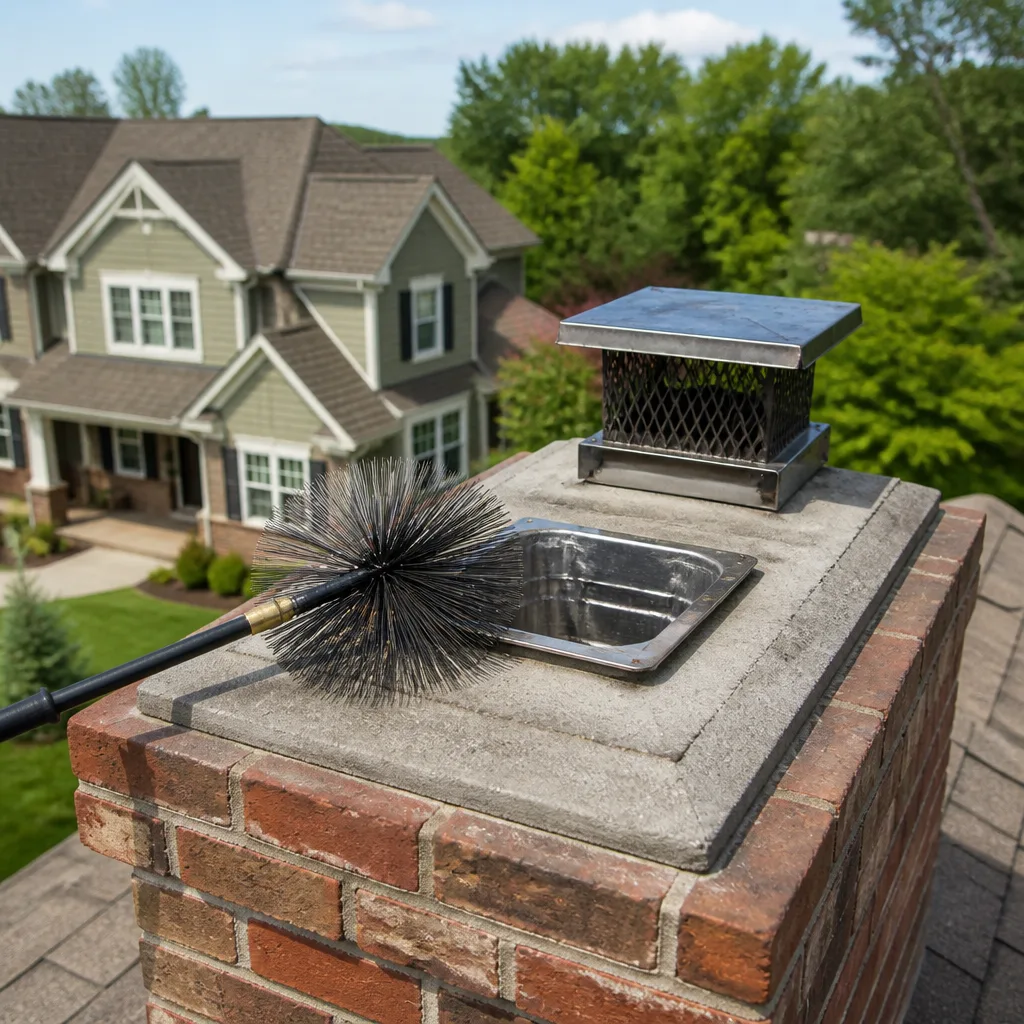
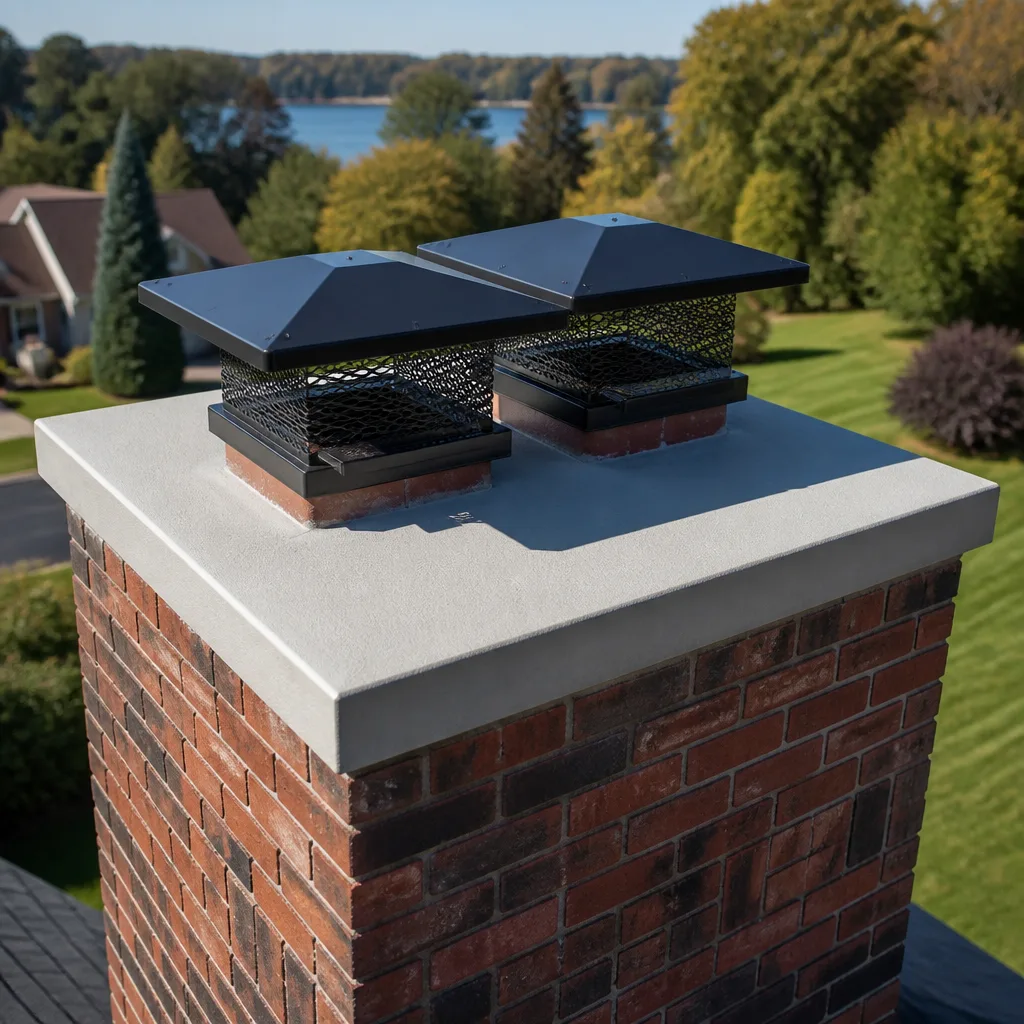
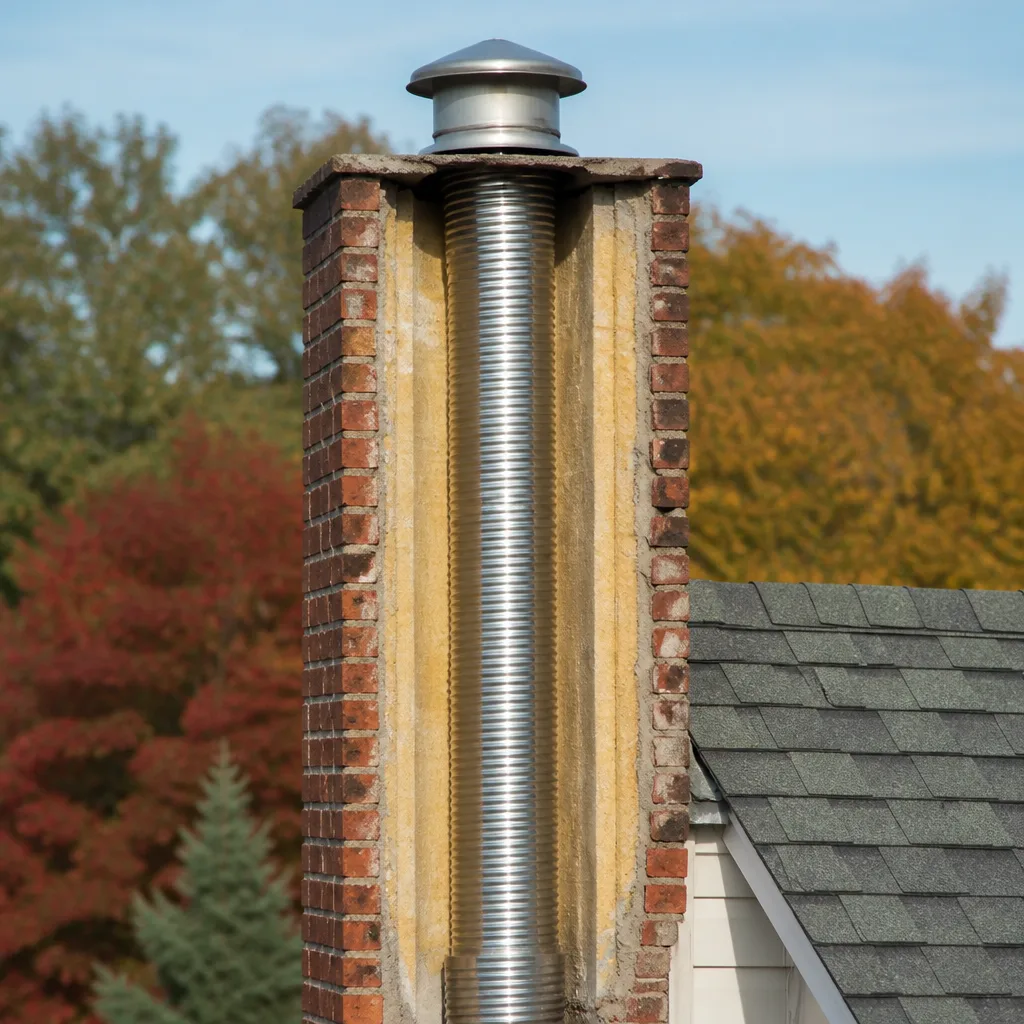
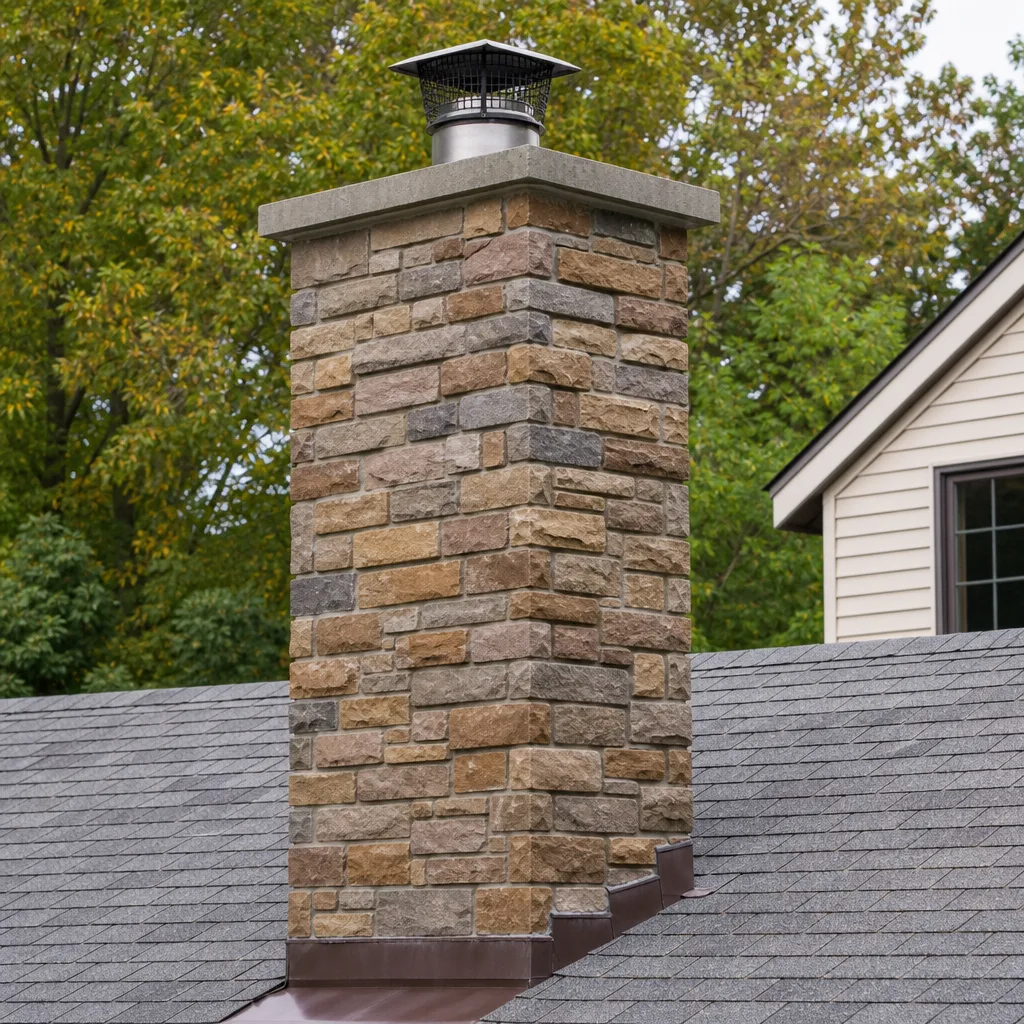
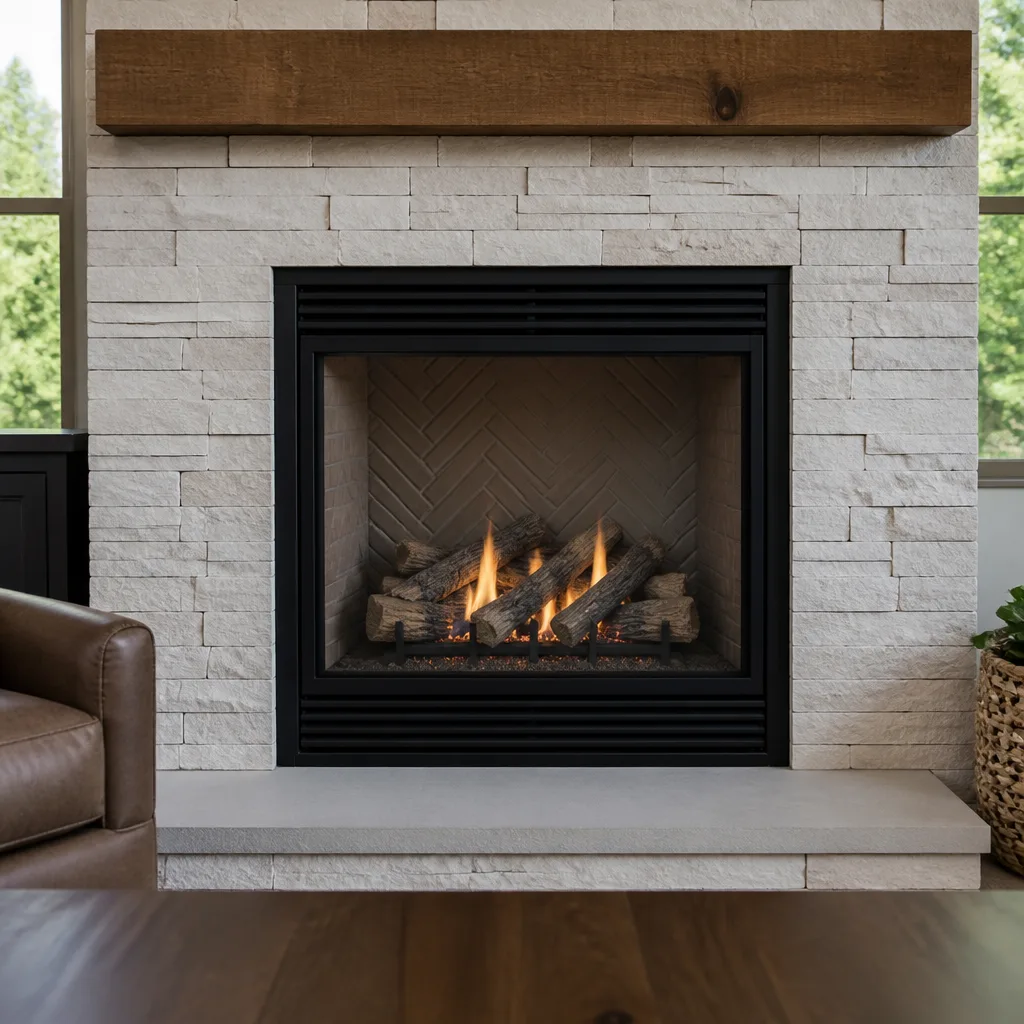
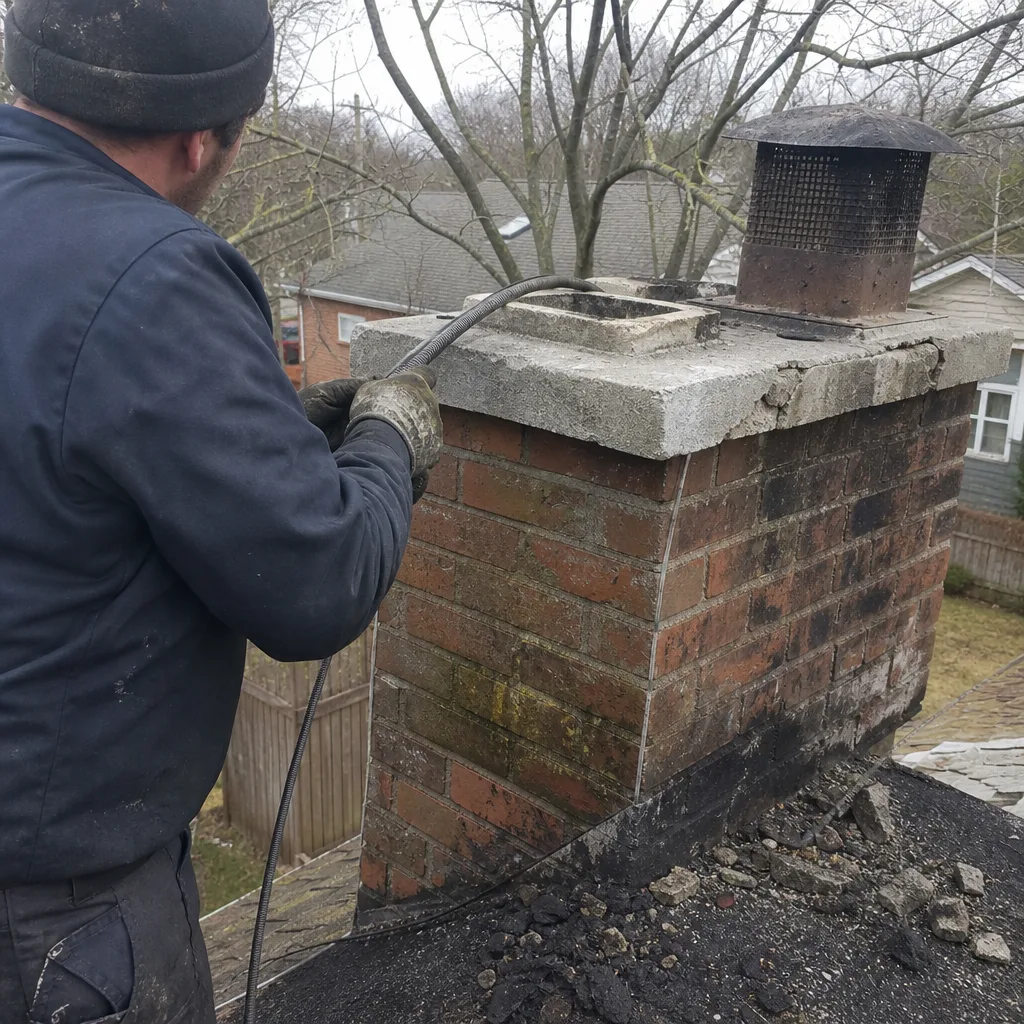 Before
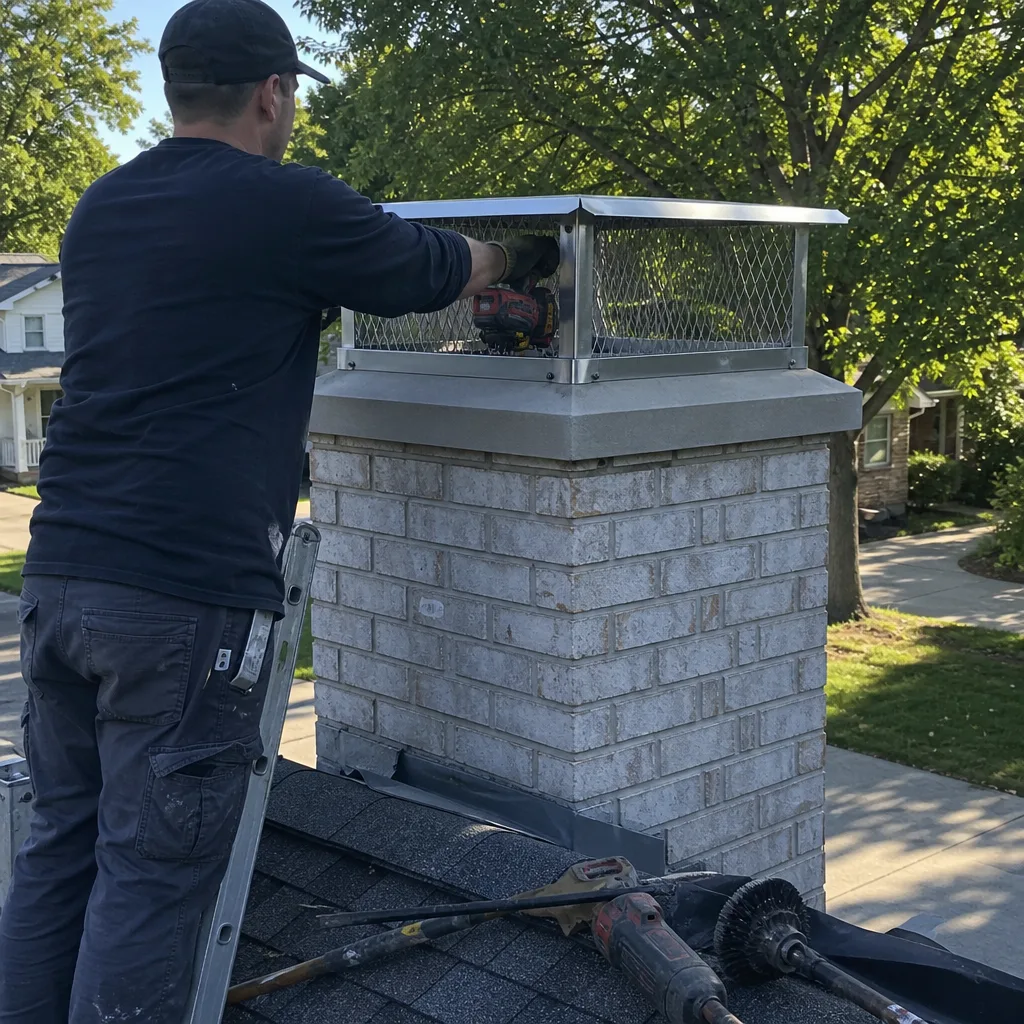 After
After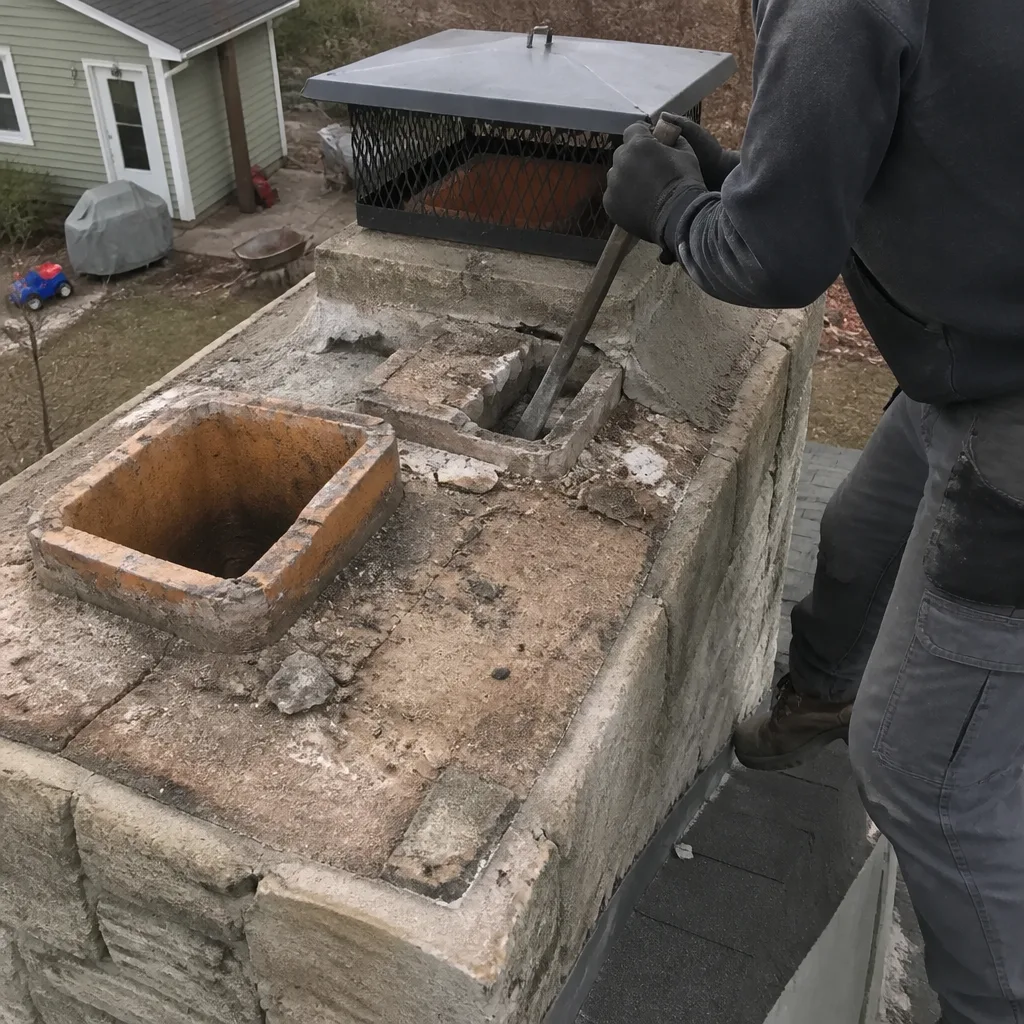 Before
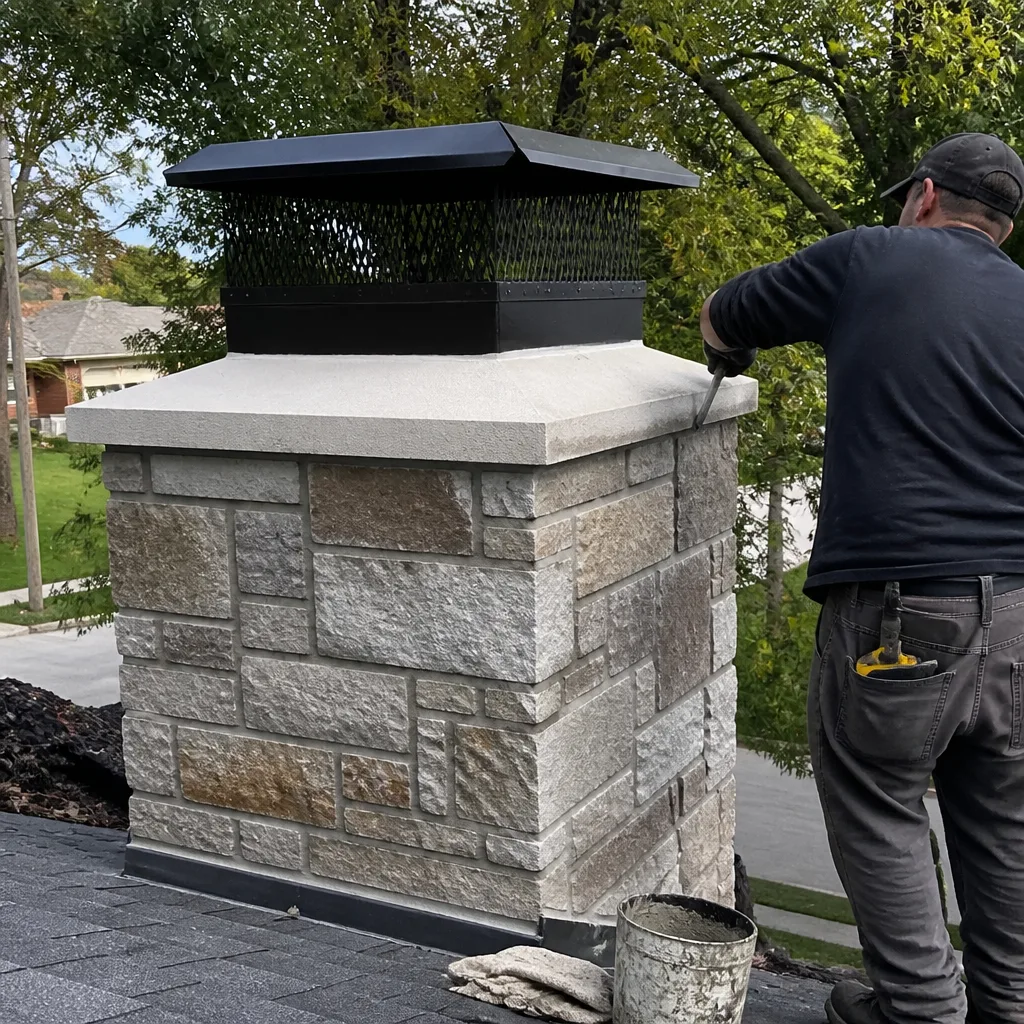 After
After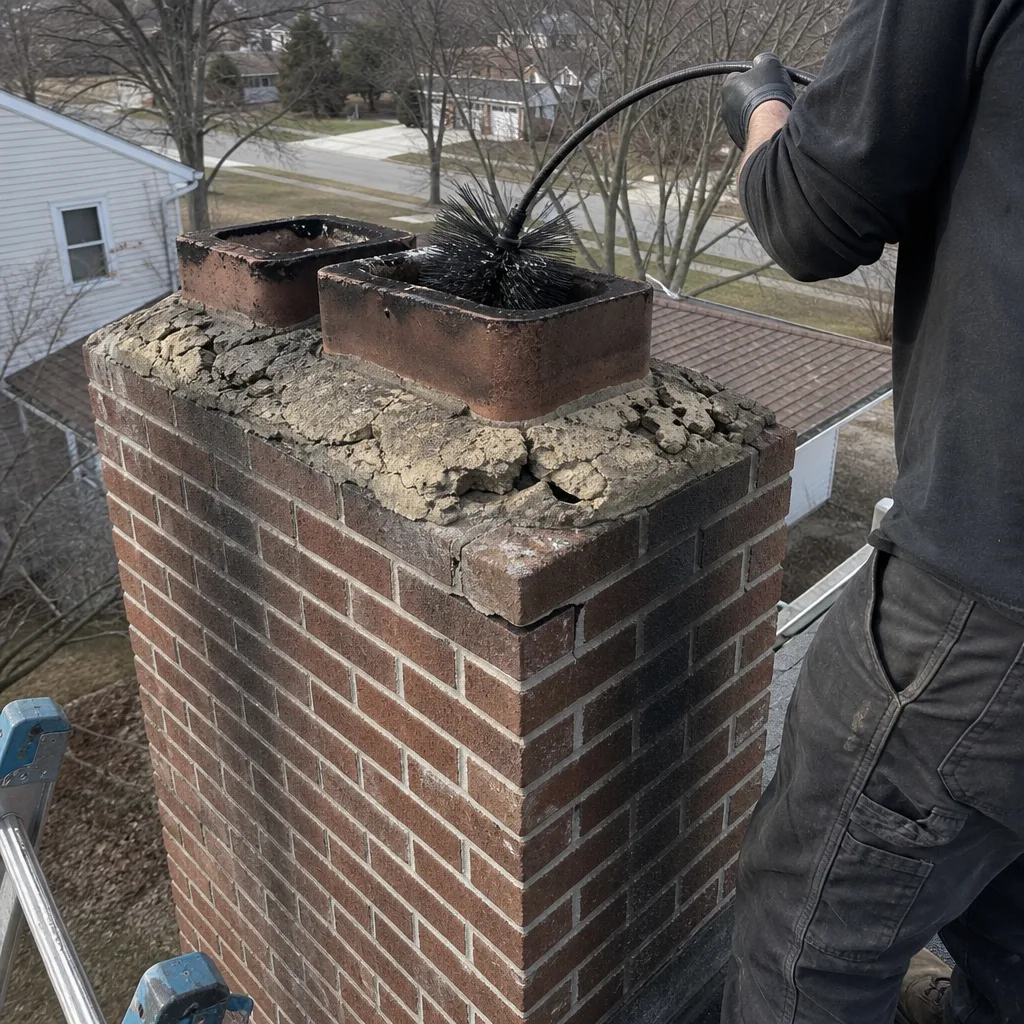 Before
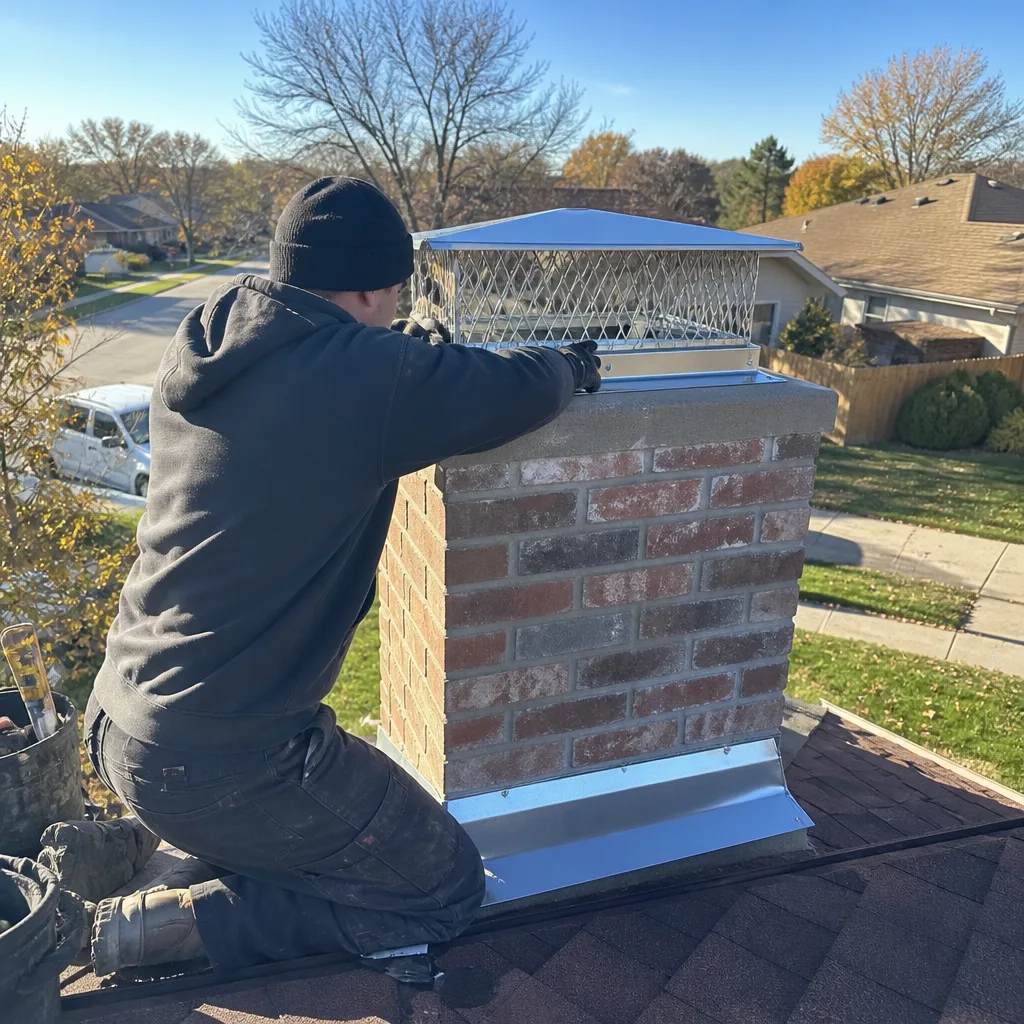 After
AfterDIY vs Professional Chimney Cleaning: The Naperville Homeowner’s Decision Guide
Consumer chimney brush kits sold at hardware stores along Route 59 or Ogden Avenue are legitimate tools. They remove Stage 1 creosote adequately from a straight flue with no offsets. What they don’t produce is the camera record that NFPA 211, your Illinois homeowner’s insurer, and a future buyer’s inspector will ask for. In Naperville, where home sales average 12 days on market and buyers bring thorough inspectors, that documentation gap can cost you a sale, a claim denial, or worse, a fire you never saw coming. This guide walks through exactly what you can replicate with consumer equipment, what you can’t, and where the line actually falls.
Quick Answer
Most Naperville homeowners can safely remove light Stage 1 creosote from a straight, masonry flue using a $40 brush kit. You cannot inspect the flue liner for cracks, measure creosote thickness, or produce the documented photo record that insurance and real estate transactions require. For any flue with offsets, metal liner, or unknown condition, professional cleaning with NFPA 211 Level 2 inspection is the only defensible choice.
Table of Contents
- What DIY Chimney Cleaning Can Actually Do
- Equipment Costs and Limitations
- The Documentation Gap: What DIY Cannot Produce
- Three Scenarios Where DIY Is Reasonable
- Three Scenarios Where DIY Is Risky
- Three Scenarios Where DIY Is Flatly Inadequate
- Insurance, Real Estate, and Liability in Illinois
- Common Mistakes to Avoid
- When to Call a Professional
- Frequently Asked Questions
- The Bottom Line
 Before
 After
AfterWhat DIY Chimney Cleaning Can Actually Do
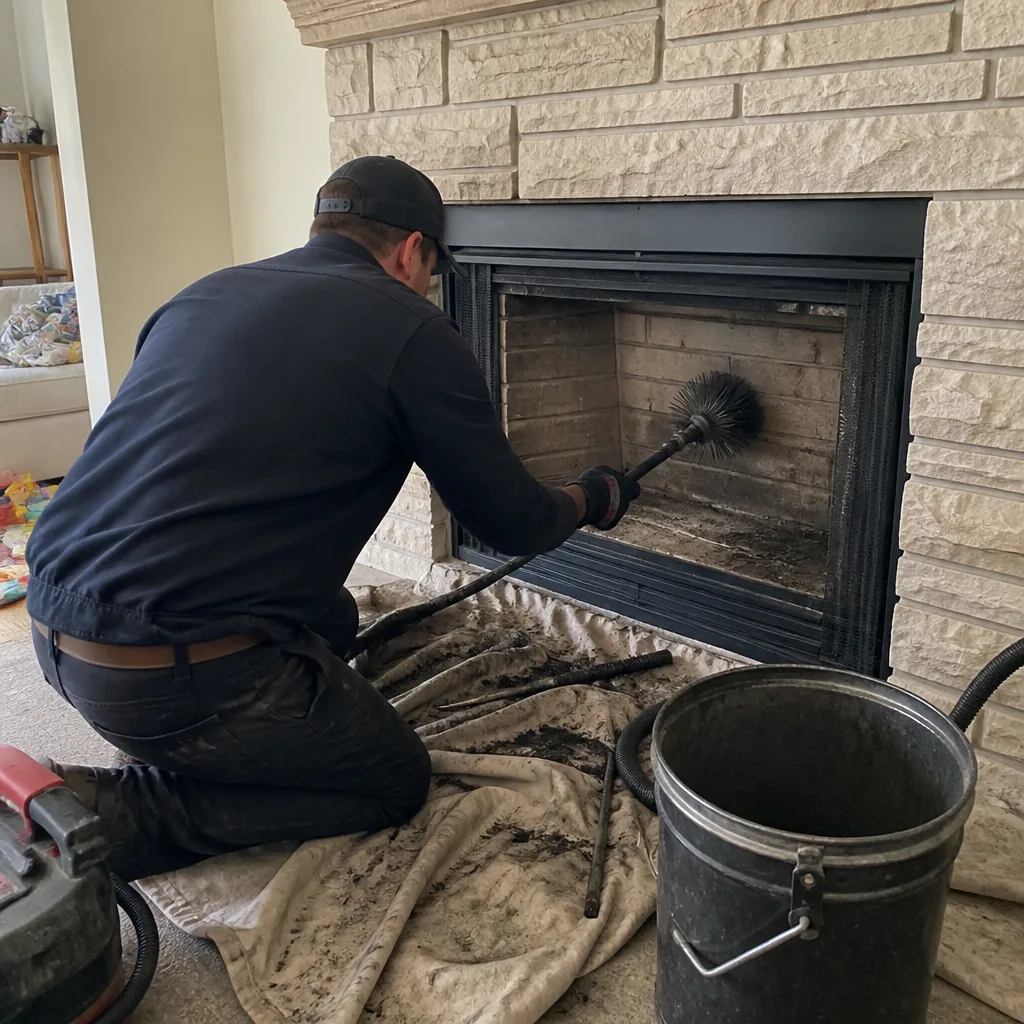
A polypropylene brush on a fiberglass rod will knock loose, flaky Stage 1 creosote from a straight masonry flue. That’s not nothing. Stage 1 creosote looks like soot, brushes off easily, and accounts for perhaps 60% of what we find in Naperville homes that burn seasoned hardwood on a regular schedule.
Here’s what the process actually involves:
- Seal the fireplace opening with plastic sheeting and tape to contain debris
- Access the flue from the top (roof ladder required) or bottom (fireplace opening)
- Attach brush to rod, add rods as you push upward, scrub with up-and-down motion
- Vacuum fallen debris from the smoke chamber and firebox using a HEPA-rated shop vac
- Inspect visible portions with a flashlight for obvious damage
The physics are simple. The brush diameter should match the flue liner dimension, typically 8″ x 8″ or 8″ round for Naperville’s 1970s-1990s colonial and split-level construction. A mismatched brush, too small, will ride the center and leave creosote on the walls. Too large, and you’ll jam it against the liner and potentially damage terra cotta.
What DIY cannot do, under any configuration, is tell you what the flue looks like after the brushing. You cannot see the full circumference of a terra cotta liner from below with a flashlight. You cannot measure remaining creosote thickness. You cannot identify a hairline crack, spalling (surface flaking of the clay), or joint separation between flue tiles. These are the conditions that lead to chimney fires and carbon monoxide intrusion, and they are invisible to consumer-grade inspection.
In Naperville’s climate specifically, freeze-thaw cycles from November through March accelerate spalling in older terra cotta liners. We’ve found significant liner degradation in homes near the DuPage River watershed where groundwater and humidity compound the stress. A brush won’t reveal this. Only a camera will.
Equipment Costs and Limitations

A complete DIY chimney cleaning setup runs $150-$300. Here’s the honest breakdown:
| Item | Typical Cost | What It Actually Does |
|---|---|---|
| Polypropylene brush kit with 6 rods | $40-$75 | Removes loose Stage 1 creosote from straight flues |
| Wire brush (for glazed creosote) | $25-$40 | May damage terra cotta; requires experience to use safely |
| HEPA shop vacuum | $80-$150 | Collects debris; must be HEPA-rated for respirable silica |
| Drop cloths, PPE, ladder | $30-$50 | Basic contamination and fall protection |
| Flashlight inspection mirror | $15-$30 | Limited view of smoke chamber; no flue liner visibility |
Compare this to Chimney Cleaning & Sweep in Naperville, where a professional sweep with full NFPA 211 Level 2 inspection starts in a comparable range and includes equipment no homeowner owns: a chimney camera with 360-degree rotation, digital measurement tools, and a written report with photo documentation.
The equipment gap matters most on three fronts:
- Camera systems: Professional chimney cameras cost $3,000-$8,000. They record video and still images of the entire flue liner, stored with date stamp and job record. No consumer equivalent exists.
- Vacuum systems: Professional chimney vacuums use triple-filtration and are grounded to prevent static ignition of combustible dust. Standard shop vacs lack this safeguard.
- Drop cloth and containment: Professional-grade HEPA containment prevents respirable particulate from circulating through your HVAC system. DIY sheeting is better than nothing, but it’s not sealed negative-air containment.
The real cost comparison isn’t equipment versus service. It’s equipment plus your time plus the diagnostic value you’re not getting versus a professional service that includes diagnosis, documentation, and warranty.
The Documentation Gap: What DIY Cannot Produce
This is where the DIY versus professional debate usually misses the point entirely. The question isn’t whether you can push a brush up a flue. The question is what record exists when you’re done, and who that record protects.
A professional NFPA 211 Level 2 inspection from Level Two Chimney Naperville home produces the following documentation, every time, as required by Haven Standard Clause 4:
- Date-stamped video and still images of the entire flue liner interior
- Written findings on liner condition, creosote classification and thickness, crown integrity, damper operation, and smoke chamber condition
- Measurements: flue dimensions, liner thickness where visible, clearance to combustibles where accessible
- Written scope of work and price before any work begins (Haven Standard Clause 1)
- Written warranty and 365-Day Done Right Promise on completed work
- Archived record retrievable for future reference, sale, or insurance claim
DIY produces none of this. A photo of your brush with soot on it proves nothing about flue condition. A verbal description to your insurance adjuster carries no weight. A home inspector during a Naperville sale will ask for professional documentation, and “I did it myself” is not a satisfactory answer.
We’ve seen this play out in Naperville’s competitive market. In neighborhoods like Ashbury or Tall Grass where homes move quickly, buyers’ inspectors routinely request chimney inspection records. Sellers with professional documentation from a recognized provider close without friction. Sellers without it face repair credits or delayed closings.
The documentation gap also affects safety in ways homeowners don’t anticipate. If you sweep your own flue and miss a cracked liner, there’s no second set of eyes, no professional standard of care, and no liability coverage if the defect leads to a fire. Professional work carries errors and omissions insurance. DIY carries your homeowner’s policy, which may or may not cover damage from self-performed maintenance.
Three Scenarios Where DIY Is Reasonable
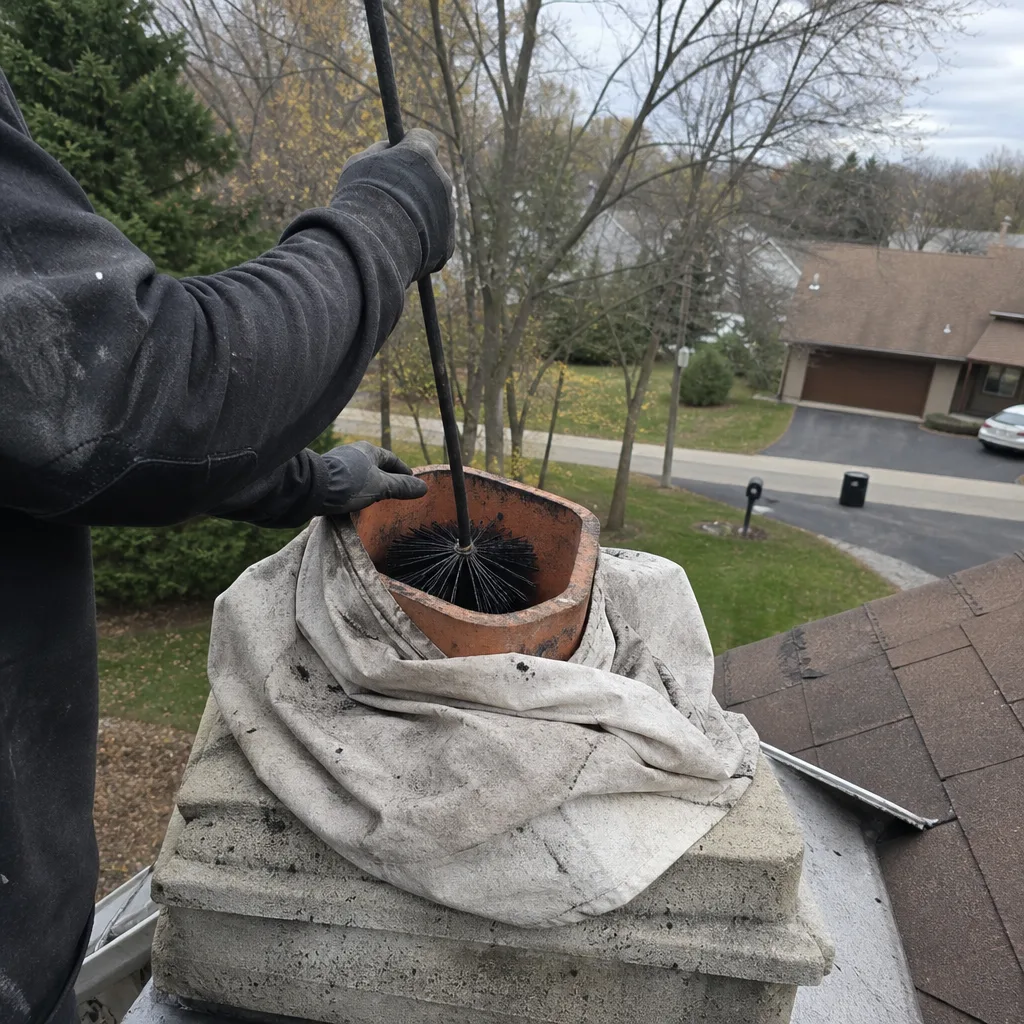
We’re not here to tell you that DIY is never appropriate. In our experience across 38,000+ inspections, three specific configurations make DIY chimney cleaning a rational choice:
- Straight masonry flue, Stage 1 creosote only, recent professional baseline: If a Level 2 inspection within the last 12 months documented sound liner condition and light creosote accumulation, and you burn only seasoned hardwood, a mid-season DIY brushing can maintain cleanliness between professional visits. You have a baseline. You know what you’re working with.
- Supplemental maintenance between annual professional sweeps: Some Naperville homeowners with high-use fireplaces, particularly in older homes near Naper Boulevard with original masonry, choose to DIY once between annual professional services. This is maintenance, not replacement of professional inspection.
- Outdoor fire pit or non-structural chimney with no liner: A simple masonry outdoor chimney with no flue liner, no structural connection to the home, and no insurance or resale implications can be safely brushed by a homeowner. The stakes are lower, and the configuration is accessible.
In each case, the common thread is that professional documentation already exists or is not required, and the flue configuration is simple enough that consumer equipment can physically reach all surfaces.
Three Scenarios Where DIY Is Risky
These are the situations where we’ve seen homeowners get into trouble, often after a seemingly successful DIY attempt gave false confidence:
- Flue with one or more offsets: Many Naperville homes built 1985-2005 have factory-built fireplaces with offset flues to accommodate second-story framing. A straight rod cannot navigate a 30-degree offset. You’ll leave creosote in the offset section, and you won’t know it’s there. We’ve pulled apart offset flues where the homeowner had “cleaned” annually for years and found packed Stage 3 creosote behind the bend.
- Metal flue liner or factory-built chimney: Stainless steel liners, common in Naperville’s 1990s-2000s construction, require specific brush types. A wire brush on a flexible stainless liner can scratch the surface, creating creosote adhesion points that accelerate future buildup. You need to know your liner material and match the brush, which most homeowners don’t verify.
- Unknown creosote stage or burning history: If you’ve moved into a Naperville home and don’t know what’s been burned, how often, or when it was last cleaned, DIY is gambling. Unseasoned wood, Christmas tree disposal, or prior owner practices may have created glazed Stage 2 or hardened Stage 3 creosote that consumer brushes cannot remove. Worse, you won’t know you failed to remove it.
The risk in each scenario is invisible failure. You finish the job feeling accomplished, but the flue is not actually clean, or worse, you’ve damaged something you can’t see.
Three Scenarios Where DIY Is Flatly Inadequate
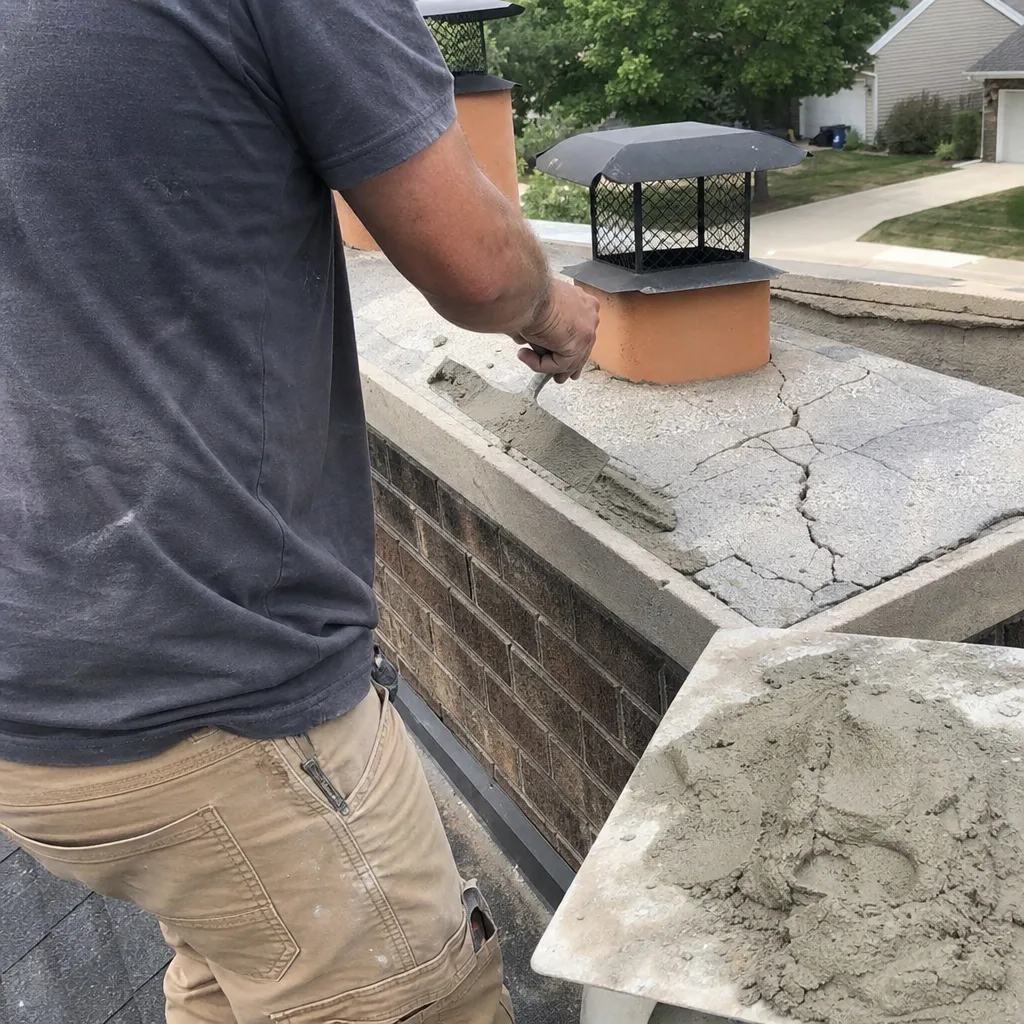
These configurations require professional equipment and training, full stop. No consumer workaround exists:
- Class III (Stage 3) glazed or hardened creosote: This tar-like or hardened deposit requires rotary mechanical removal with specialized chains or whips at controlled speed. Consumer brushes bounce off it. Attempting removal with improvised tools risks liner damage, roof falls, or chimney fire from dislodged hot material. We’ve responded to emergency calls in Cress Creek and White Eagle where DIY attempts on glazed creosote ended with 911 calls.
- Any suspected liner damage, spalling, or missing mortar joints: If you can see damage from below with a flashlight, it’s worse above where you cannot see. Continuing to use a damaged liner risks carbon monoxide intrusion or structural fire. Only a camera inspection can map the full extent. Chimney Repair in Naperville addresses these conditions with documented scope and pricing before work begins.
- Chimney fire history: Even a small chimney fire, sometimes undetected by the homeowner, can damage liner integrity through thermal shock. The flue may look normal from below but have hairline cracks or displaced tiles above. Post-fire inspection requires professional camera documentation for insurance purposes, and DIY cleaning afterward is dangerous without knowing the structural condition.
In these scenarios, the hazard is not inadequate cleaning. It’s false assurance. A homeowner who DIYs in these conditions walks away believing the chimney is safe when it demonstrably is not.
Insurance, Real Estate, and Liability in Illinois
The documentation question becomes concrete when you file a claim or list your home. Here’s what Illinois homeowners need to understand:
Some Illinois homeowner policies contain provisions requiring documented professional inspection following any chimney fire, or before installation of a new wood-burning appliance. These provisions are increasingly common in policies written after 2020, as insurers respond to rising fire claims. DIY records, including photos or receipts for brush kits, do not satisfy these requirements. The insurer wants a dated report from a qualified professional, typically defined as CSIA-certified or equivalent, with photo documentation.
In Naperville’s real estate market, this matters beyond insurance. The Naperville Area Chamber of Commerce tracks average home sales at premium velocity, and buyers arrive prepared. A 2024 transaction in the Ranchview neighborhood stalled when the buyer’s inspector flagged a lack of chimney documentation. The seller, who had self-maintained for eight years, faced a $2,400 credit for professional inspection and repair that could have been managed incrementally.
Liability exposure is less obvious but equally real. If a guest or tenant is harmed by carbon monoxide or fire originating from a chimney you maintained yourself, your defense rests on demonstrating reasonable care. “I bought a brush at Home Depot” is not reasonable care for a complex structural system. Professional documentation, by contrast, establishes a standard of care and shifts liability appropriately.
For Fireplace Services in Naperville that include gas inserts or conversions, the documentation requirement is even stricter. Gas appliance installation requires permit and inspection in Naperville, and homeowner-performed work voids most manufacturer warranties and complicates insurance coverage.
Common Mistakes to Avoid
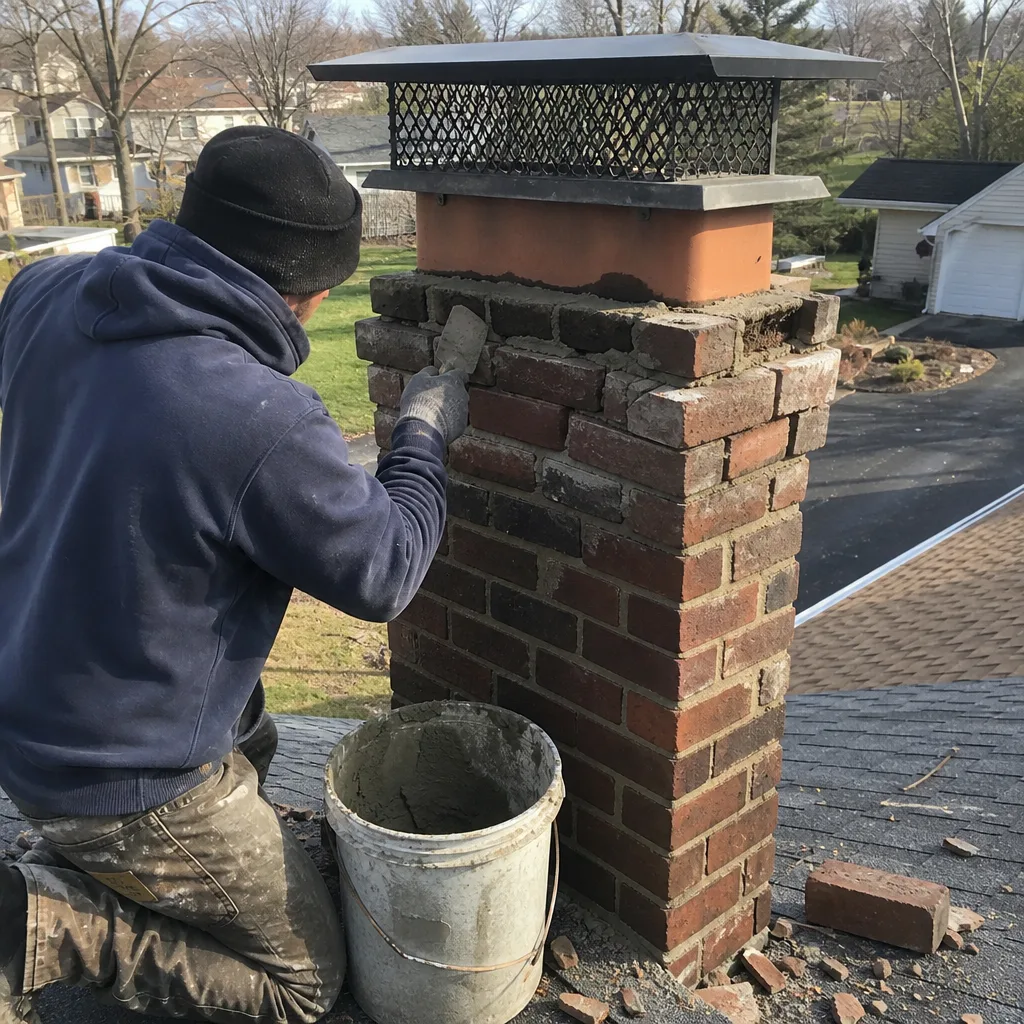
- Using a wire brush on terra cotta liner: Wire bristles score the clay surface, creating pores where creosote adheres more aggressively. We’ve replaced liners in Naperville’s East Highlands neighborhood where years of wire brushing accelerated degradation that proper polypropylene brushes would have avoided.
- Cleaning from the bottom only: Gravity works against you. Debris falls onto the smoke chamber shelf, where it can block the flue or ignite. Professional sweeps clean from top and bottom, or use vacuum collection at the base with proper containment.
- Skipping the damper and smoke chamber: The smoke chamber, the area above the damper and below the flue, accumulates the most dangerous creosote deposits. It’s also the hardest to reach. Consumer rods rarely access this space adequately.
- Burning creosote debris in the fireplace: Some homeowners collect the soot and burn it. This is extremely dangerous. Creosote debris belongs in a metal container, outdoors, away from structures, never in the firebox or household trash.
- Assuming “no smell” means “no creosote”: Odor is not a reliable indicator. We’ve measured quarter-inch creosote buildup in flues with no detectable odor to the homeowner. Only visual inspection reveals the truth.
- Neglecting the crown and cap: Water intrusion through a cracked crown, common after Naperville’s freeze-thaw cycles, destroys liners from the outside. DIY cleaning addresses interior buildup but ignores the exterior weatherproofing that prevents liner failure.
- Using a shop vac without HEPA filtration: Standard shop vacs expel respirable particulate through the exhaust. Chimney soot contains silica and combustion byproducts you do not want in your living space. True HEPA vacuums are expensive; most homeowners don’t own them.
When to Call a Professional
Call a professional when the flue configuration exceeds consumer equipment, when documentation is required, or when any uncertainty exists about condition. Specifically: offsets, metal liners, unknown burning history, any prior chimney fire, visible damage from below, or preparation for home sale or insurance renewal.
In Naperville, where winter temperatures drop below 10°F and heating systems work hard, annual professional inspection is the baseline for safe operation. Level Two Chimney Naperville offers free estimates throughout Naperville and surrounding communities. Call (331) 265-1700 to schedule. Every estimate includes a written price before work begins, a documented photo record on completion, and the 365-Day Done Right Promise backed by Haven Standard Clause 4.
Frequently Asked Questions
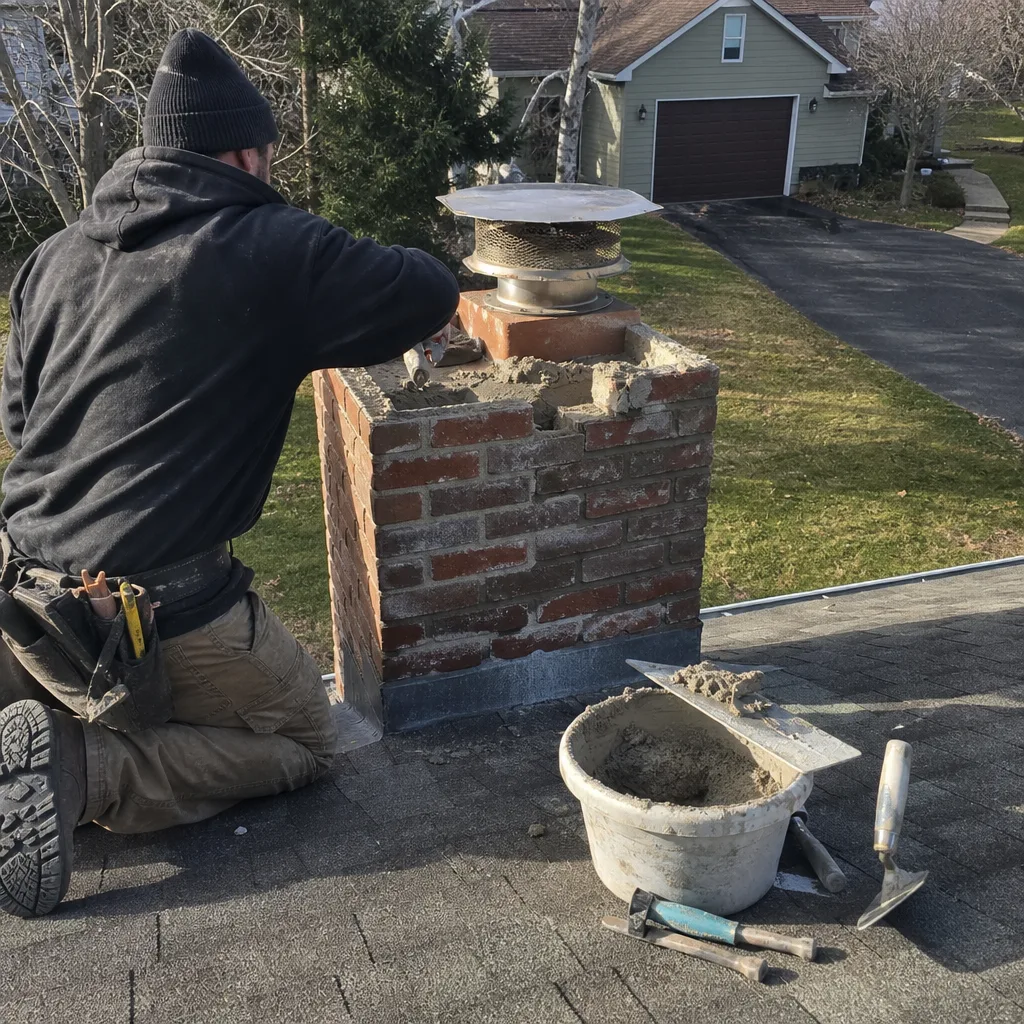
A professional chimney sweep with NFPA 211 Level 2 camera inspection in Naperville typically ranges from $200-$350 for a standard masonry flue, depending on accessibility, liner type, and condition. This includes the documented photo record, written findings, and written warranty. DIY equipment costs $150-$300 but produces no diagnostic value or documentation. Call (331) 265-1700 for an exact quote on your specific chimney - estimates are free.
You need a new liner when inspection reveals cracks, spalling, missing mortar joints, or deterioration that compromises containment of heat and combustion gases. We never recommend liner replacement without camera evidence you can see for yourself. In some cases, minor spalling can be addressed with HeatShield cerfractory sealant rather than full replacement. Schedule a free second opinion on any written estimate from another provider.
The NFPA 211 standard recommends annual inspection, with cleaning frequency determined by use and fuel type. A Naperville home burning seasoned hardwood 2-3 times weekly typically needs annual sweeping. Homes with gas inserts need less frequent cleaning but still require annual inspection for venting integrity and moisture damage. The freeze-thaw climate here accelerates exterior deterioration, so annual inspection catches crown and cap issues before they reach the liner.
Skipped cleaning allows creosote accumulation, which restricts flue draft and increases chimney fire risk. Stage 1 creosote becomes Stage 2 (glazed) and then Stage 3 (hardened), each progressively harder and more expensive to remove. In Naperville’s cold climate, a restricted flue also reduces heating efficiency and can cause smoke backup into living spaces. The most serious risk is undetected liner damage allowing carbon monoxide intrusion or structural fire. Annual professional inspection finds these conditions before they become emergencies.
Chimney cleaning logs contain chemicals that loosen light creosote, turning Stage 1 deposits into flaky material that may fall away. They do not remove existing buildup, cannot address Stage 2 or 3 creosote, and produce no inspection documentation. We occasionally see logs used as supplemental maintenance between professional sweeps, but never as replacement. They are not recognized by NFPA 211 or insurance requirements.
Some policies require documented professional inspection after any chimney fire or before adding wood-burning appliances. Requirements vary by carrier and policy date. DIY maintenance records do not satisfy these provisions. If you’re uncertain, contact your agent directly and ask specifically about chimney documentation requirements. We provide inspection reports formatted for insurance submission on request.
The Bottom Line
DIY chimney cleaning occupies a narrow band: straight masonry flues, light Stage 1 creosote, known good condition, and no documentation requirements. Outside that band, consumer equipment cannot reach, cannot diagnose, and cannot protect you. The real decision variable is not cost or convenience. It’s documentation - the camera record, written findings, and warranty that professional service provides and DIY cannot replicate. In Naperville’s climate, market, and regulatory environment, that documentation protects your safety, your insurance coverage, and your home’s value.
Written by Corrine Halstead, Owner at Level Two Chimney Naperville, serving Naperville since 2009.