
Last updated September 22, 2026
Level 1 sweep and inspection to the NFPA 211 annual standard - flue, crown, cap, and flashing checked and photographed
Chimney sweep logs do not sweep chimneys. They loosen some creosote - which then falls where a brush and vacuum still have to collect it.
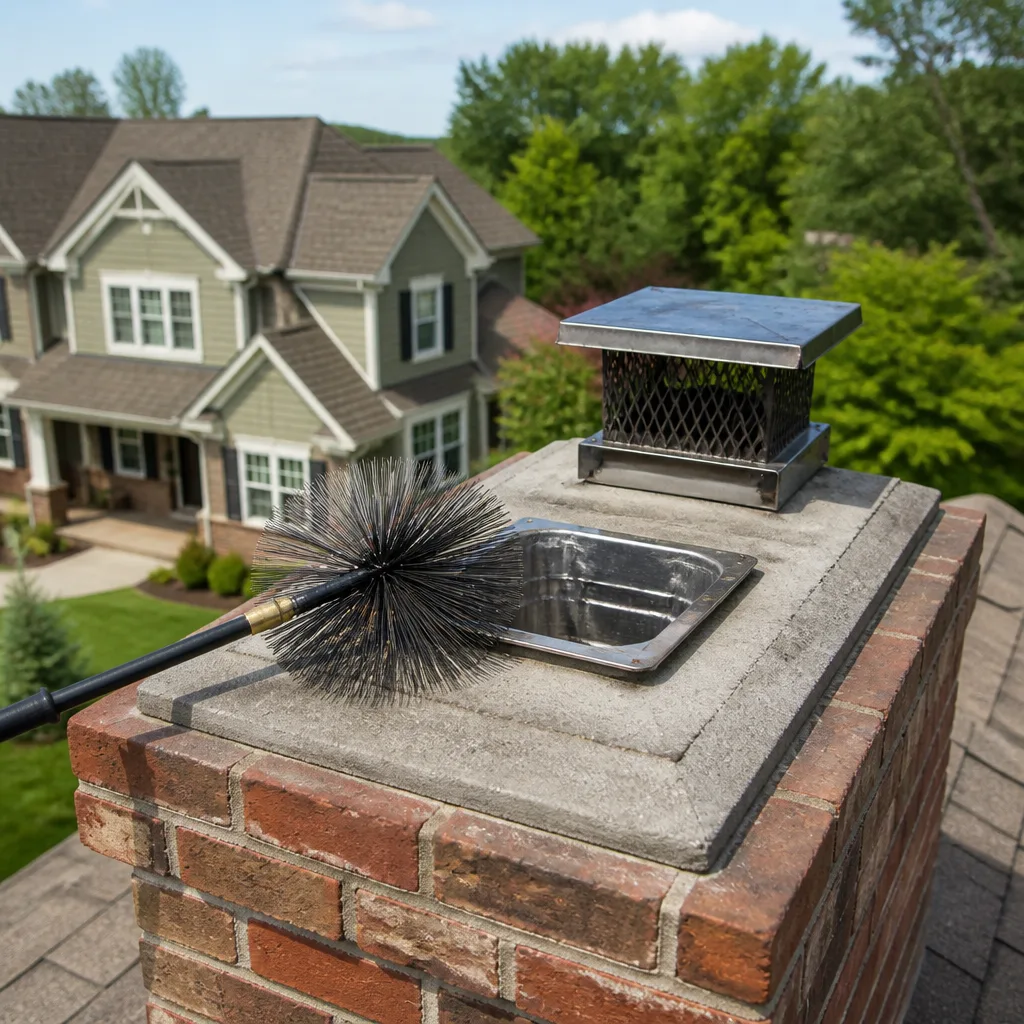
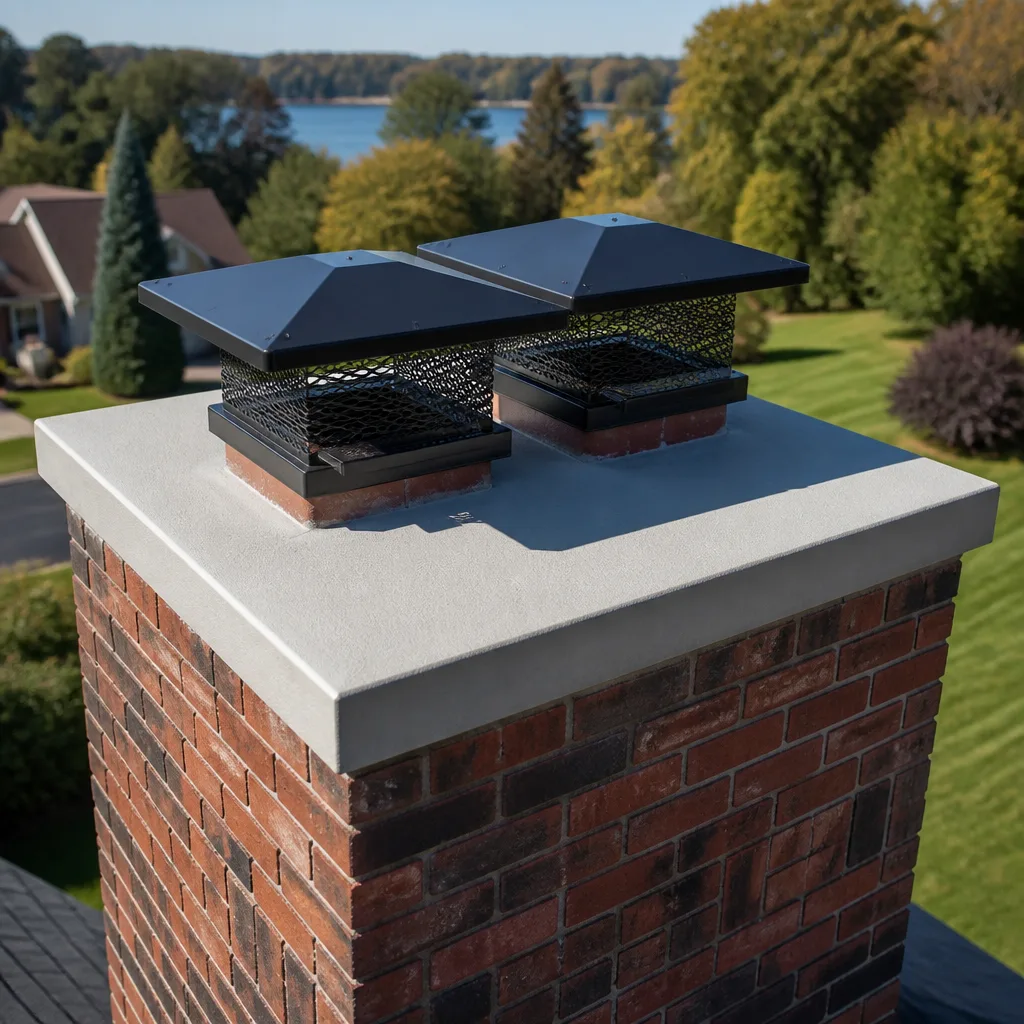
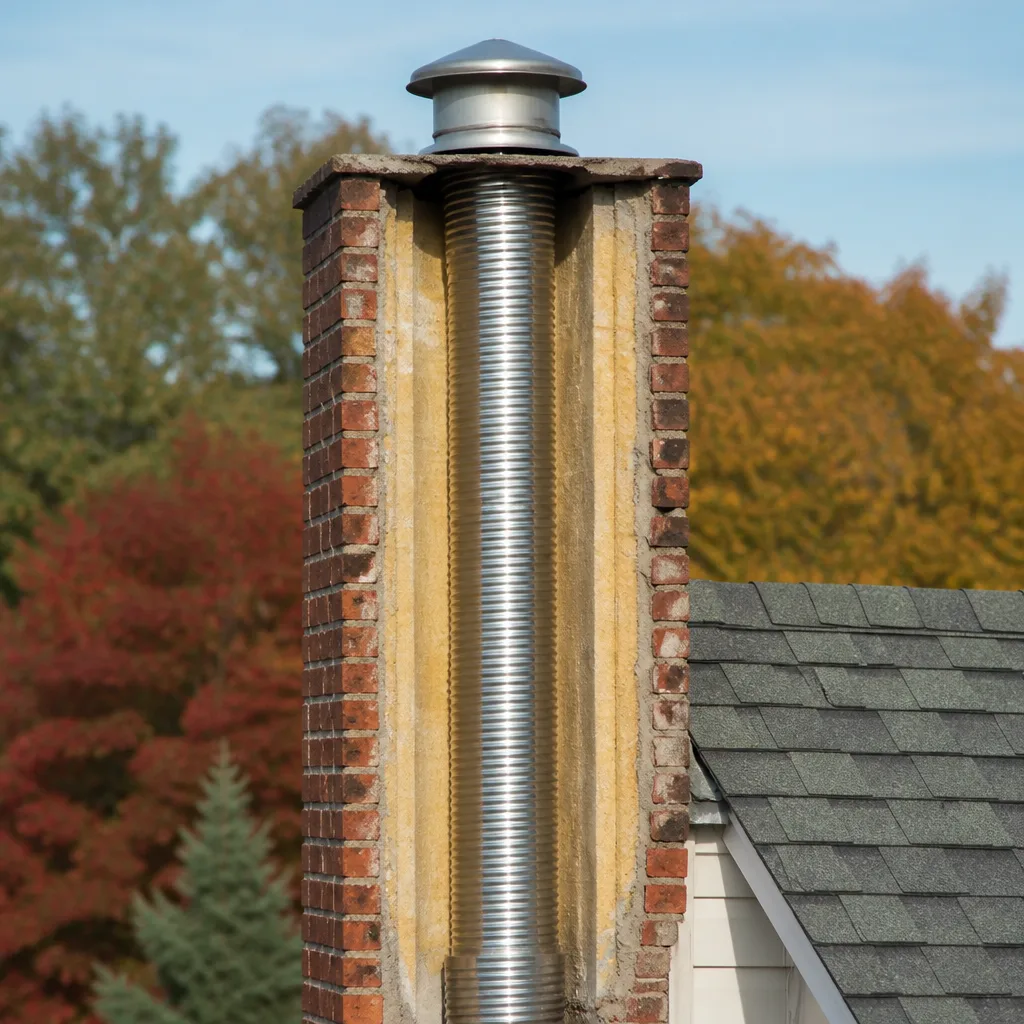
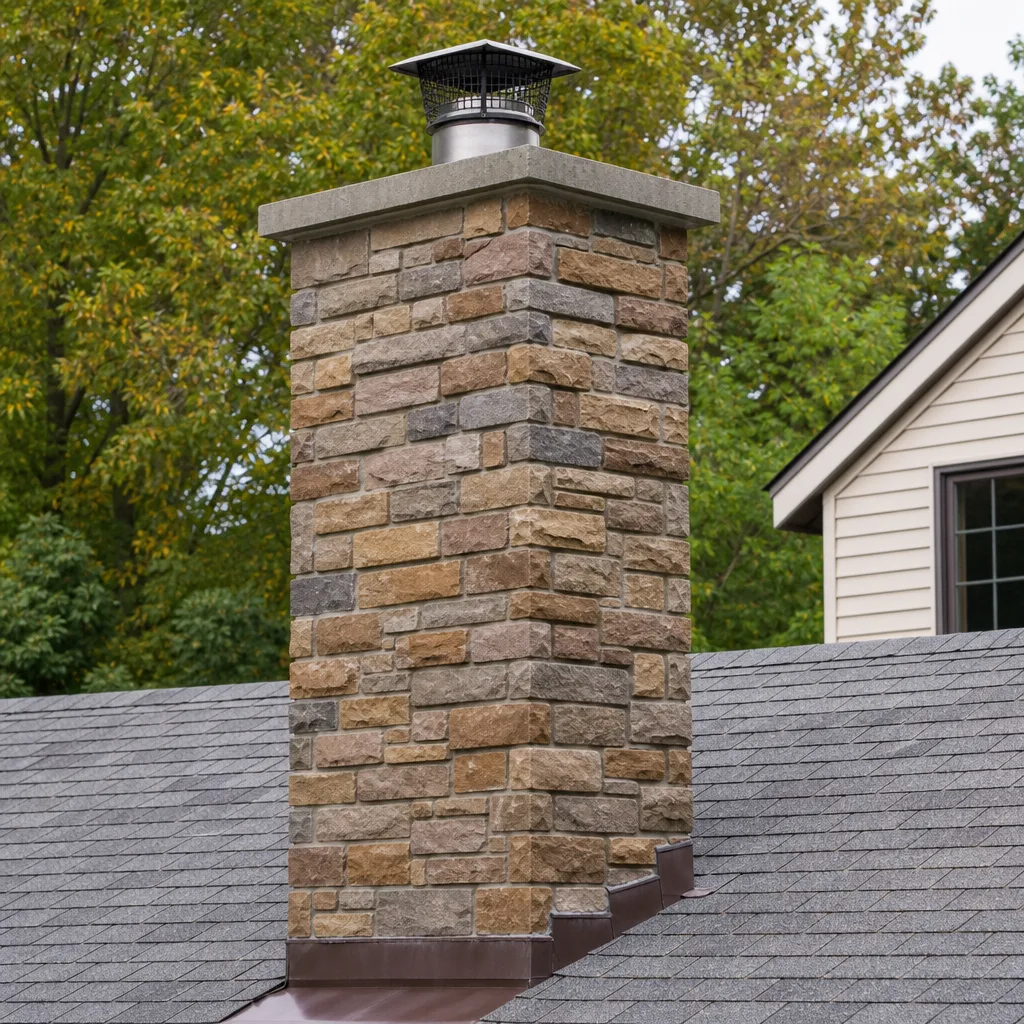
 Before
 After
After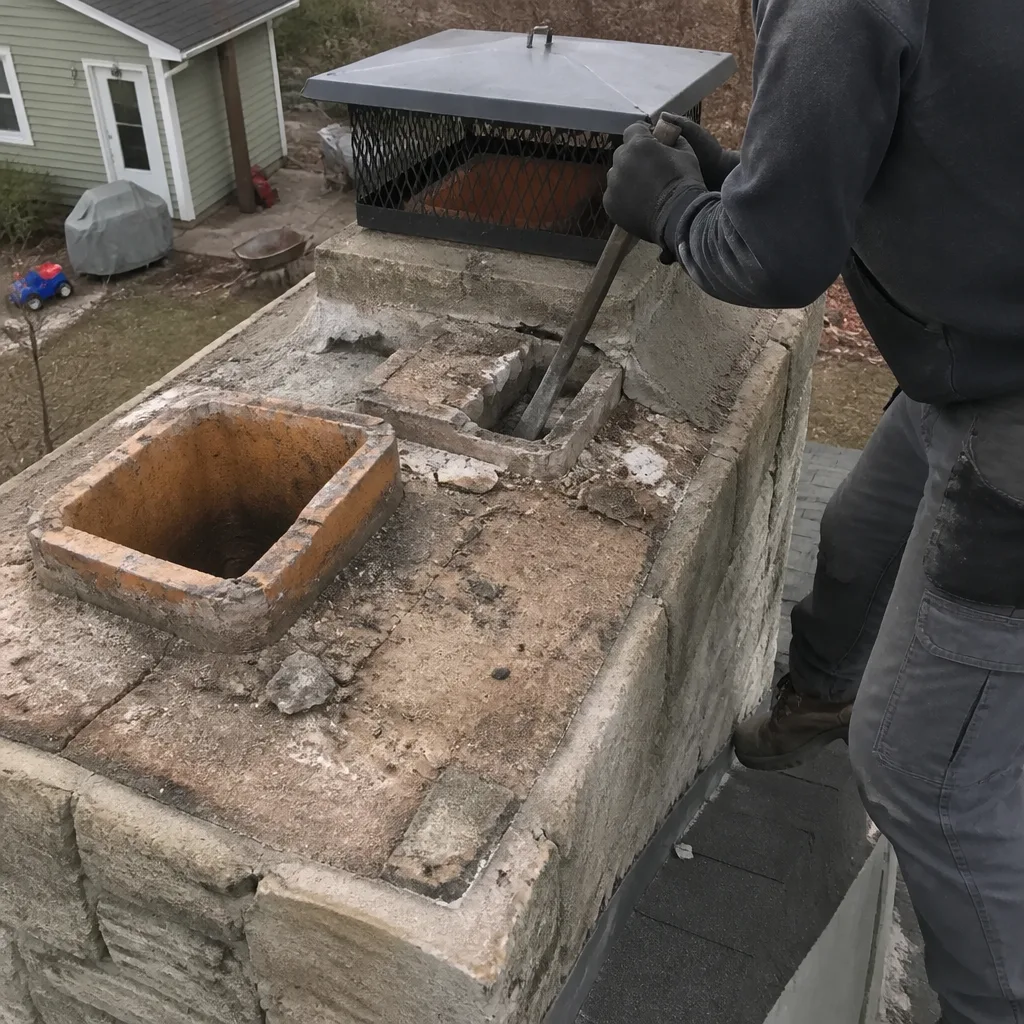 Before
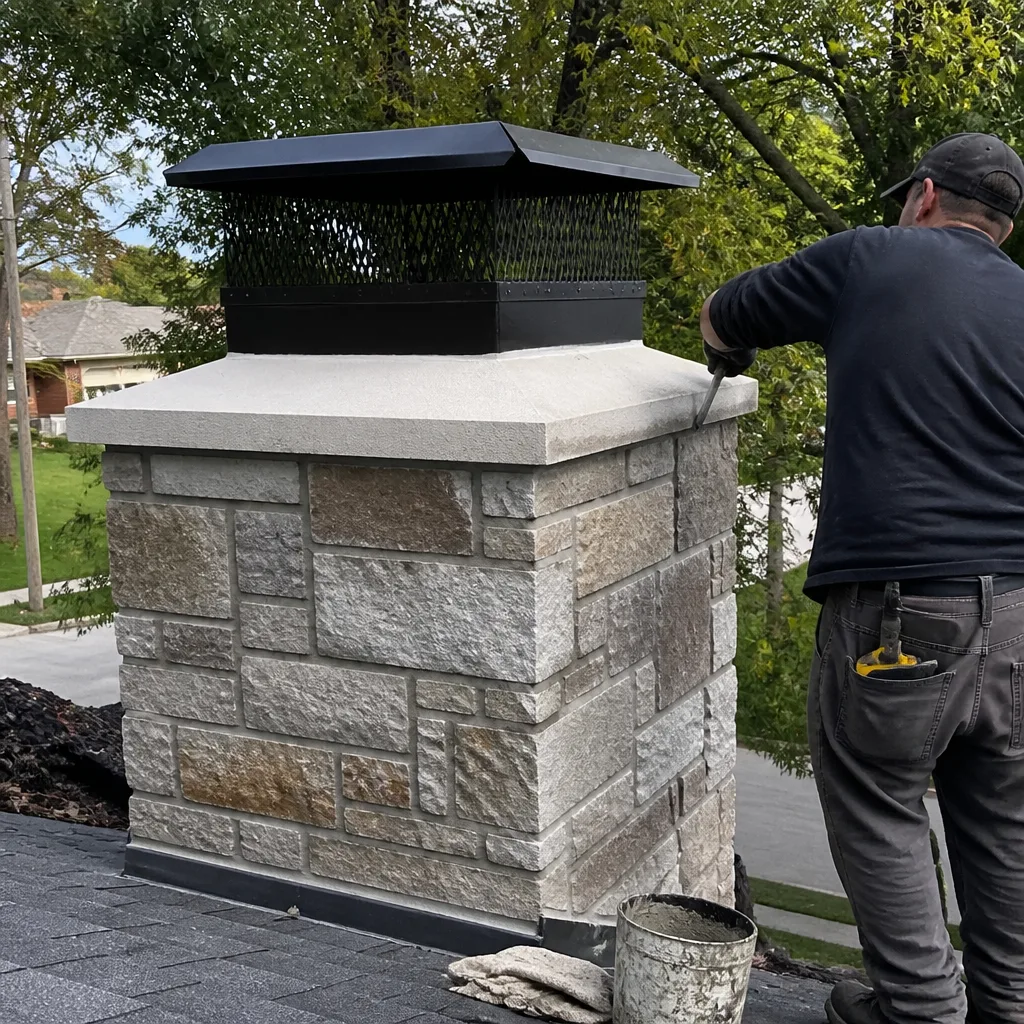 After
After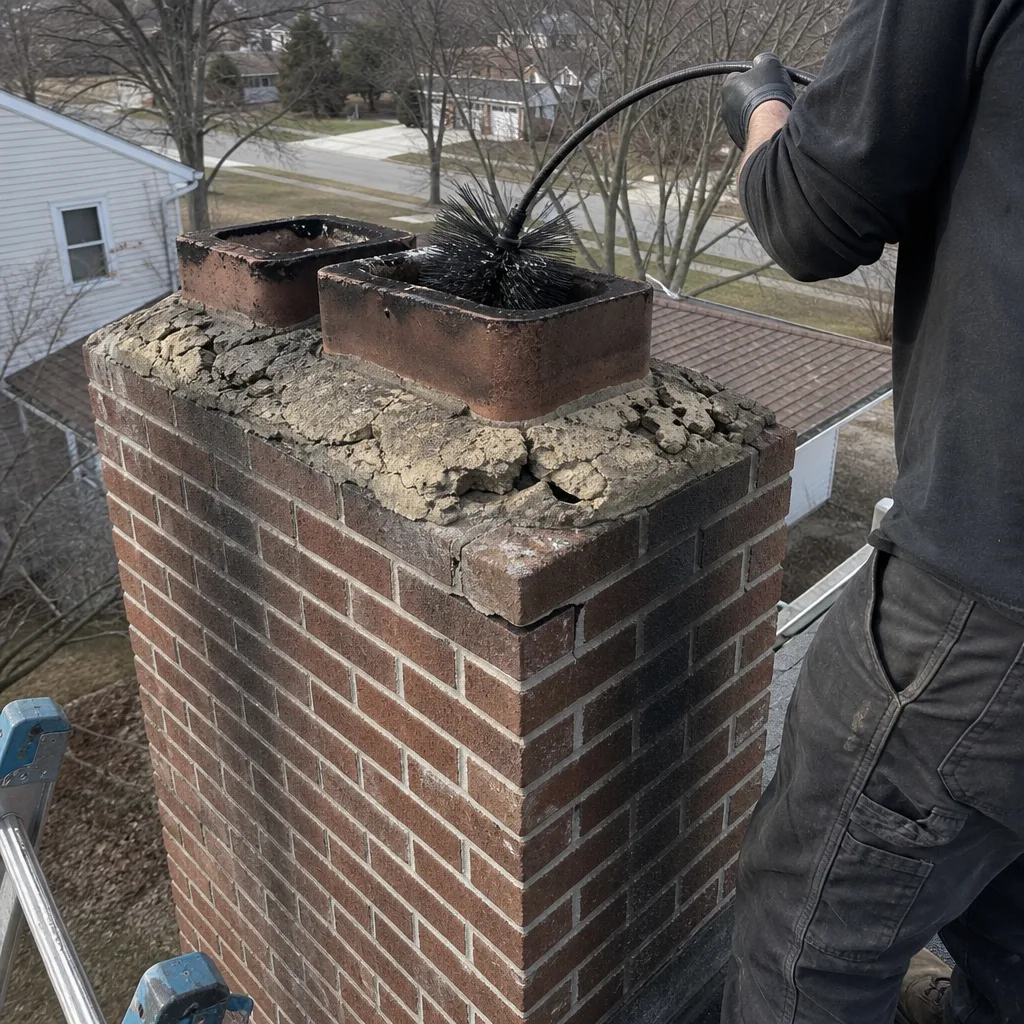 Before
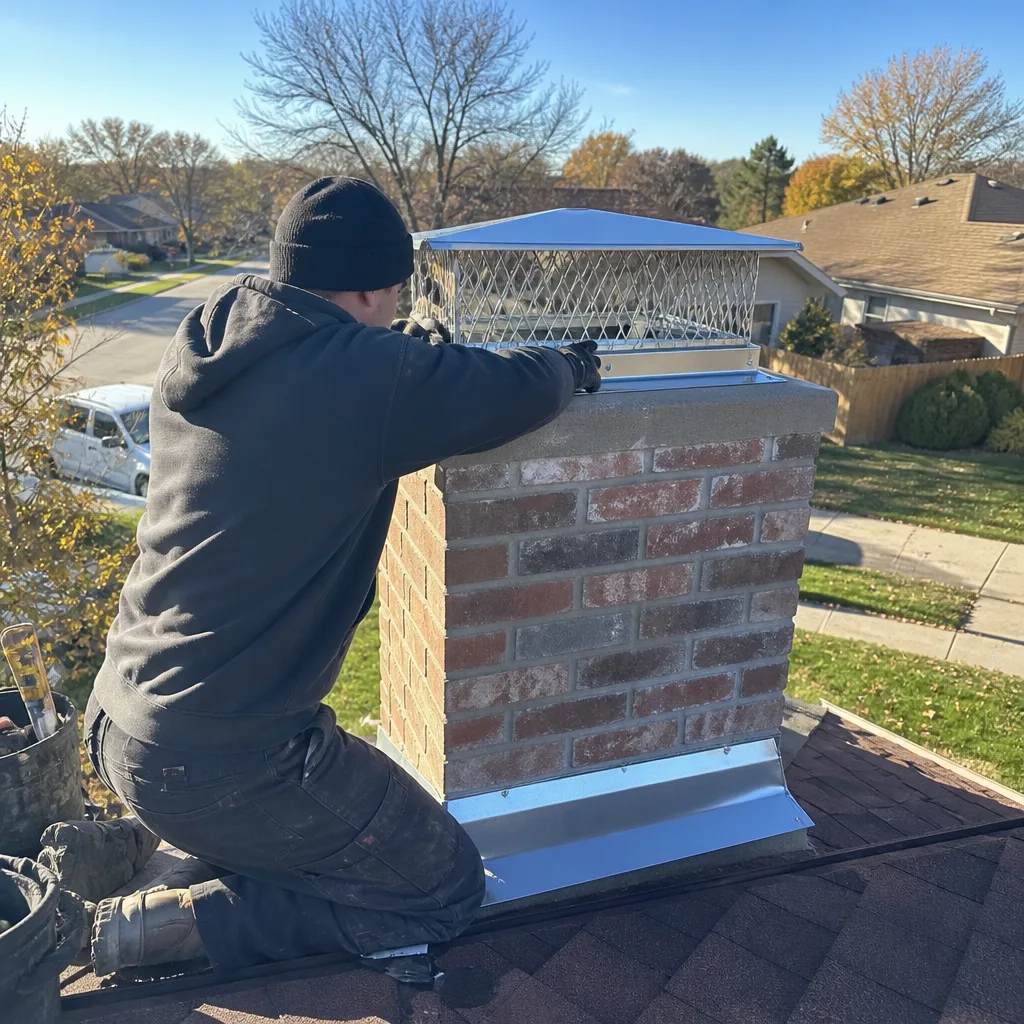 After
AfterSeasonal Chimney Cleaning Care for Naperville: Year-Round Homeowner’s Guide
Naperville averages 38 inches of precipitation annually, and the freeze-thaw cycle between November and March is the leading cause of masonry spalling - damage that begins as a hairline crack visible only on camera and ends as a $4,000 crown rebuild. Most homeowners here treat chimney maintenance as a single fall appointment, but that’s backwards. The flue, crown, liner, and smoke chamber each face distinct threats across four seasons, and the homeowner who recognizes the pattern stops reacting to emergencies and starts preventing them. This guide maps what Naperville’s climate actually does to your chimney, season by season, with specific costs and the exact documentation you should demand at each step, and points to more guides & resources for year-round maintenance.
Quick Answer
Seasonal chimney care in Naperville means four distinct maintenance actions aligned to weather-driven failure modes: a camera-first inspection in early fall before any cleaning, combustion-efficiency monitoring in winter for backdraft risks, masonry assessment after spring freeze-thaw cycles, and cap/crown sealing during dry summer months. Annual costs typically range from $250-$450 for preventive maintenance versus $1,800-$6,500 for reactive repairs after seasonal damage compounds.
Table of Contents
- Fall: Why Camera Inspection Must Come Before Cleaning
- Winter: Backdrafting, Stack Effect, and Gas Fireplace Risks
- Spring: Reading the Damage After Freeze-Thaw Cycles
- Summer: Cap and Crown Work in Dry Weather
- What Seasonal Chimney Care Costs in Naperville
- Building Your Annual Maintenance Calendar
- Common Mistakes to Avoid
- When to Call a Professional
- Frequently Asked Questions
 Before
 After
AfterFall: Why Camera Inspection Must Come Before Cleaning
The pre-season rush hits Naperville every September, and most sweep companies book cleaning appointments first, promising to “check things out while we’re up there.” That’s a problem. Cleaning before inspection destroys the evidence of what was accumulating, how fast, and why.
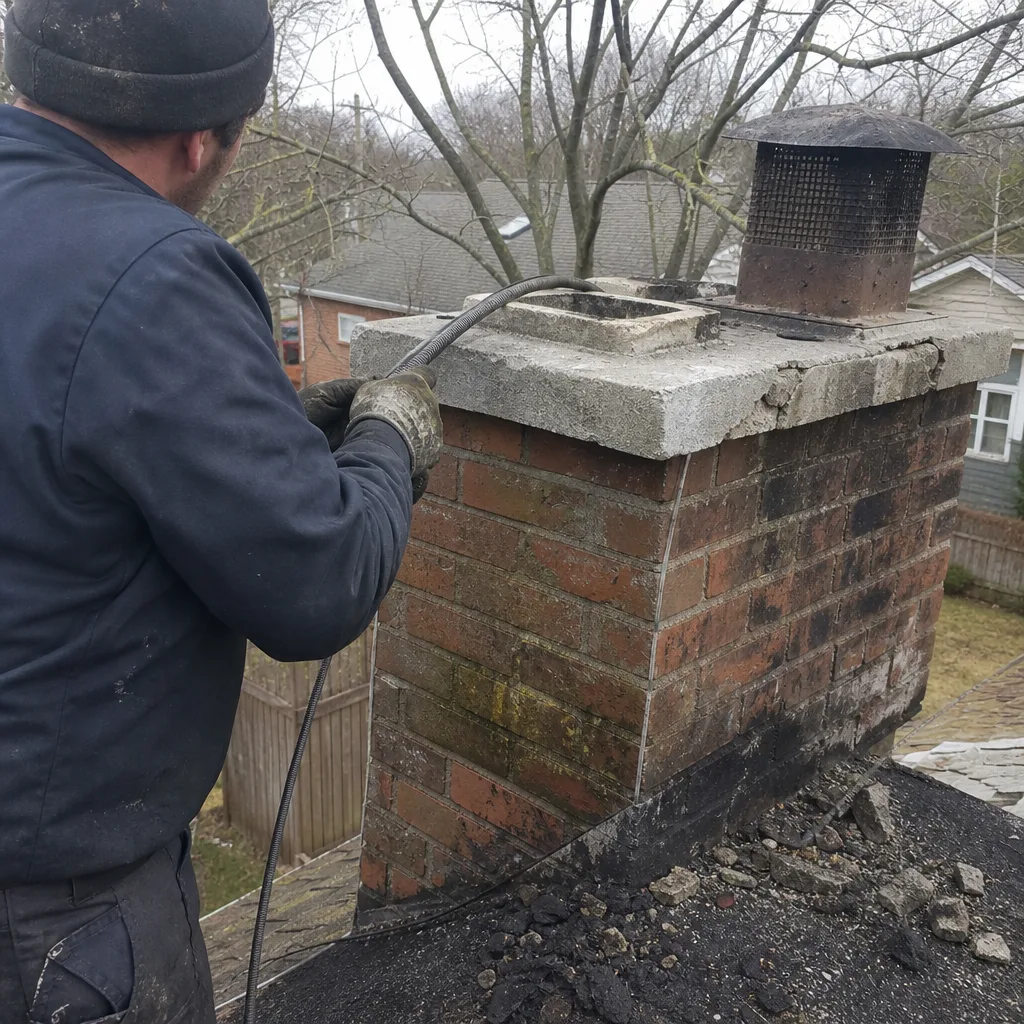
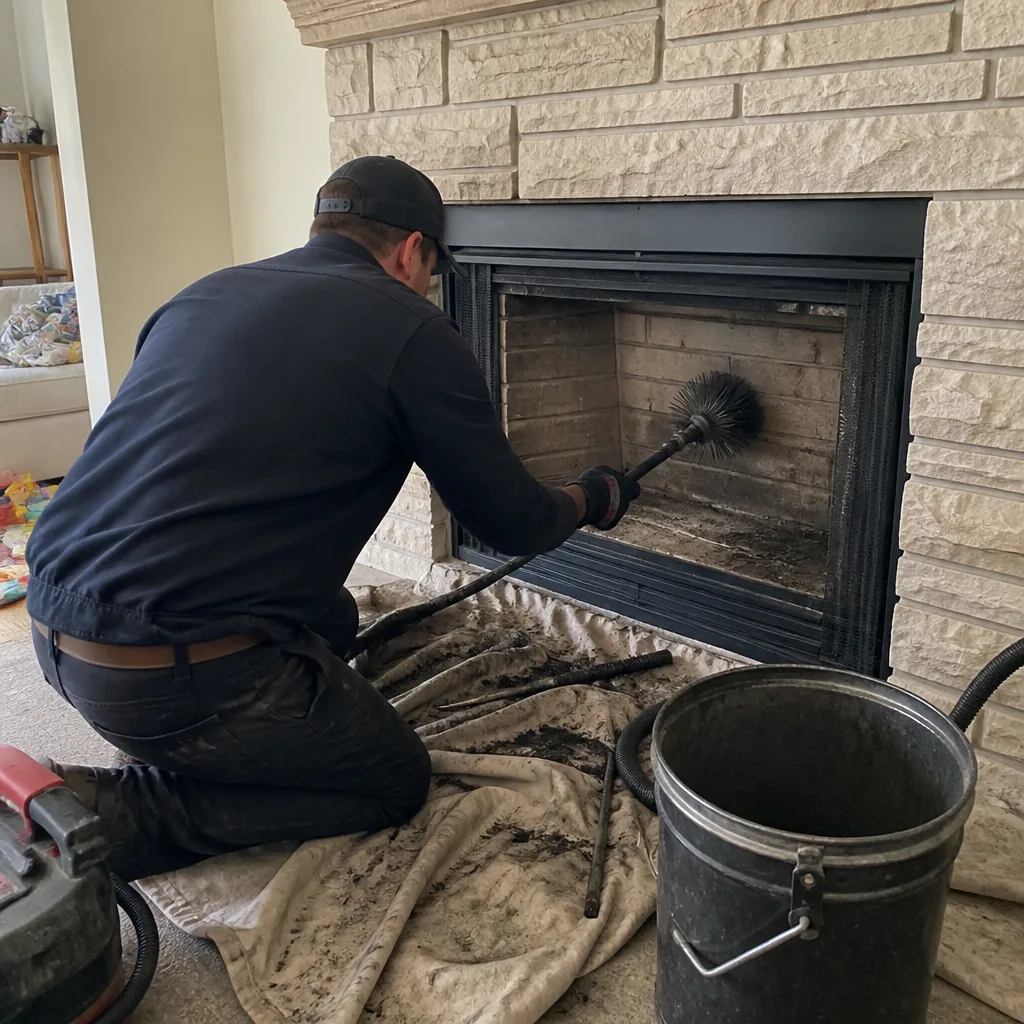
Here’s what we mean. When our technician runs a Chimney Cleaning & Sweep in Naperville, the brush and rods scour the flue liner surface. If that liner has cracked clay tiles, deteriorating mortar joints, or a partial collapse, the cleaning action can mask those defects or even worsen them. The camera scan - NFPA 211 Level 2, clause 4 of the Haven Standard - must happen first so the homeowner sees the actual condition before any mechanical action.
In Naperville specifically, fall inspections often reveal Class III creosote (glazed, tar-like, and highly combustible) in homes that burn primarily oak or hickory from local suppliers. This creosote type cannot be removed with standard brushing. It requires a chemical treatment cycle, then a return visit. If we cleaned first without looking, we’d leave the hazard in place and the homeowner would never know.
The correct fall sequence is:
- Camera scan of the full flue, smoke chamber, and firebox
- Written scope and price for any needed work, delivered before the technician leaves the roof
- Cleaning performed only after the homeowner approves the documented findings
- Photo record of completed work, archived under Haven Standard Clause 4
Fall timing in Naperville should target mid-September to mid-October, before the first sustained burn. Homes in older neighborhoods like East Highlands or Near North often have unlined brick chimneys that were grandfathered under prior codes; these require particular attention to mortar joint condition, which camera inspection reveals clearly.
Typical fall costs: $250-$350 for Level 2 inspection with camera scan and sweep; $180-$280 additional if chemical creosote treatment is needed. For a detailed breakdown, see our Chimney Cleaning Cost Breakdown: The Naperville Homeowner’s Reference for 2026.
Winter: Backdrafting, Stack Effect, and Gas Fireplace Risks
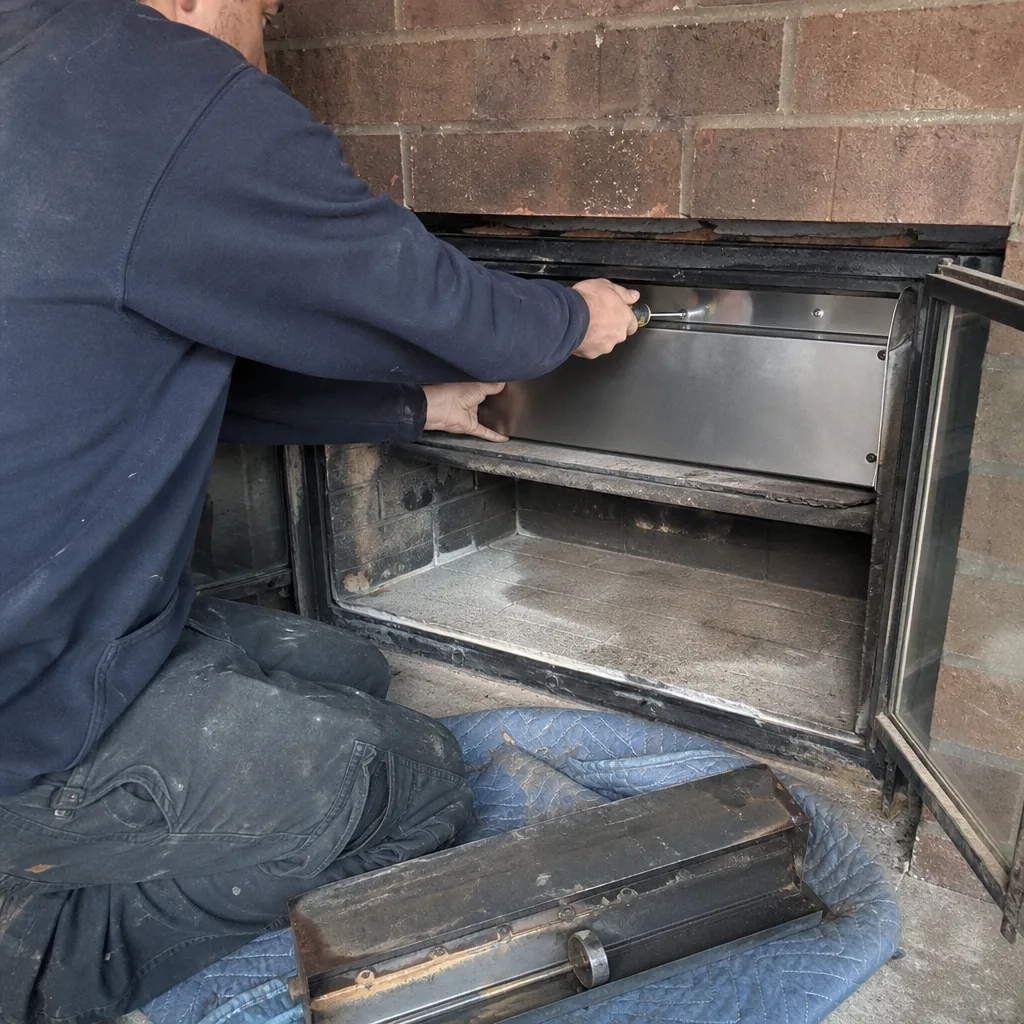
Winter in Naperville brings the most dangerous chimney failure mode, and it rarely announces itself with smoke in the room. Backdrafting - exhaust gases spilling into the living space instead of rising through the flue - is often invisible, odorless, and particularly insidious with natural gas and propane appliances.
The physics are specific to cold climates. In a well-insulated Naperville home built after 2010, the stack effect is exaggerated: warm interior air rises and escapes through upper-level gaps, creating negative pressure at the basement and first floor. The fireplace or furnace, which needs a slight positive draw to function, competes with that negative pressure. When the pressure differential wins, combustion gases spill backward.
Signs of winter backdrafting in Naperville homes include:
- Condensation on interior windows near the fireplace, especially on calm, very cold days
- Soot or scorch marks on the fireplace face, even with “clean” gas fuel
- Headaches, nausea, or fatigue that resolve when you leave the house - carbon monoxide exposure often presents this way
- Pilot light outages in direct-vent gas inserts, particularly in homes with spray-foam insulation and tight construction
Gas fireplaces are especially vulnerable because homeowners assume they’re maintenance-free. The reality: gas produces water vapor as a primary combustion byproduct, and in a cold flue, that vapor condenses into acidic moisture that degrades stainless steel liners. In Naperville’s sub-zero January weeks, we’ve seen 5-year-old DuraFlex liners with pinhole corrosion that would have lasted 20 years in a warmer climate.
Winter monitoring should include a combustion analyzer reading at the appliance and a draft-pressure test at the flue. These are not homeowner tasks. The equipment costs several thousand dollars, and interpreting the readings requires training. But you can and should request these specific tests by name when booking service.
If you suspect backdrafting, stop using the appliance and call for inspection. Carbon monoxide detectors are required by Illinois law, but they’re a last line of defense, not a substitute for proper draft.
Spring: Reading the Damage After Freeze-Thaw Cycles
March and April in Naperville deliver the most destructive weather pattern for masonry chimneys: temperatures cycling above and below freezing while precipitation is frequent. Water enters hairline cracks in the crown or mortar joints, expands when it freezes, and widens those cracks. By the third or fourth cycle, a crack that was 1/32 inch is 1/8 inch, and water is entering the chimney structure itself.
This is where many homeowners make a costly error. They look up at the chimney in April, see nothing alarming from the ground, and assume the structure survived winter intact. Most freeze-thaw damage is not visible from the yard.
Owner-observable spring indicators include:
- Efflorescence - white, powdery mineral deposits on the exterior brick, indicating water is moving through the masonry and depositing salts as it evaporates
- Spalling - flaking or popping of brick faces, often visible as debris on the roof or ground near the chimney base
- Mortar joint recession - the mortar between bricks has eroded to a depth you can catch with a fingernail
Camera-only findings, which require a Level 2 inspection, include:
- Interior liner cracks that opened during thermal stress
- Crown delamination - separation of the concrete crown into layers, invisible from below but clear on close inspection
- Smoke chamber deterioration behind the damper, where freeze-thaw moisture has degraded parging (the smooth mortar coating)
In Naperville neighborhoods with heavy clay soils, like those south of 75th Street, we’ve also seen foundation settling translate to chimney lean or separation from the house. Spring is the right time to document this, before summer humidity masks the progression.
Spring assessment costs: $250-$350 for inspection with camera documentation. If damage is found, crown sealing runs $450-$850, tuckpointing (grinding and replacing deteriorated mortar) is $800-$2,400 depending on chimney height, and partial rebuilds start around $1,800. Review our Chimney Cleaning Permits, Codes & Inspections in IL: What You Need to Know before scheduling major repairs.
Summer: Cap and Crown Work in Dry Weather

July and August in Naperville are the right months for cap and crown service, and this timing is counterintuitive to many homeowners. The instinct is to address water problems when it’s raining. The better approach is to seal and protect when the masonry is dry and temperatures are stable.
The crown is the concrete slab that tops the chimney, sloped to shed water. In Naperville, crowns are typically poured with a 2-inch overhang past the brick face. When that crown cracks or the slope degrades, water enters the chimney structure. The cap is the metal cover above the flue termination; it keeps rain, animals, and debris out while allowing exhaust to escape.
Summer inspection should evaluate:
- Crown integrity - tap with a hammer; a solid crown rings, a delaminated one thuds
- Cap fit and screen condition - mesh should be 3/4 inch to stop animals without clogging with creosote
- Flashing seal at the roofline - the metal transition where chimney meets roof is a common leak point
- Cricket condition on chimneys wider than 30 inches - the peaked diversion structure that prevents water pooling on the uphill side
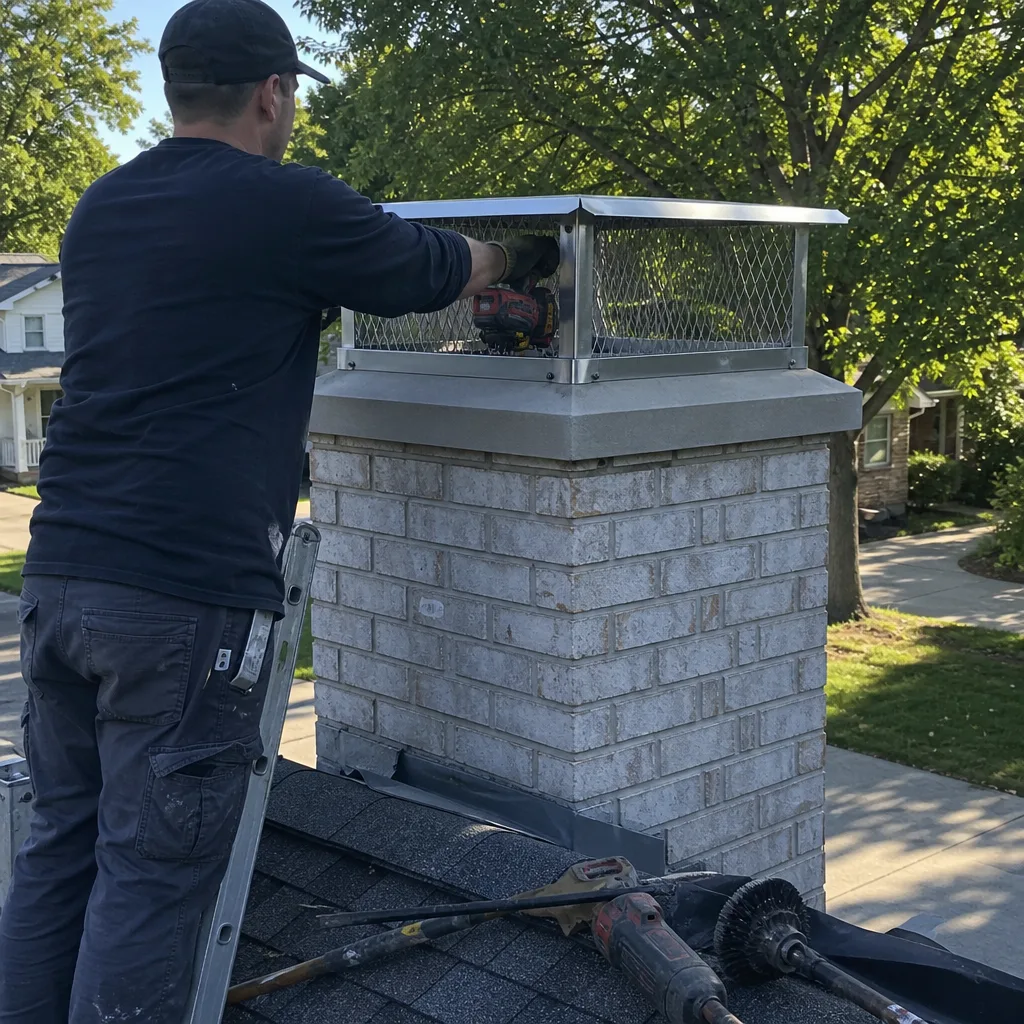
Summer is also when we install chimney caps from Famco and Copperfield, sourced through Haven’s buying network. A properly fitted cap with a lifetime warranty costs $250-$450 installed. Crown sealing with a flexible, breathable sealant runs $450-$850. Full crown replacement, when delamination is advanced, is $1,800-$3,200.
The dry-month advantage is concrete: sealants cure properly, mortar sets without rain interruption, and the technician can work safely on a roof that isn’t slick. A cap installed in August prevents the October-November rains from entering a flue that will sit dormant until the first fire.
What Seasonal Chimney Care Costs in Naperville
Homeowners in Naperville should budget for chimney maintenance as an annual line item, not an emergency fund. The difference between proactive and reactive spending is roughly 4:1 in our experience across 38,000 jobs.
| Service | Typical Range | Season | Reactive Cost if Skipped |
|---|---|---|---|
| Level 2 inspection with camera scan | $250-$350 | Fall | Hidden liner failure: $2,500-$5,500 |
| Chimney sweep and cleaning | $180-$280 | Fall | Chimney fire damage: $3,000-$12,000 |
| Chemical creosote treatment | $180-$280 | Fall (as needed) | Class III creosote fire: $5,000+ |
| Combustion analysis & draft test | $150-$250 | Winter | CO exposure / liner replacement: $2,000-$4,500 |
| Spring masonry assessment | $250-$350 | Spring | Structural rebuild: $4,000-$15,000 |
| Crown sealing | $450-$850 | Summer | Crown replacement + water damage: $2,500-$6,500 |
| Chimney cap installation | $250-$450 | Summer | Water-damaged flue liner: $2,500-$5,500 |
| Tuckpointing (per chimney) | $800-$2,400 | Spring/Summer | Partial or full rebuild: $3,500-$12,000 |
Annual proactive budget for a typical Naperville home with one wood-burning fireplace: $430-$780. Annual reactive cost if maintenance is deferred until failure: $2,500-$6,500 in a typical year, with catastrophic fire or collapse scenarios exceeding $15,000.
Every estimate from Level Two Chimney Naperville home is delivered in writing before work begins, with scope, price, and warranty documented. Haven Standard Clause 1 requires this; we do not deviate.
Building Your Annual Maintenance Calendar
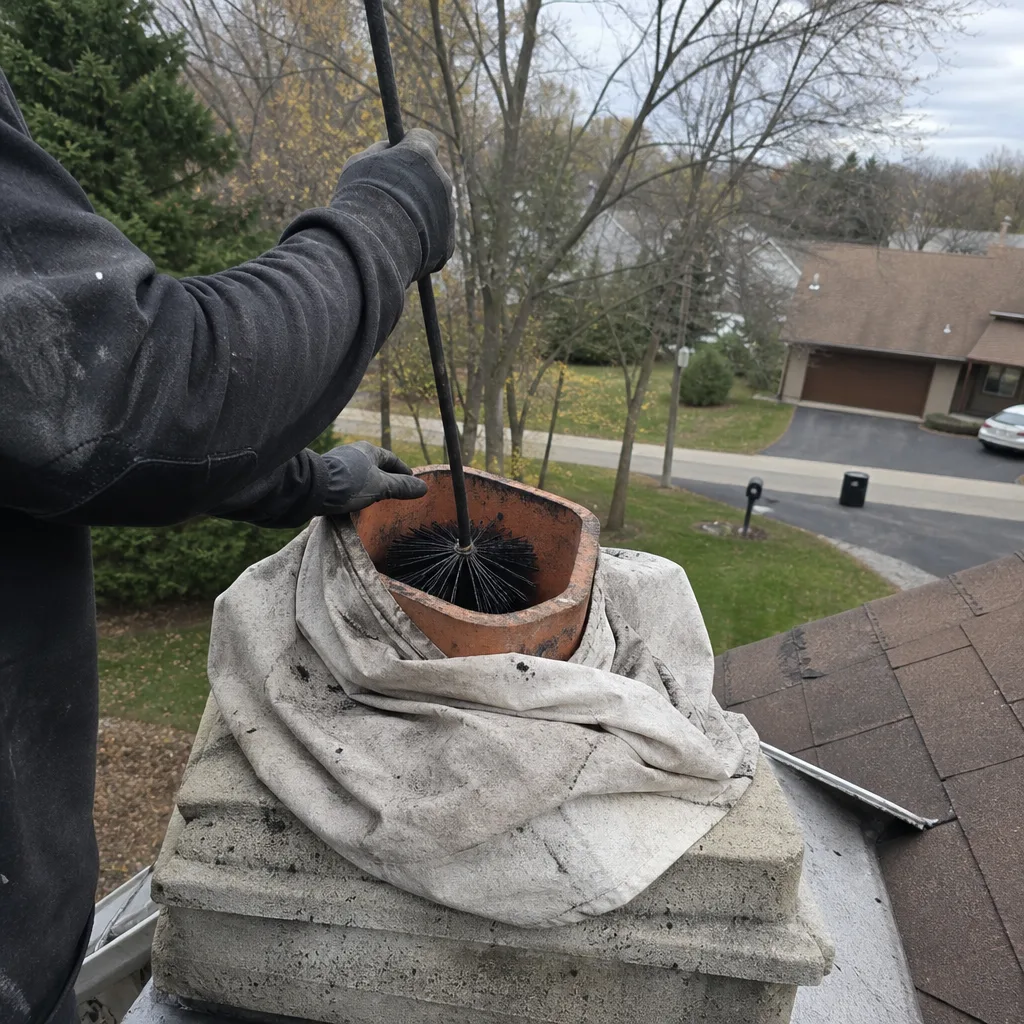
The homeowner who avoids surprises runs a calendar, not a crisis response. Here’s the schedule we’ve refined across 15 years of Naperville service calls, organized by what the weather is doing to your chimney. Use our Chimney Cleaning & Sweep Maintenance Checklist for Naperville Homeowners to track each task.
September 1-15: Schedule fall inspection
Book early. The third week of September fills first. Request a Level 2 inspection with camera scan - not a “safety check” or “visual inspection.” Specify that you want the photo record included, per Haven Standard Clause 4.
September 15-October 15: Complete inspection and cleaning
If Class III creosote is found, schedule the chemical treatment immediately. This requires a 5-7 day dwell time before mechanical removal. Do not delay into burning season.
November 1: First fire, with fresh batteries in CO detectors
Illinois law requires carbon monoxide detectors within 15 feet of sleeping areas. Test them. If you have a gas fireplace, note any unusual odors, moisture on windows, or pilot instability.
January: Mid-winter combustion check (gas appliances)
Particularly for homes built 2015-2025 with tight envelopes. A combustion analyzer reading takes 20 minutes and confirms your appliance is exhausting properly.
March 15-April 15: Post-winter masonry assessment
Walk the exterior. Look for efflorescence, spalling, and mortar recession. Schedule camera inspection if anything concerns you, or if your chimney is 25+ years old.
May-June: Schedule summer cap/crown work
Book after the spring assessment results. Crown sealing and cap installation require dry conditions and moderate temperatures.
July-August: Complete preventive work
Finish before September demand surges. Your chimney enters fall protected, documented, and ready for inspection to focus on combustion byproducts rather than structural surprises.
Common Mistakes to Avoid
- Cleaning before inspecting. The brush destroys the evidence of liner condition, creosote classification, and accumulation patterns. Always camera-scan first.
- Assuming gas fireplaces need no service. Gas produces acidic condensate that corrodes liners, and backdrafting in tight Naperville homes is a documented hazard. Annual inspection applies to all fuel types.
- Ignoring efflorescence as “just cosmetic.” Those white deposits mean water is actively migrating through your masonry. The underlying cause - failed crown, bad flashing, or porous brick - will worsen until addressed.
- Booking only when the fireplace smells. Odor indicates creosote saturation or animal intrusion, both of which are advanced stages of problems that were preventable months earlier.
- Accepting verbal estimates. A price given over the phone or on the truck tailgate cannot be held to scope. Haven Standard Clause 1 requires written price, written scope, written warranty before any work starts.
- Skipping summer maintenance because “we don’t use it then.” The off-season is when structural work is most effective and scheduling is most flexible. Waiting for fall puts you in the emergency queue.
- Hiring based on lowest price without documentation standards. A $99 sweep with no camera, no photo record, and no written warranty leaves you with a clean flue and no knowledge of what’s actually wrong.
When to Call a Professional
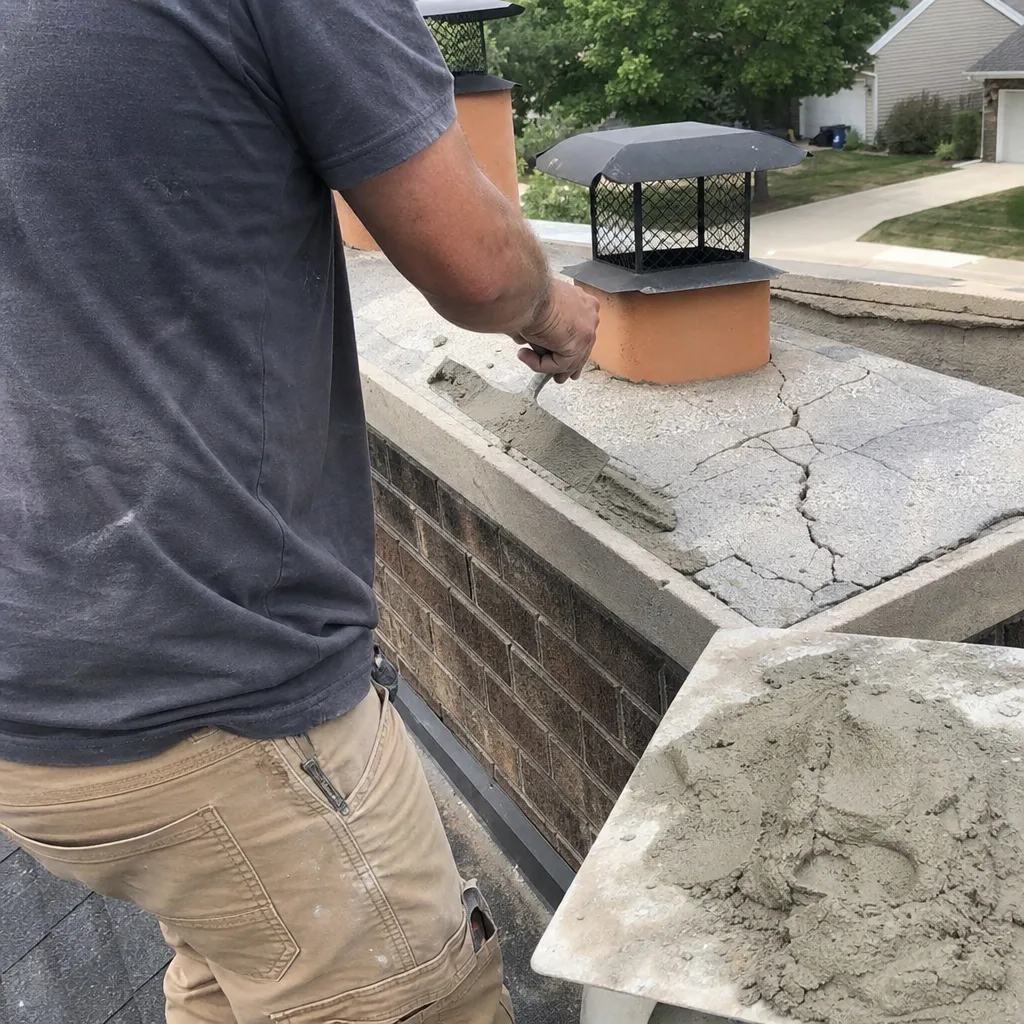
Call for inspection before the situation becomes urgent. Specific triggers: visible spalling or mortar loss on the chimney exterior; any smoke or odor in the living space during fireplace operation; a CO detector alarm, even if it seems like a false trigger; water stains on the ceiling near the chimney; or if it’s been more than 12 months since your last Level 2 camera inspection.
Level Two Chimney Naperville offers free estimates in Naperville - call (331) 265-1700. Every estimate includes a written scope and price before any work begins, backed by our 365-Day Done Right Promise. If you have a competitor’s written quote, we provide a free second opinion with no obligation.
Frequently Asked Questions
A professional chimney sweep with Level 2 camera inspection in Naperville typically costs $250-$450, depending on chimney height, accessibility, and creosote condition. Chemical treatment for glazed creosote adds $180-$280. Call (331) 265-1700 for an exact quote - estimates are free.
The NFPA 211 standard calls for annual inspection of all chimneys, and cleaning as needed based on creosote accumulation. In practice, most Naperville wood-burning fireplaces need annual sweeping; gas fireplaces need annual inspection with cleaning every 2-3 years depending on condensate buildup. Heavy use of oak or hickory, common in this area, accelerates creosote formation.
You need a new liner when the existing one is cracked, perforated, or improperly sized for the appliance - and only a camera inspection can confirm this. We do not recommend liner replacement without photo evidence you can see yourself. Some conditions can be monitored annually; others require immediate action due to fire or CO risk. A written second opinion is always available if another company has recommended replacement.
Deferred maintenance leads to three predictable outcomes: creosote accumulation increases chimney fire risk; moisture intrusion degrades masonry until rebuild is required; and gas appliance backdrafting creates carbon monoxide exposure. In Naperville’s freeze-thaw climate, a $450 crown seal skipped in summer becomes a $3,200 crown replacement plus interior water damage within three years. Call (331) 265-1700 for an exact quote - estimates are free.
“Clean-burning” refers to visible soot, not exhaust safety. Gas combustion produces water vapor, carbon monoxide, and nitrogen oxides. In cold flues, water vapor condenses into corrosive liquid that degrades stainless steel liners. Additionally, Naperville’s tight new homes are prone to negative pressure backdrafting, which spills exhaust into living spaces. Annual combustion analysis confirms safe operation.
A Level 1 inspection is a visual examination of readily accessible portions of the chimney - what can be seen without tools or damage to building finishes. A Level 2 inspection, required for real estate transactions and after any chimney fire or weather event, includes video camera scan of the full flue interior, inspection of accessible attics and crawl spaces, and documentation of all findings. Level Two Chimney Naperville performs Level 2 as our default on every visit; we do not offer lesser inspections.
The Bottom Line
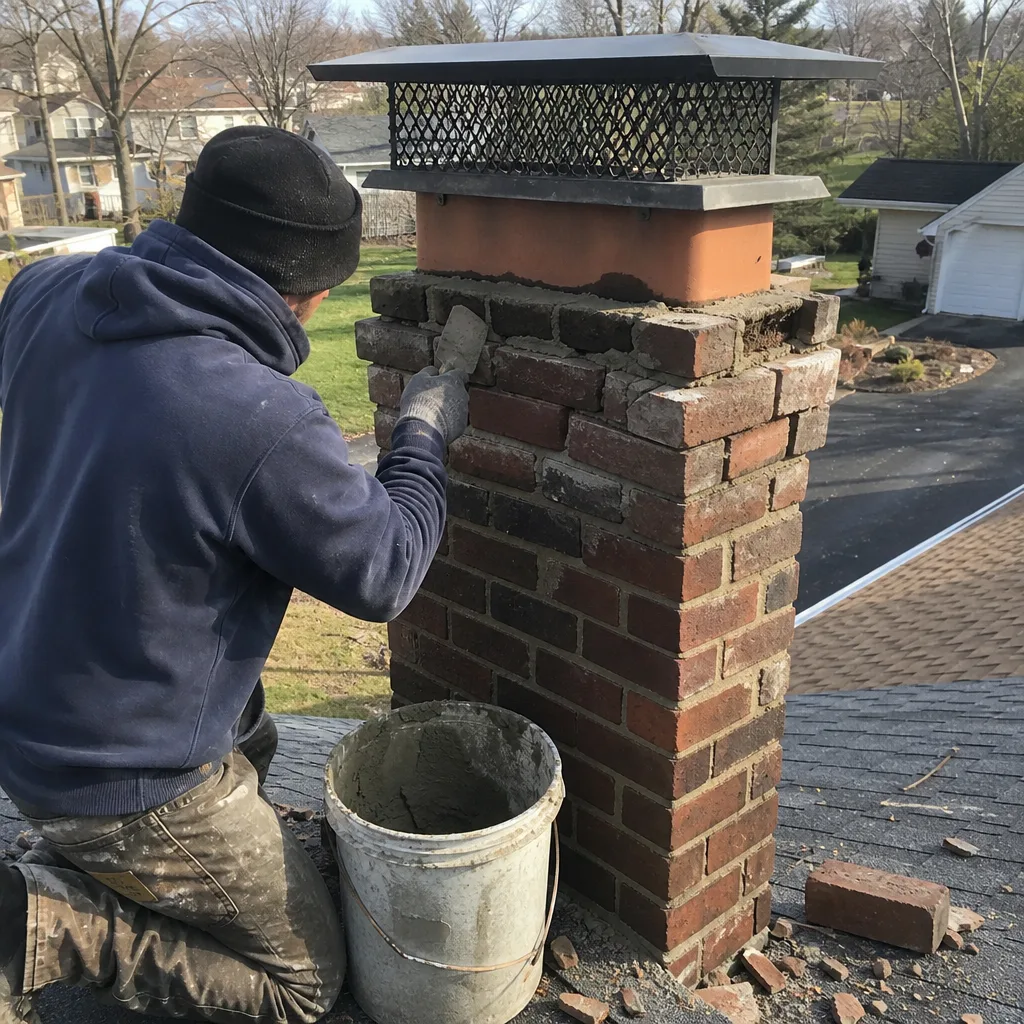
Naperville’s four-season climate creates four distinct chimney failure modes, each preventable with timed, documented maintenance. The camera-first fall inspection, winter combustion monitoring, spring masonry assessment, and summer cap and crown sealing form a complete annual cycle. Budget $430-$780 annually for proactive care, or face $2,500-$6,500 when deferred maintenance compounds into structural repair. The documentation standard matters as much as the timing: written price before work, photo record after, and a warranty you can enforce. That’s been Haven Standard practice since 2009.
Written by Corrine Halstead, Owner at Level Two Chimney Naperville, serving Naperville since 2009.