
Last updated September 22, 2026
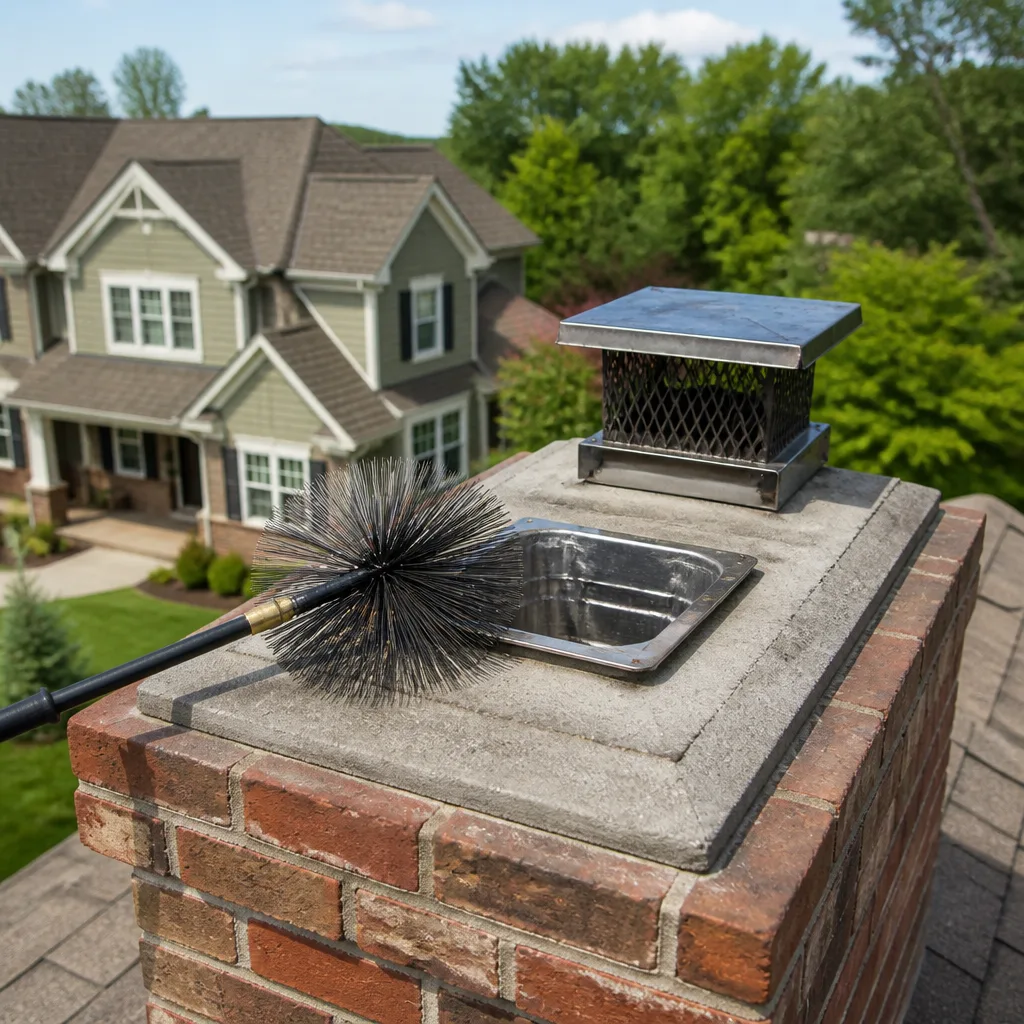
Level 1 sweep and inspection to the NFPA 211 annual standard - flue, crown, cap, and flashing checked and photographed
Chimney sweep logs do not sweep chimneys. They loosen some creosote - which then falls where a brush and vacuum still have to collect it.
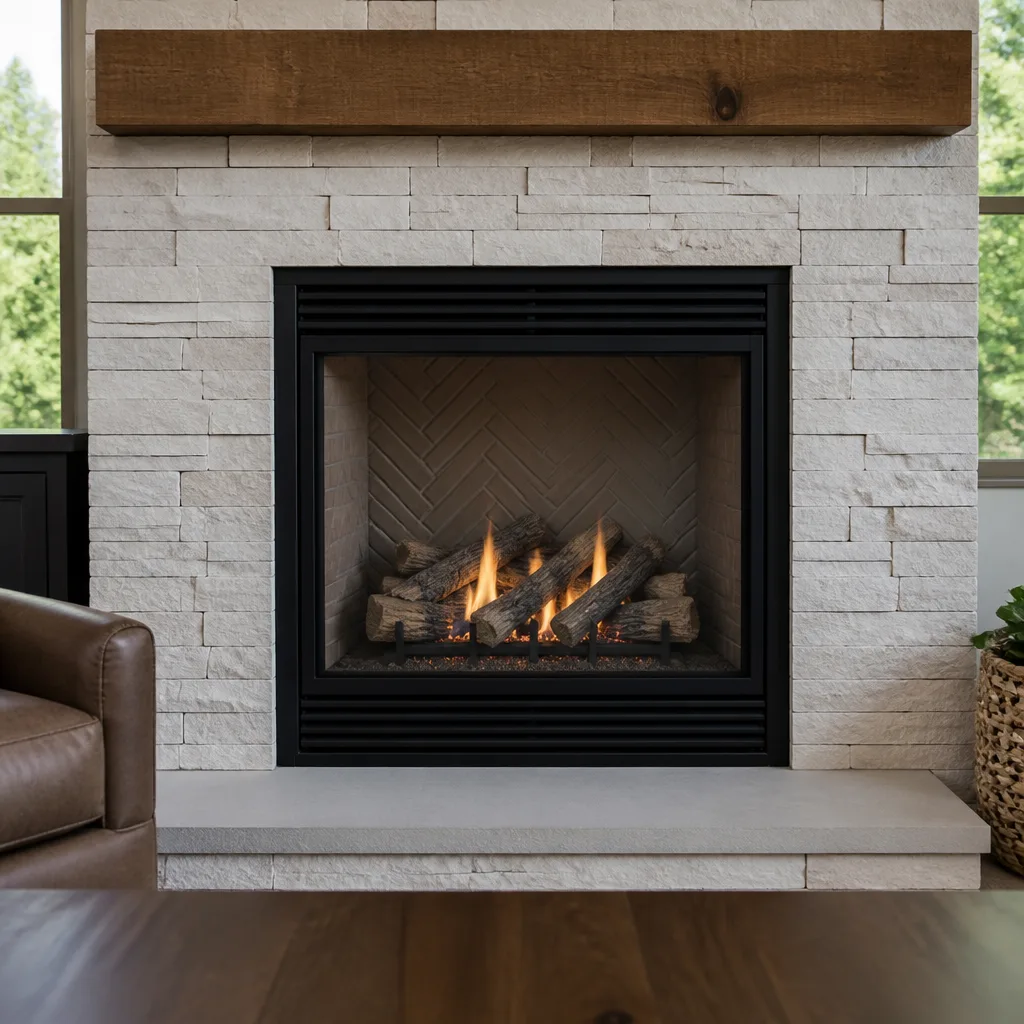
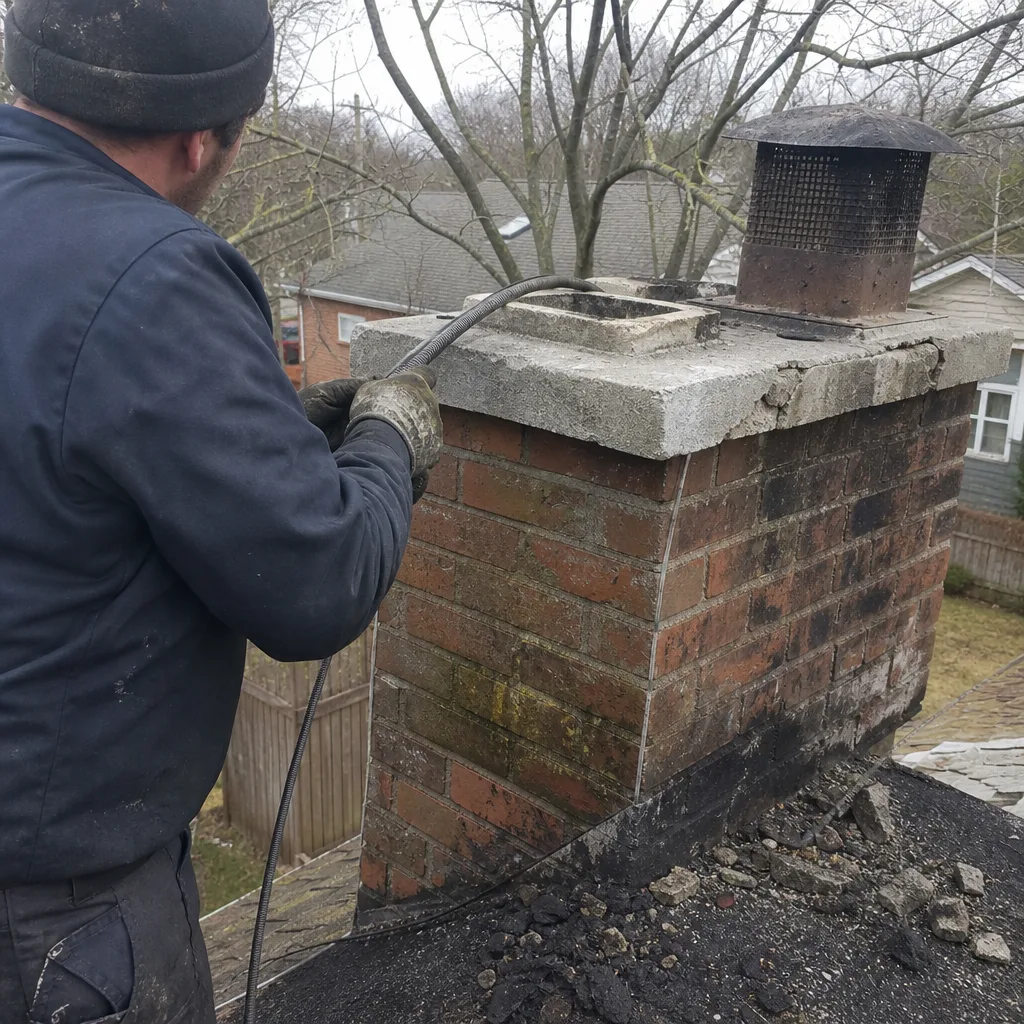 Before
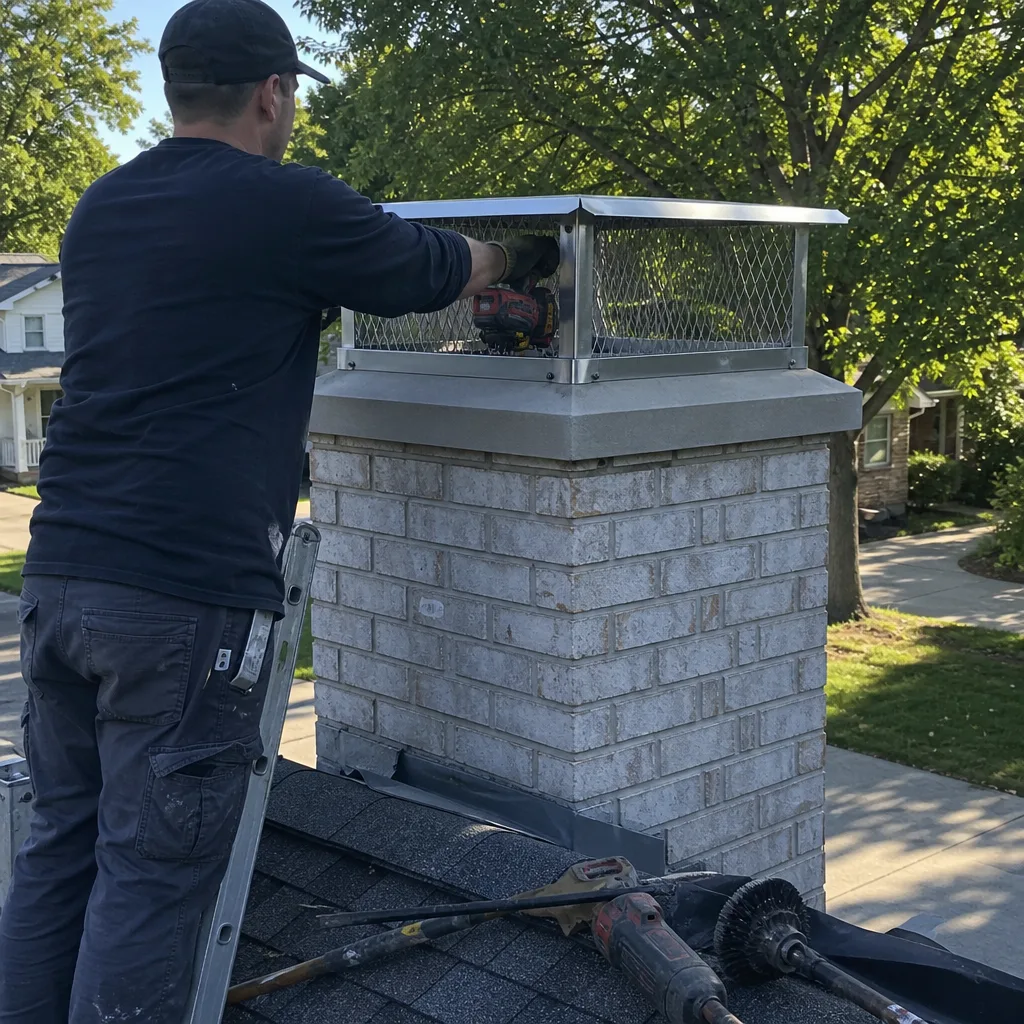 After
After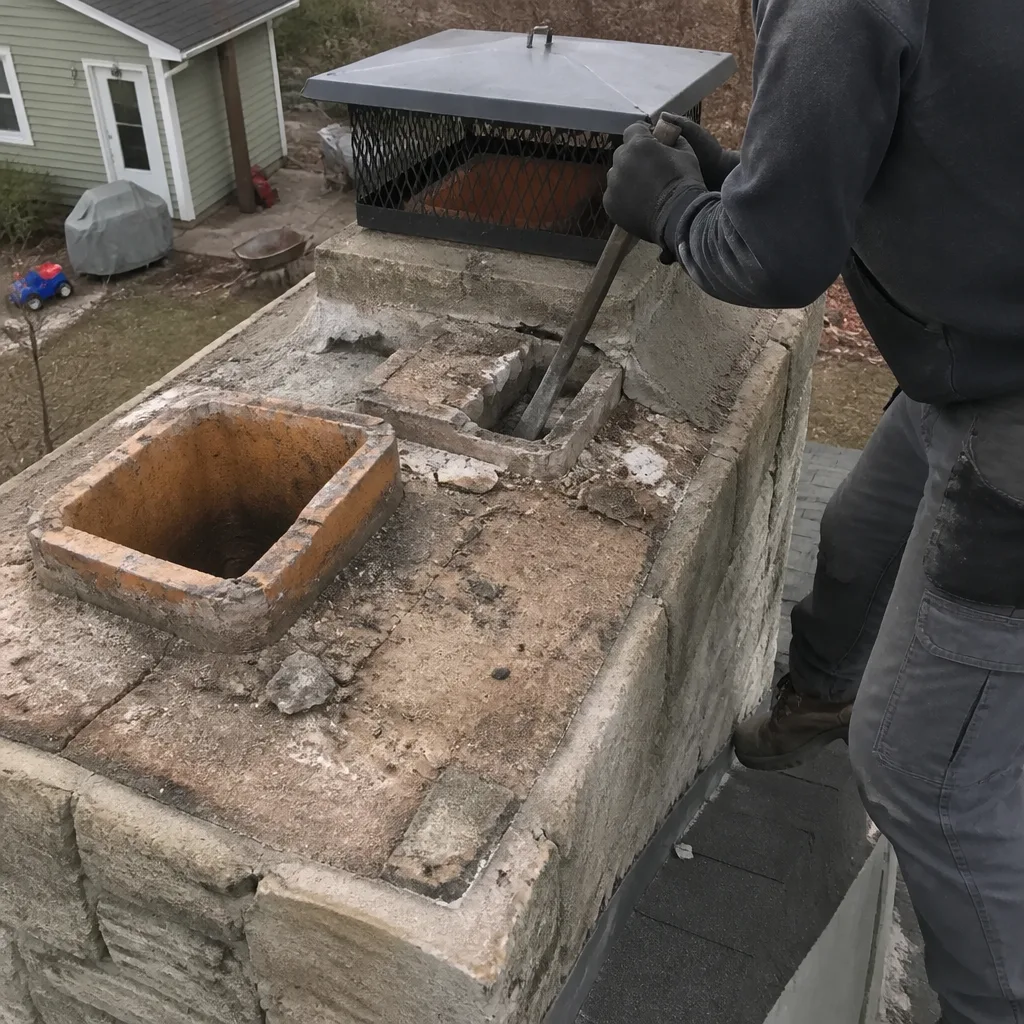 Before
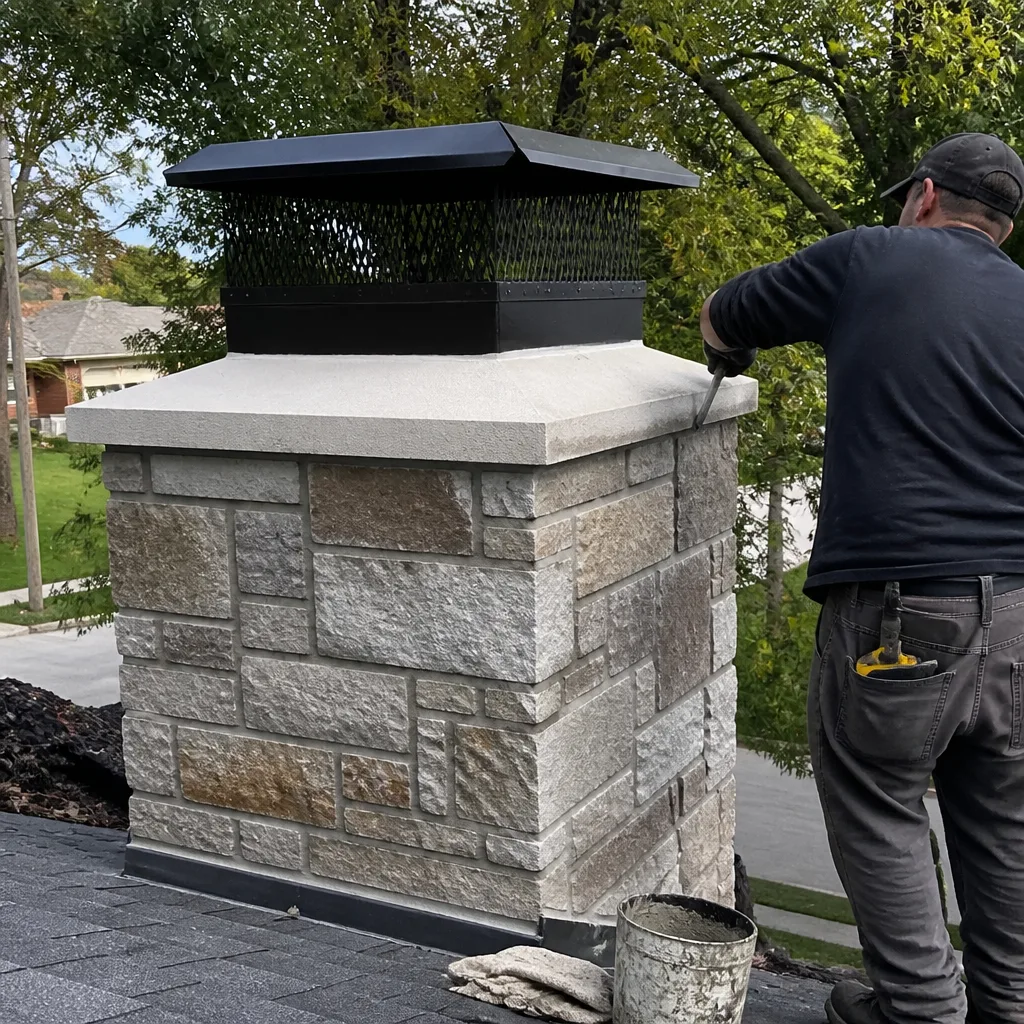 After
After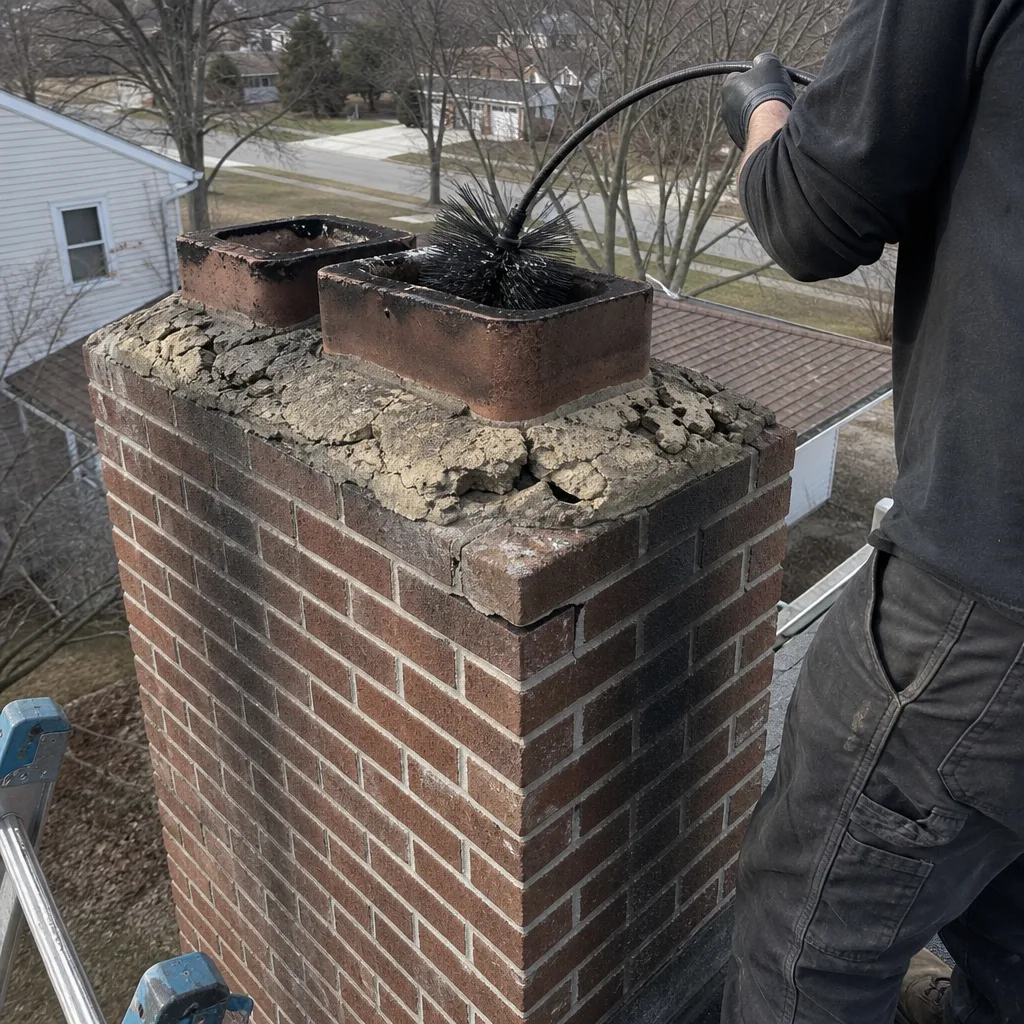 Before
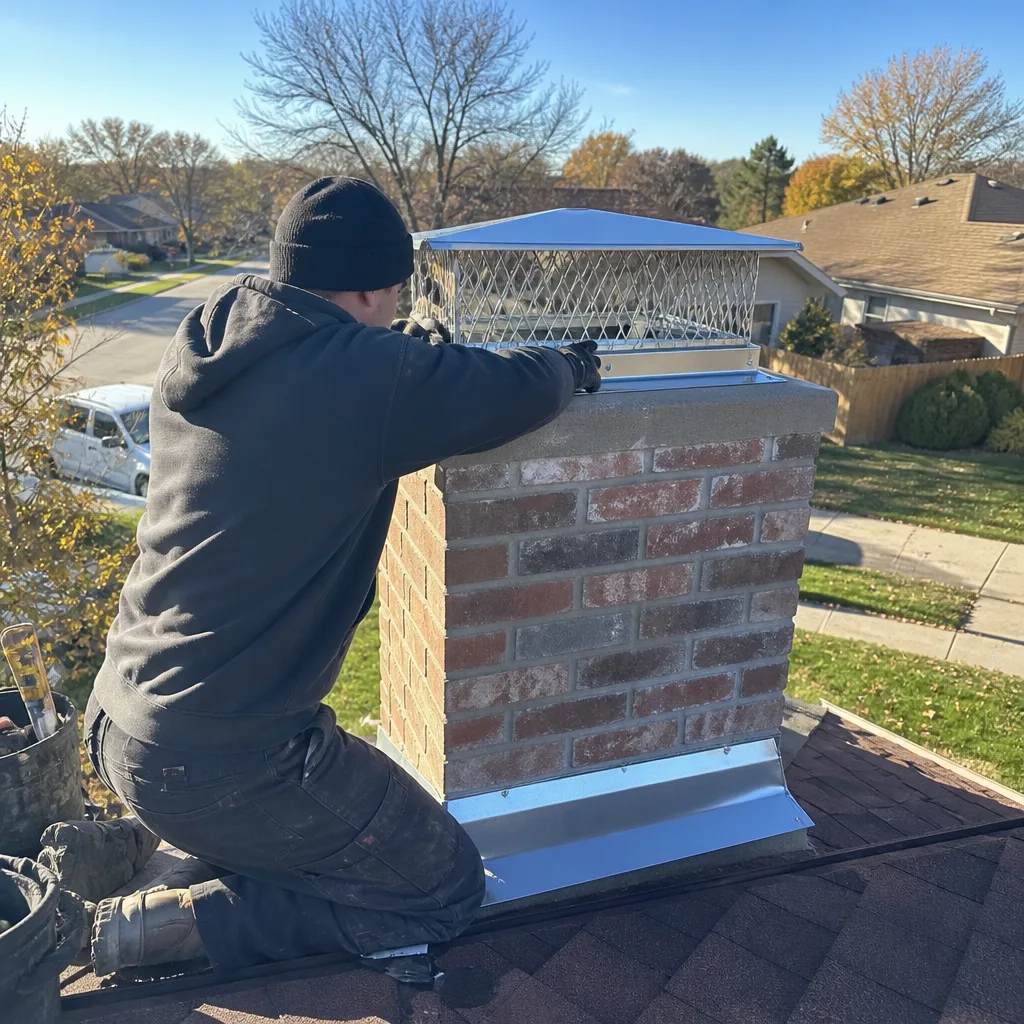 After
AfterChimney Cleaning Warning Signs: A Naperville Homeowner’s Reference Guide
A white stain on the exterior brick and a dark stain on the interior firebox wall look nothing alike, but both signal the same underlying problem: water is moving through your masonry system. Confusing one for cosmetic and the other for serious delays a repair that’s getting more expensive by the month. In Naperville, where freeze-thaw cycles run from late October through April, that delay often turns a $400 crown seal into a $3,000 rebuild. This guide maps specific observable indicators to specific failure modes, so you can accurately describe what you’re seeing before the technician arrives. For how to hire a chimney cleaning contractor in Naperville, see our step-by-step companion guide.
Quick Answer
Chimney warning signs fall into five locations: exterior masonry (efflorescence, spalling, missing mortar), firebox interior (cracked bricks, shifted panels, rust stains), smoke chamber (soot buildup above the damper), flue liner (requires camera inspection), and roofline (damaged cap, deteriorated crown, missing flashing). Most visible signs indicate water intrusion or venting failure; odor changes signal creosote accumulation, animal intrusion, or moisture problems. In Naperville’s climate, exterior masonry damage worsens measurably each winter.
Table of Contents
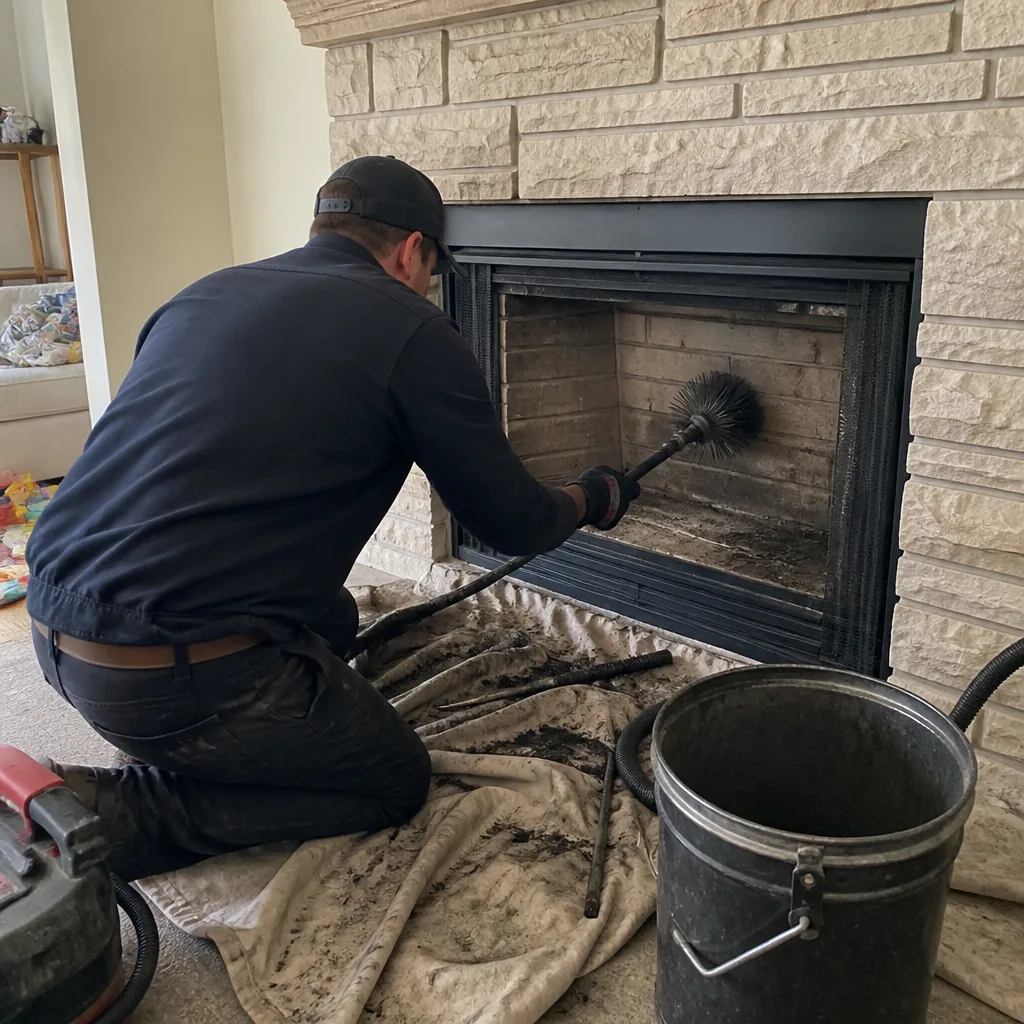
- Exterior Masonry Warning Signs
- Firebox Interior Warning Signs
- Smoke Chamber and Damper Problems
- Flue Liner: The False Clear Problem
- Roofline, Cap, and Crown Failures
- Gas Fireplace Warning Signs
- Odor-Based Warning Signs
- Common Mistakes to Avoid
- When to Call a Professional
- Frequently Asked Questions
 Before
 After
AfterExterior Masonry Warning Signs
Naperville’s clay-heavy soils and freeze-thaw cycles punish masonry differently than warmer climates. Here’s what to look for on the outside of your chimney, what each sign means, and how urgent it is.
Efflorescence (White Powdery Stains)
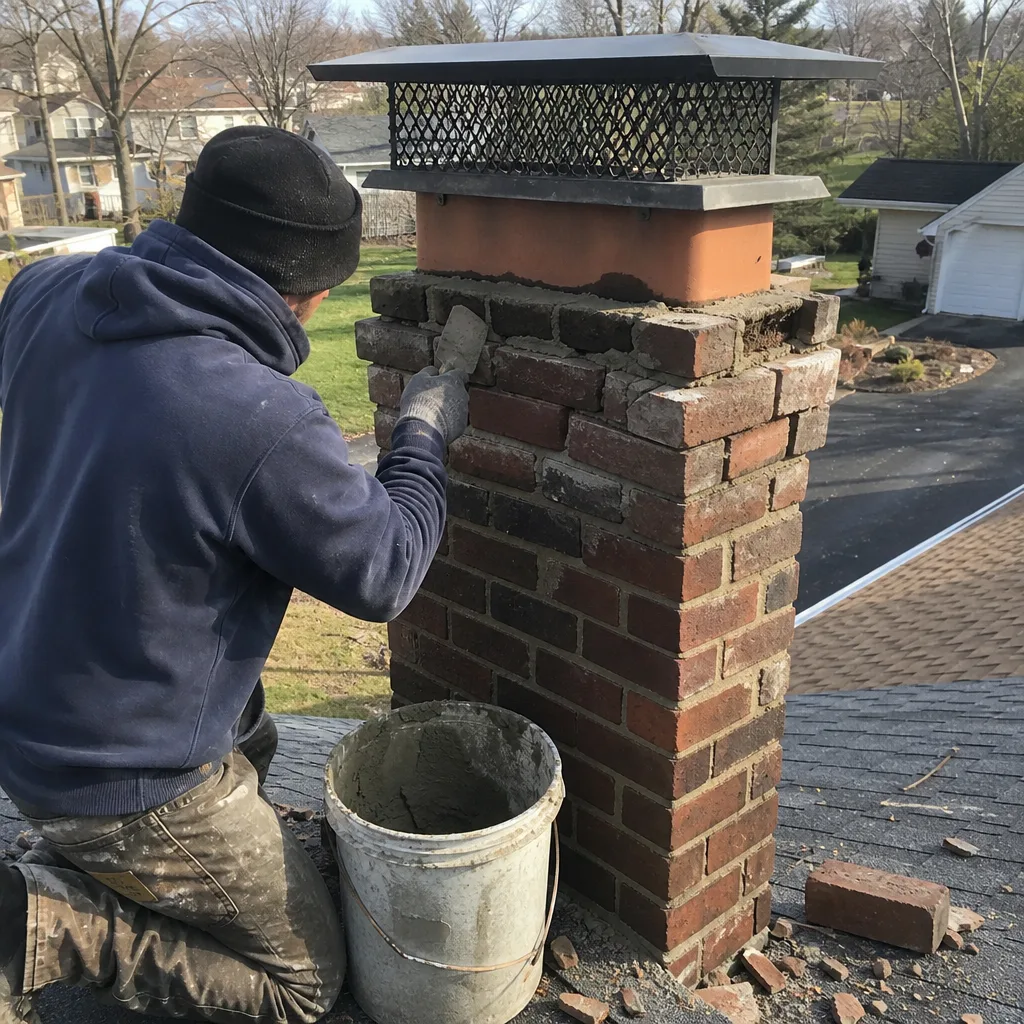
White, chalky deposits on brick faces mean water is moving through the masonry, dissolving salts, and depositing them on the surface as it evaporates. This is not cosmetic. It’s the first visible stage of water intrusion, and in Naperville’s winters, that water freezes, expands, and begins breaking the brick from within. We’ve documented efflorescence on chimneys in the Cress Creek and Hobson West neighborhoods that progressed to spalling within 18 months.
Urgency tier: Schedule inspection within 60 days. The underlying water source (failed crown, deteriorated mortar joints, or missing cap) is usually repairable at this stage.
Spalling (Flaking or Chipping Brick Faces)
Spalling occurs when water trapped inside brick freezes and forces the face off in layers. You’ll see pitted surfaces, missing chunks, or brick faces that look like they’ve peeled. Once spalling starts, the brick loses its protective skin and absorbs water faster. In Naperville, we’ve replaced entire courses of spalled brick on chimneys in the East Highlands and River Woods areas where homeowners waited two seasons after first noticing flaking.
Urgency tier: Stop using the fireplace and schedule repair. Spalled brick compromises structural integrity and accelerates interior water damage.
Missing or Receding Mortar Joints
mortar joints that have eroded to the depth of a pencil eraser or deeper need repointing. In Naperville’s older stock, particularly homes built 1965-1985 in the Maplebrook and Naper Carriage Hill subdivisions, we’ve found original lime mortar that’s turned to sand. Open joints channel water directly into the wall cavity.
Urgency tier: Schedule within 60 days. Open joints are an entry point for water and an exit point for combustion gases.
Leaning or Separated Chimney
A chimney pulling away from the house wall indicates foundation settlement, deteriorated footing, or corroded support structure. This is not a sweep issue. It’s a structural safety issue. Naperville’s expansive clay soils shift seasonally, and chimneys built without proper footings below frost line are vulnerable.
Urgency tier: Stop using immediately. Call a structural engineer or qualified mason.
Firebox Interior Warning Signs

The firebox is where you can see the most without tools. These signs are visible during normal use or with a flashlight during cleaning.
Cracked or Shifting Firebrick
Firebrick cracks from thermal shock, improper fuel (burning painted wood or construction debris), or long-term overheating. A single hairline crack in one brick is monitorable. Multiple cracks, shifted bricks, or gaps where mortar has fallen out expose the surrounding structure to direct flame and heat. In Naperville, we see accelerated firebrick failure in homes where homeowners burn firewood stored indoors at room temperature, then toss it into a hot fire, creating rapid temperature swings.
Urgency tier: Cracks through multiple bricks or any shifted unit: stop using and schedule repair. Single hairline crack: schedule inspection within 60 days.
Rust Stains on Firebox Walls or Floor
Rust indicates water is entering from above and running down the flue, carrying iron oxide from the damper frame or other metal components. The water source is almost always a failed crown, cap, or flashing. In Naperville, we’ve traced rust stains to deteriorated chimney crowns on homes in the Ashbury and Tall Grass subdivisions where the original concrete crown cracked within 10 years of construction.
Urgency tier: Schedule inspection within 60 days. Rust means ongoing water intrusion that will eventually reach structural components.
Smoke Stains Above the Fireplace Opening
Dark staining on the mantel, surround, or wall above the opening indicates smoke spillage into the room. Causes include blocked flue, improper damper operation, negative pressure in the house, or a smoke chamber that’s too small for the fireplace opening. In newer Naperville homes with tight envelopes and exhaust fans, we’ve diagnosed smoke spillage caused by makeup air deficiency, not flue blockage.
Urgency tier: Stop using until cause is identified. Smoke spillage deposits combustible creosote on interior surfaces and indicates venting failure.
Deteriorated Mortar Between Firebricks
Refractory mortar in the firebox is formulated to withstand direct flame. When it crumbles, the joints become gaps that let heat reach the surrounding structure. Check by running a screwdriver along the joints. If mortar falls out in grains or powder, it’s degraded.
Urgency tier: Schedule repair within 60 days. Degraded firebox mortar is a fire hazard.
Smoke Chamber and Damper Problems
The smoke chamber is the area above the damper and below the flue liner. You can see the bottom portion with a flashlight and a mirror, but the upper reaches require a camera. These are the signs visible from below.
Excessive Soot Buildup Above the Damper
A thin layer of soot is normal. Buildup more than 1/8 inch thick, or soot that’s glazed and shiny, indicates poor draft, burning unseasoned wood, or a smoke chamber that’s too large for the fireplace. The glazed material is Stage 2 creosote, which ignites at lower temperatures than powdery Stage 1.
In Naperville, we find heavy smoke chamber buildup in homes where homeowners burn wood with moisture content above 20 percent, often because wood was purchased green and stored insufficiently. The smoke chamber in a typical 1980s Naperville ranch is oversized by modern standards, which compounds the problem by allowing smoke to cool and deposit creosote before it reaches the flue.
Urgency tier: Schedule cleaning before next burning season. Glazed creosote requires mechanical removal, not brushing alone.
Corroded or Misaligned Damper
The damper should open fully, close tightly, and seal without visible gaps. Rust, warping, or missing pieces mean it’s not controlling airflow. A damper that won’t fully open restricts draft and causes smoke spillage. One that won’t fully close wastes heated air up the flue when the fireplace isn’t in use.
Urgency tier: Repair or replace before next use. Damper failure is a functional and energy issue.
Parged Smoke Chamber with Cracks or Gaps
Many smoke chambers are parged, smooth-coated with refractory mortar to improve draft. Cracks in this coating expose corbelled brick edges that disrupt airflow and collect creosote. We’ve found deteriorated parging in Naperville homes from the 1970s and 1980s where original construction used standard mortar instead of refractory mix.
Urgency tier: Schedule inspection within 60 days. Cracked parging can be repaired with HeatShield or similar refractory products without full reconstruction.
Flue Liner: The False Clear Problem
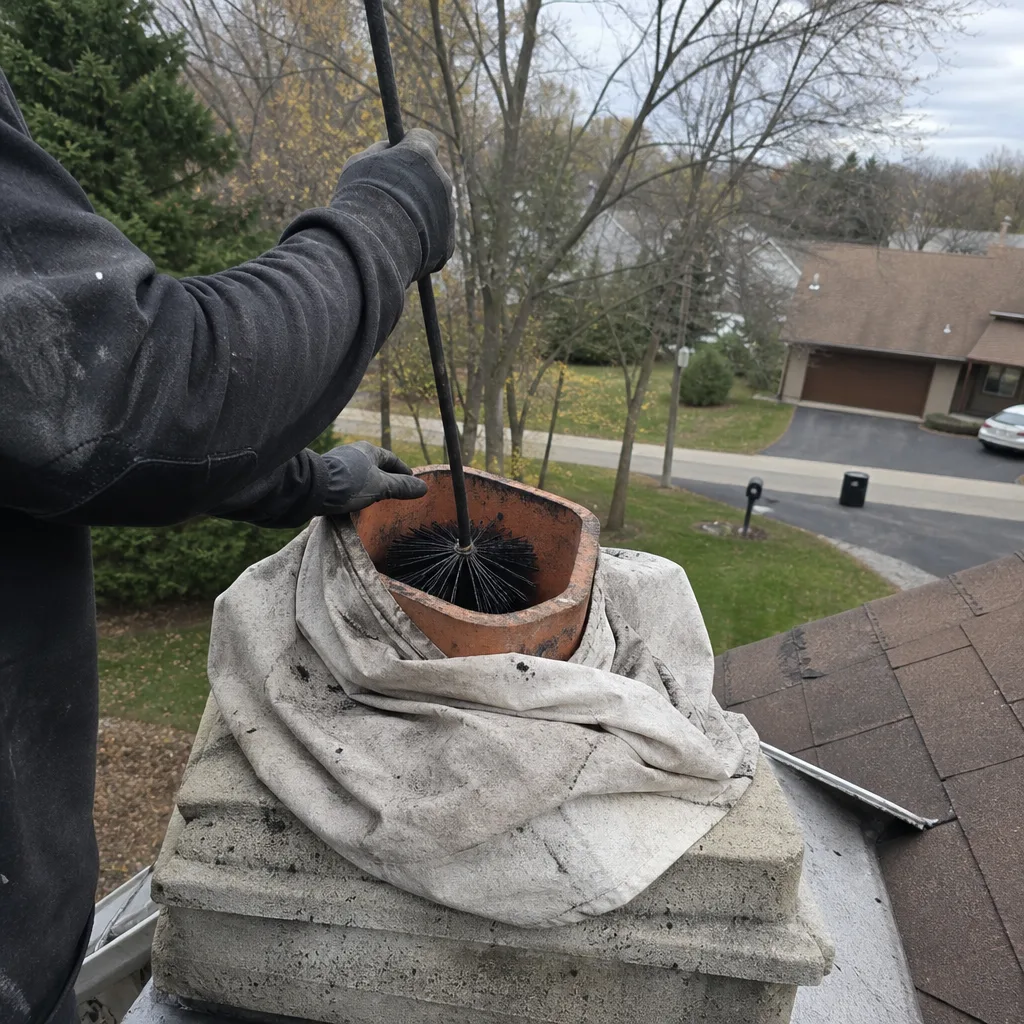
This is the most important section in our complete guide to chimney cleaning in Naperville. A clean-looking firebox tells you almost nothing about flue liner condition.
Why the Firebox Lies
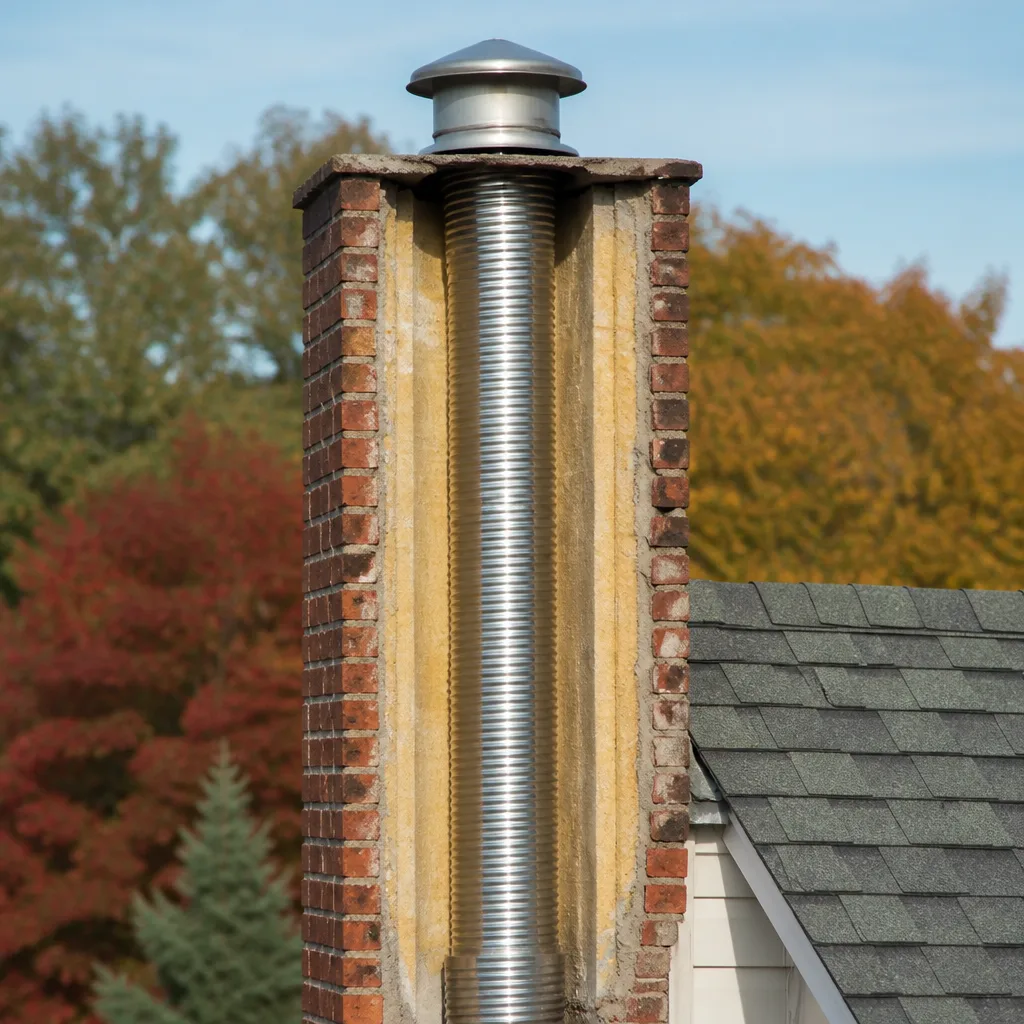
The firebox is vertical, open, and accessible. You can see it, sweep it, and evaluate it with a flashlight. The flue liner is vertical or offset, enclosed, and typically 15 to 25 feet above your head. Creosote deposits heaviest at the top of the flue where temperatures drop. Cracks, gaps, and deterioration in clay tile liners occur most often at the top, where thermal stress and moisture exposure are greatest.
We’ve performed camera inspections in Naperville homes where the firebox looked swept and sound, and the flue liner showed separated clay tiles, missing mortar joints, or a gap that allowed combustion gases to enter the chimney wall cavity. In one 1992 home near 95th Street and Book Road, the homeowner had burned fires for three seasons after being told the chimney “looked fine” from below. The camera revealed a 3-foot vertical crack in the third flue tile that vented carbon monoxide into the attic space.
What the Camera Typically Finds
- Tile displacement: Clay flue tiles that have shifted, creating gaps at the joints. These gaps allow heat and combustion gases to reach combustible framing.
- Spalled tile interior: The inner surface of clay tiles flakes from thermal cycling, creating rough areas that accelerate creosote buildup.
- Missing mortar at tile joints: Original construction used mortar between tiles. Over decades, it falls out, leaving open joints.
- Vertical cracks: Thermal shock or chimney fire damage creates cracks that run the length of a tile, compromising containment.
- Glazed or Stage 3 creosote: A hard, tar-like coating that cannot be removed with standard brushes. This material ignites at approximately 450°F, well within normal operating temperatures.
- Obstructions: Bird nests, collapsed liner sections, or construction debris that block draft.
NFPA 211, the standard referenced by Illinois fire codes, requires a Level 2 inspection, including camera scan, upon sale or transfer of property, after chimney fire or seismic event, and when changes are made to the system. Chimney Cleaning & Sweep in Naperville includes this camera inspection as standard practice, not an add-on. Clause 4 of the Haven Standard requires a documented photo record on every job, a practice we’ve maintained since 2009.
Urgency tier for any visible liner damage on camera: Stop using until repaired. Liner failure is a fire and carbon monoxide hazard.
Roofline, Cap, and Crown Failures
Most chimney water intrusion starts at the top. These components are visible from the ground with binoculars or from a ladder if you’re comfortable, but we recommend a professional evaluation for any roofline work.
Damaged or Missing Chimney Cap
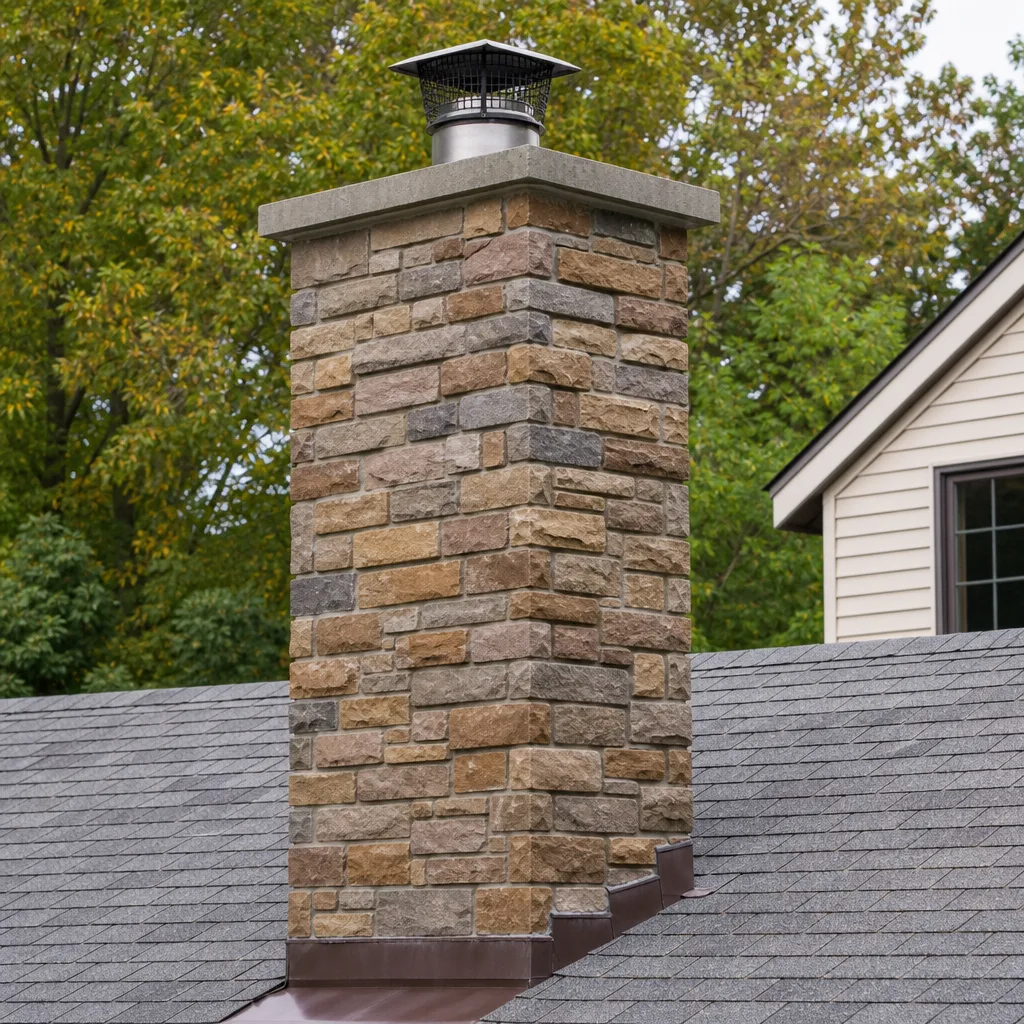
The cap covers the flue opening, excludes rain and animals, and includes a spark arrestor. A missing cap means direct water entry and open invitation to squirrels, raccoons, and birds. A damaged cap with separated seams or rust holes admits water and may obstruct draft with debris.
In Naperville, we replace caps most often on homes where original galvanized steel caps have rusted through after 15-20 years. Stainless steel and copper caps from Gelco and Olympia Chimney, sourced through our buying network, carry longer service lives.
Urgency tier: Replace missing caps immediately. Repair damaged caps before next burning season.
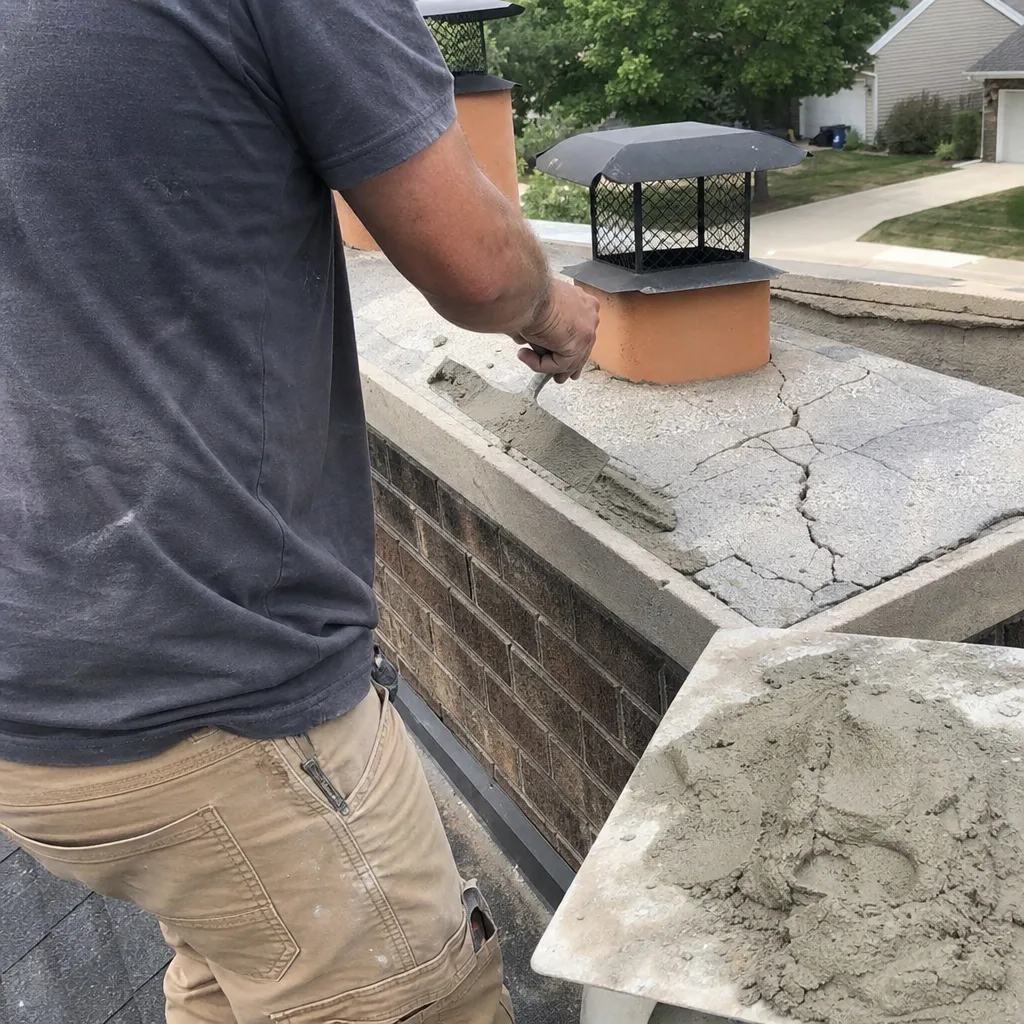
Cracked or Deteriorated Crown
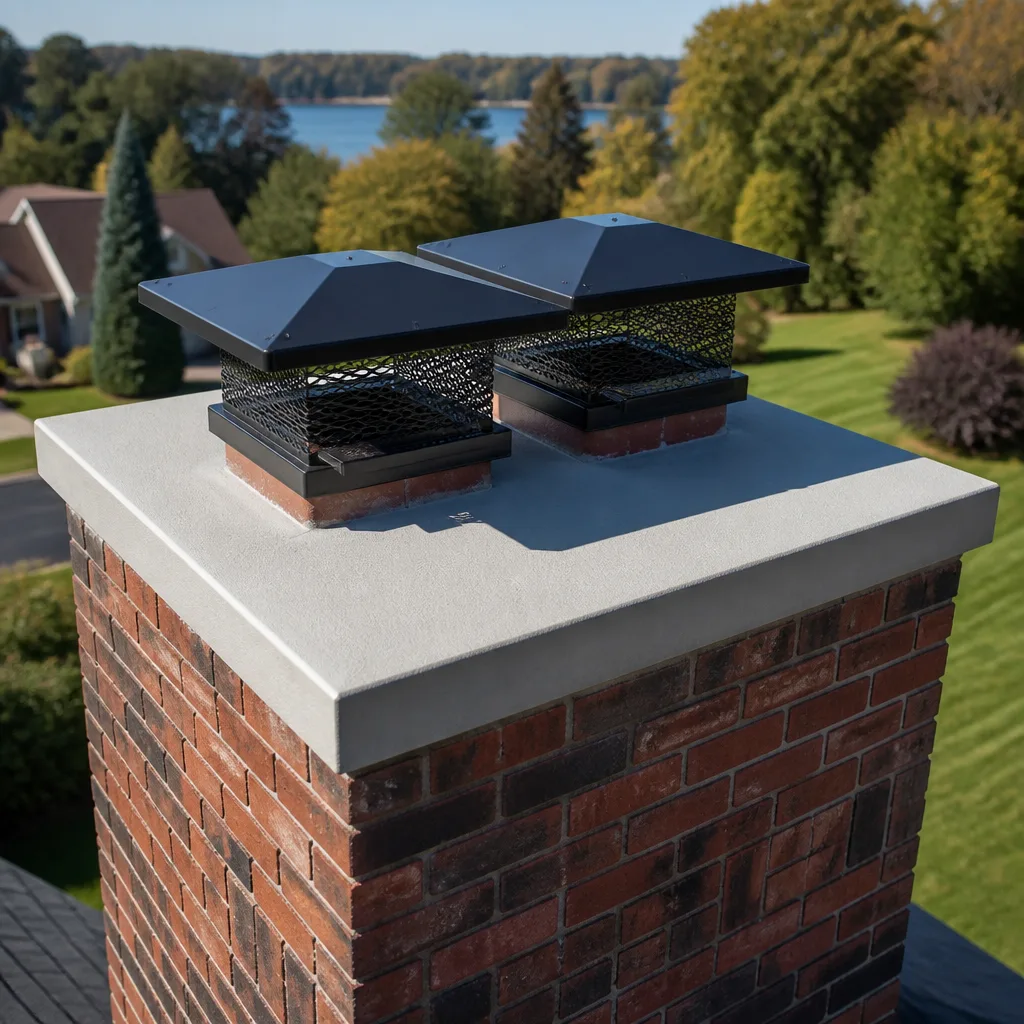
The crown is the concrete slab that tops a masonry chimney, sloped to shed water. Cracks in the crown allow water into the chimney structure below. In Naperville, crown failure is accelerated by freeze-thaw cycling when water enters cracks, freezes, and widens them. We’ve found crowns on homes in the Steeple Run and South Pointe areas that were cracked completely through within 8 years of construction due to improper mix or inadequate overhang.
A proper crown should extend 2 inches beyond the chimney wall on all sides and have a drip edge underneath. Many original crowns on Naperville homes are simply flush with the wall, directing water straight down the brick faces.
Urgency tier: Seal hairline cracks before winter. Rebuild or overlay cracked-through crowns before next burning season.
Failed or Improperly Installed Flashing
Flashing is the metal assembly where the chimney penetrates the roof. Failed flashing causes leaks that appear as water stains on ceilings or walls near the chimney, often misdiagnosed as roof leaks. In Naperville’s wind-exposed subdivisions, we’ve found flashing that was never properly counter-flashed into the mortar joints, relying instead of sealant that fails within 5-7 years.
Urgency tier: Repair at first interior sign. Water damage from flashing failure affects roof decking, framing, and interior finishes.
Missing or Damaged Cricket
A cricket is a small roof structure behind chimneys wider than 30 inches, designed to divert water around the chimney. Without it, water ponds behind the chimney and accelerates flashing and masonry deterioration. Many Naperville homes built before 1990 lack crickets on chimneys that should have them.
Urgency tier: Add if missing and chimney width exceeds 30 inches. This is preventive, not emergency, but delays increase risk.
Gas Fireplace Warning Signs
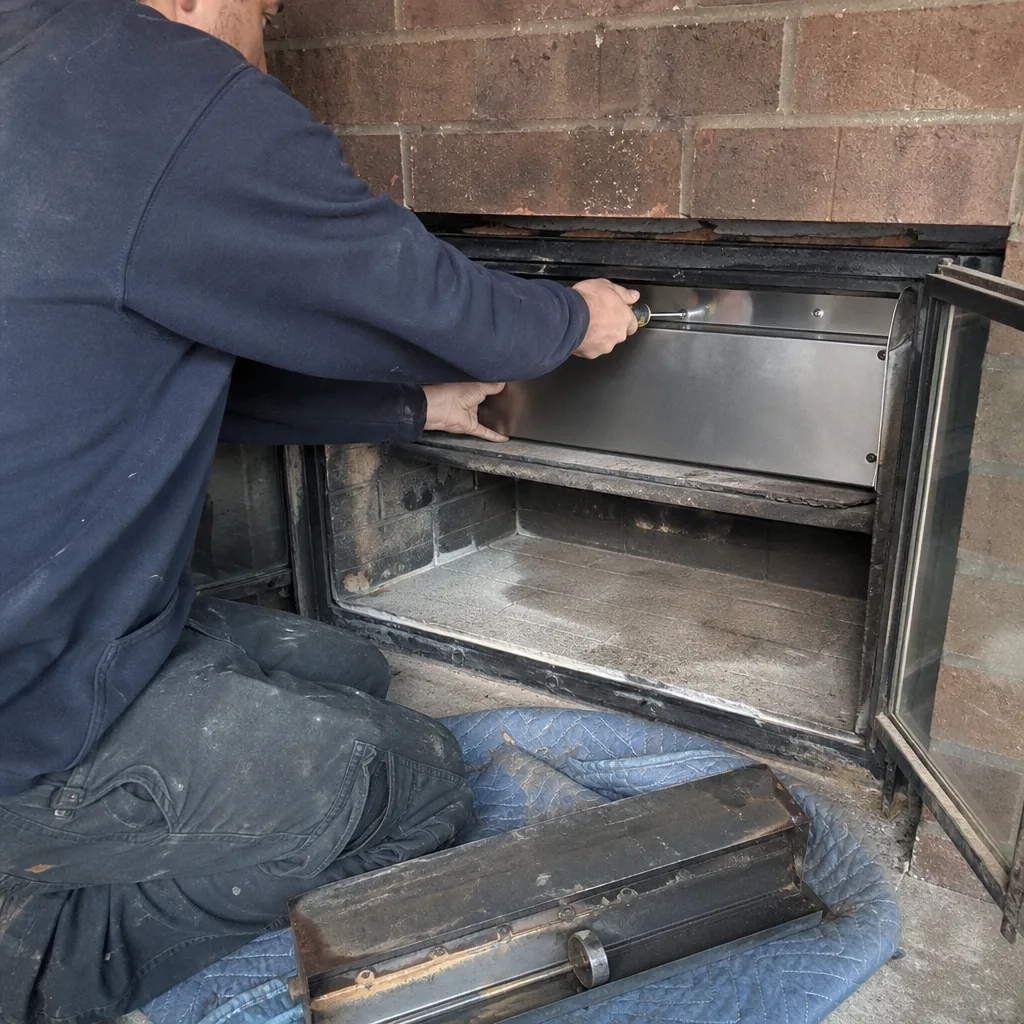
Gas fireplaces produce different warning signs than wood-burning systems, and these are frequently misdiagnosed as appliance problems rather than venting problems.
Pilot Light Issues
A pilot that won’t stay lit, burns yellow or orange instead of blue, or produces soot indicates incomplete combustion. Possible causes include dirty pilot assembly, failing thermocouple, or venting problems. If the pilot issue correlates with windy conditions or follows a roof repair, suspect downdraft or vent obstruction.
In Naperville, we’ve diagnosed pilot failures in direct-vent gas inserts where the vent terminal was blocked by snow accumulation or landscaping debris. The homeowner had replaced the pilot assembly twice before the venting issue was identified.
Urgency tier: Schedule service before next use. Incomplete combustion produces carbon monoxide.
Soot Around the Insert Face or on Surrounding Surfaces
Any soot production from a gas appliance indicates combustion problems. Possible causes include incorrect fuel-air mixture, blocked vent, damaged burner, or deteriorated firebox insulation. Soot on the insert face, mantel, or wall means combustion products are escaping into the room.
Urgency tier: Stop using immediately. Soot from gas combustion is a carbon monoxide indicator.
Delayed Ignition or “Hard Start”
Gas that ignites with a small explosion or delayed burst indicates accumulated gas before ignition. Causes include dirty burner ports, incorrect gas pressure, or ignition system failure. In vented gas logs, delayed ignition can also result from logs placed incorrectly, disrupting flame pattern and causing rollout.
Urgency tier: Stop using until serviced. Delayed ignition risks fire and burns.
Moisture or Condensation on Glass
Persistent condensation on the glass face of a direct-vent insert indicates improper venting, incorrect log placement disrupting draft, or inadequate room air supply. In tight Naperville homes with energy recovery ventilators, we’ve found negative pressure that prevents proper draft establishment.
Urgency tier: Schedule inspection within 60 days. Chronic condensation corrodes components and indicates venting imbalance.
Unusual Odors from Gas Fireplace
Gas fireplaces should produce minimal odor. A chemical or metallic smell may indicate overheating components or paint curing on a new insert. A rotten egg smell indicates gas leak. An earthy or musty smell suggests water intrusion in the chase.
Urgency tier: Rotten egg smell: evacuate and call gas utility immediately. Other odors: schedule inspection within 60 days.
Odor-Based Warning Signs
Smell is an underutilized diagnostic tool. Three distinct odors indicate three distinct problems in Naperville chimneys.
Creosote Off-Gassing: Sharp, Smoky, Chemical
A sharp, acrid smell that intensifies in humid weather or when the air conditioner runs indicates Stage 1 or Stage 2 creosote depositing moisture and volatile compounds. This odor is most noticeable in summer when humidity rises and the chimney is warm. In Naperville, we field calls about “smoke smell in the house” every July and August, almost always traced to creosote buildup that wasn’t fully removed.
The odor is not just unpleasant. It indicates active creosote accumulation that will progress to Stage 3 if not addressed. Fireplace Services in Naperville includes complete creosote evaluation and removal.
Urgency tier: Schedule cleaning before next burning season. Not an emergency, but indicates needed maintenance.
Water Intrusion Mold: Musty, Earthy, Damp
A musty, basement-like smell from the fireplace indicates water-saturated masonry and likely mold growth in the chimney structure. This is common in Naperville after wet springs or when crown cracks admit water that doesn’t fully dry before the next rain. The smell worsens after rain and may correlate with visible efflorescence or interior rust stains.
Urgency tier: Schedule inspection within 60 days. Chronic moisture damages masonry and creates conditions for biological growth.
Animal Intrusion: Organic, Ammonia, Decomposition
A sharp ammonia smell or unmistakable decomposition odor indicates active or recent animal presence. Squirrels, raccoons, and birds enter uncapped chimneys and cannot always escape. In Naperville’s wooded subdivisions like White Eagle and Tamarack Fairways, we’ve removed nests and, unfortunately, deceased animals from chimneys where caps had blown off or were never installed.
A scratching or scurrying sound during daytime suggests squirrels. Nighttime noise suggests raccoons. Persistent fluttering indicates birds.
Urgency tier: Call immediately for animal removal. Do not attempt to smoke out animals. Decomposing animals create odor and maggot infestations, and live animals may block the flue or enter the house.
Common Mistakes to Avoid
- Assuming a clean firebox means a clean flue. The firebox is visible and often swept by homeowners. The flue liner, where creosote deposits heaviest and where most dangerous conditions develop, requires a camera inspection. We’ve found dangerous liner conditions in chimneys with pristine fireboxes.
- Interpreting exterior white stains as paint or weathering. Efflorescence is mineral salt deposition from water moving through masonry. It’s an active process indicator, not a surface condition. Washing it off without addressing water entry guarantees its return and masks progression to spalling.
- Attributing gas fireplace problems to the appliance alone. Pilot issues, soot production, and delayed ignition in gas fireplaces are frequently venting problems misdiagnosed as appliance failures. Two unnecessary service calls to the fireplace dealer could have been resolved with a chimney venting evaluation.
- Ignoring summer odors because “we’re not using the fireplace.” Creosote off-gassing and moisture intrusion are most detectable in warm, humid months. Waiting until October to address a July odor often means scheduling behind the seasonal rush and discovering damage that progressed through summer.
- Accepting “it looks fine from below” as inspection. In Naperville, we’ve encountered homeowners who were told their chimney was fine based on a flashlight look up the flue from the firebox. A flashlight from below cannot evaluate the top third of the flue, where most liner damage occurs, and cannot detect separated tile joints or interior spalling.
- Delaying cap or crown repair because “it’s not leaking yet.” Water intrusion from crown cracks and missing caps is often invisible for months or years, progressing through the masonry structure before appearing as interior stains. By then, repair scope has expanded significantly.
- Using the fireplace after any smoke spillage episode without identifying cause. A single smoke spillage event indicates draft failure. Continuing to use the fireplace without determining whether the cause was blockage, damper failure, or house pressure imbalance risks repeat exposure to combustion gases and potential chimney fire from creosote ignition.
When to Call a Professional
Call a chimney professional when you observe any of the following: visible exterior masonry damage, rust stains in the firebox, smoke spillage into the room, any gas fireplace odor other than brief new-appliance curing smell, or if it’s been more than 12 months since your last inspection. In Naperville, where burning season runs October through March, we recommend scheduling inspection and cleaning in August or September to avoid the October rush and to address any summer moisture damage before first fire.
Level Two Chimney Naperville offers free estimates in Naperville. Every estimate includes a written price, written scope, and written warranty before any work begins. Call (331) 265-1700.
Frequently Asked Questions
A standard chimney sweep and NFPA 211 Level 2 inspection in Naperville typically ranges from $250 to $400, depending on accessibility, flue configuration, and creosote condition. This includes the camera scan and documented photo record required by Clause 4 of the Haven Standard. Chimney Repair in Naperville is quoted separately based on findings. Call (331) 265-1700 for an exact quote - estimates are free.
You need a new flue liner if inspection reveals cracked, separated, or missing clay tiles; if the existing liner is unlined brick (common in pre-1940 construction); or if you’re installing a new appliance that requires a specific liner material or diameter per manufacturer specifications. We do not recommend liner replacement without camera evidence you can see for yourself. In many Naperville homes, localized repair with HeatShield or a stainless steel insert from DuraFlex resolves the issue without full reconstruction.
NFPA 211 recommends annual inspection and cleaning as needed. For wood-burning fireplaces used as primary heat source, that typically means annual sweeping. For occasional use (fewer than 30 fires per season), inspection every 12 months with cleaning every 2-3 years may suffice, contingent on creosote accumulation measured during inspection. Gas fireplaces require annual inspection of venting and burner operation, though they produce no creosote. Naperville’s freeze-thaw climate makes annual exterior evaluation equally important.
Skipped maintenance allows creosote accumulation that increases chimney fire risk, permits water intrusion that progressively destroys masonry, and leaves venting problems undetected that can cause carbon monoxide exposure or structural fire. In Naperville, we’ve documented chimneys where 5 years of deferred maintenance turned a $300 sweep into a $4,500 rebuild with liner replacement. The 365-Day Done Right Promise covers our work, but it cannot reverse damage that occurred before we arrived.
Summer chimney odors come from two sources: creosote off-gassing, which intensifies with heat and humidity, and moisture intrusion promoting mold or mildew in saturated masonry. Both indicate conditions that need addressing before burning season. The odor is not harmful in itself, but it signals active processes that degrade your chimney system. A sweep removes creosote source; inspection identifies water entry point.
You can and should observe the visible indicators in this guide: exterior masonry condition, firebox cracks, damper operation, and odor changes. You cannot evaluate flue liner condition, smoke chamber configuration, or roofline flashing integrity without specialized equipment and access. NFPA 211 Level 2 inspection requires a camera scan of the flue interior. We recommend homeowner vigilance for visible signs combined with professional evaluation for concealed components.
The Bottom Line
Chimney warning signs are location-specific and failure-specific. Exterior efflorescence and interior rust both mean water intrusion. A clean firebox conceals a potentially damaged flue. Gas fireplace pilot problems may be venting problems. Odor changes distinguish creosote accumulation from moisture intrusion from animal presence. In Naperville’s climate, exterior damage accelerates through each freeze-thaw cycle, and the cost of delayed repair compounds accordingly. Document what you observe, note when it started, and communicate specifics when you call. The more accurately you describe what you’re seeing, the more precisely we can scope the inspection and quote the work before we arrive.
Written by Corrine Halstead, Owner at Level Two Chimney Naperville, serving Naperville since 2009.