
Last updated September 22, 2026
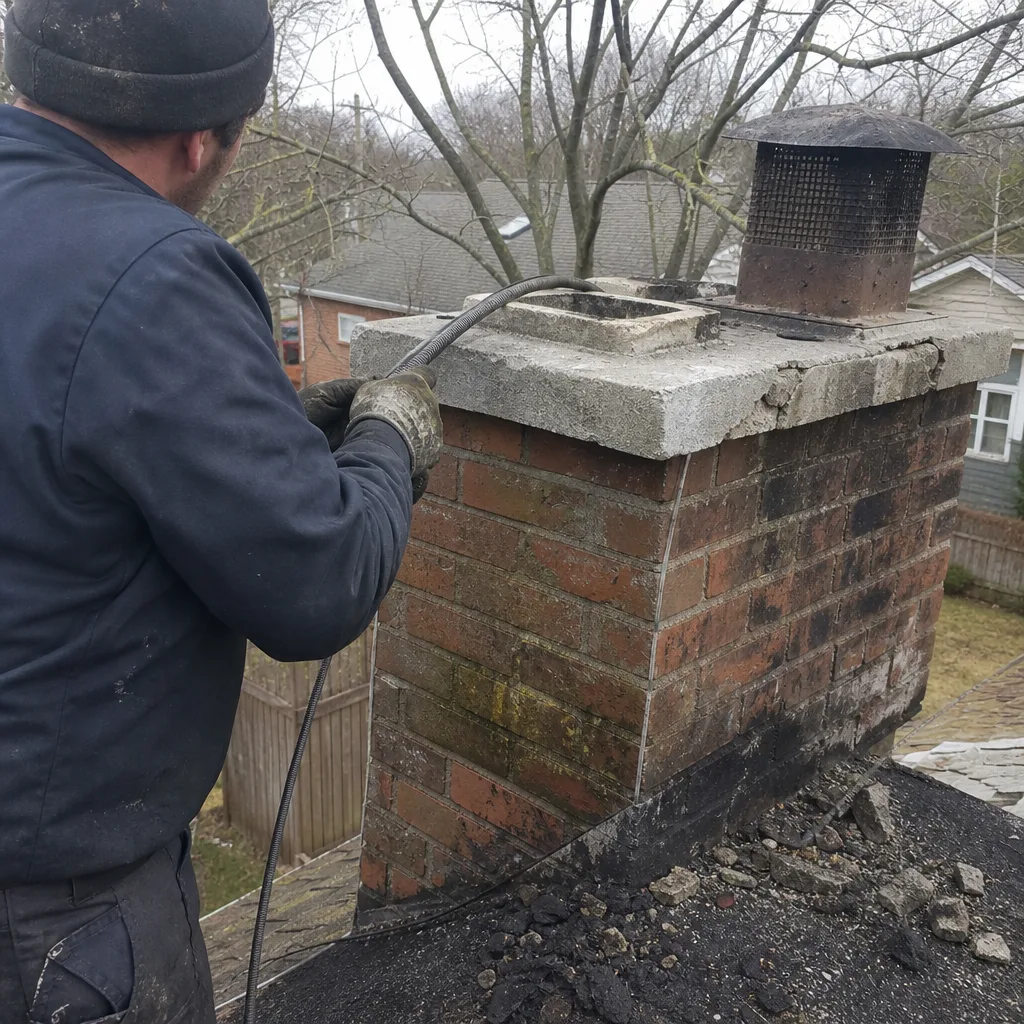
Level 1 sweep and inspection to the NFPA 211 annual standard - flue, crown, cap, and flashing checked and photographed
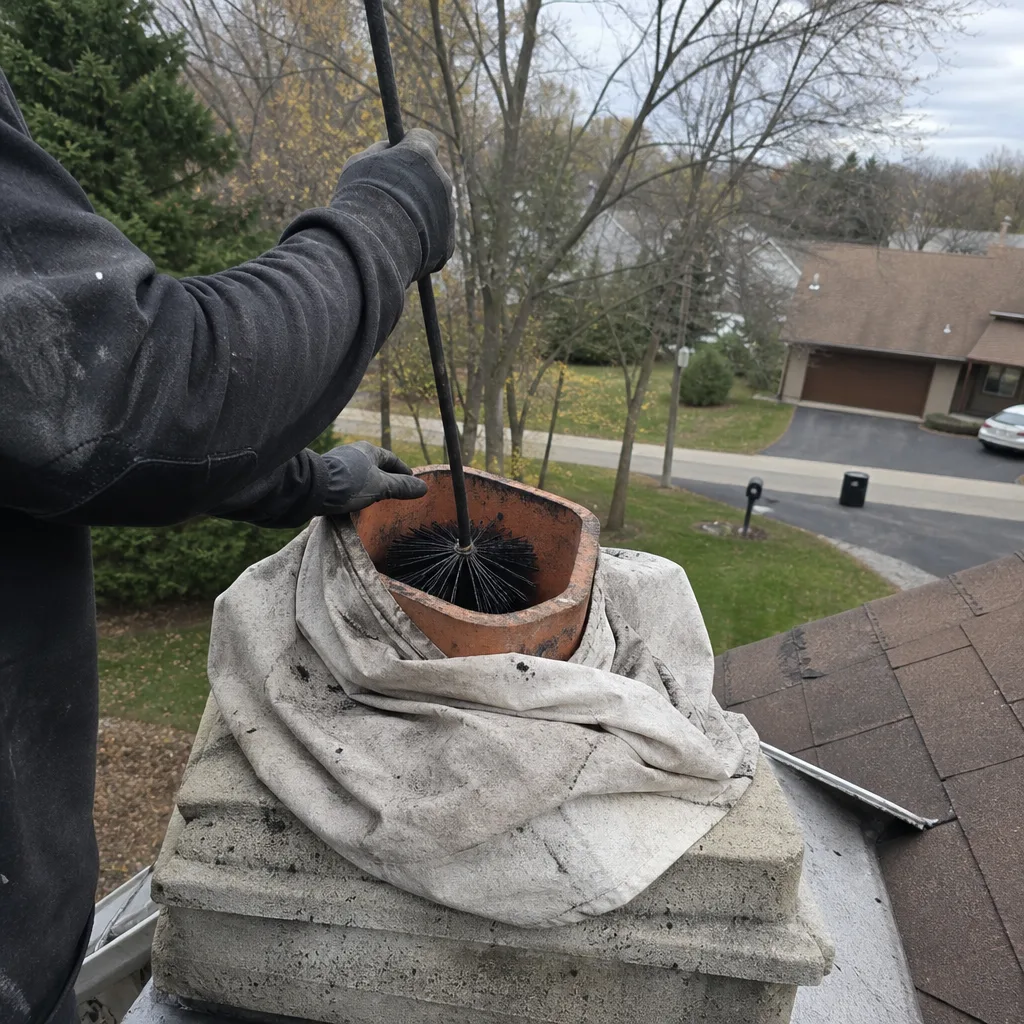
Chimney sweep logs do not sweep chimneys. They loosen some creosote - which then falls where a brush and vacuum still have to collect it.
 Before
 After
After Before
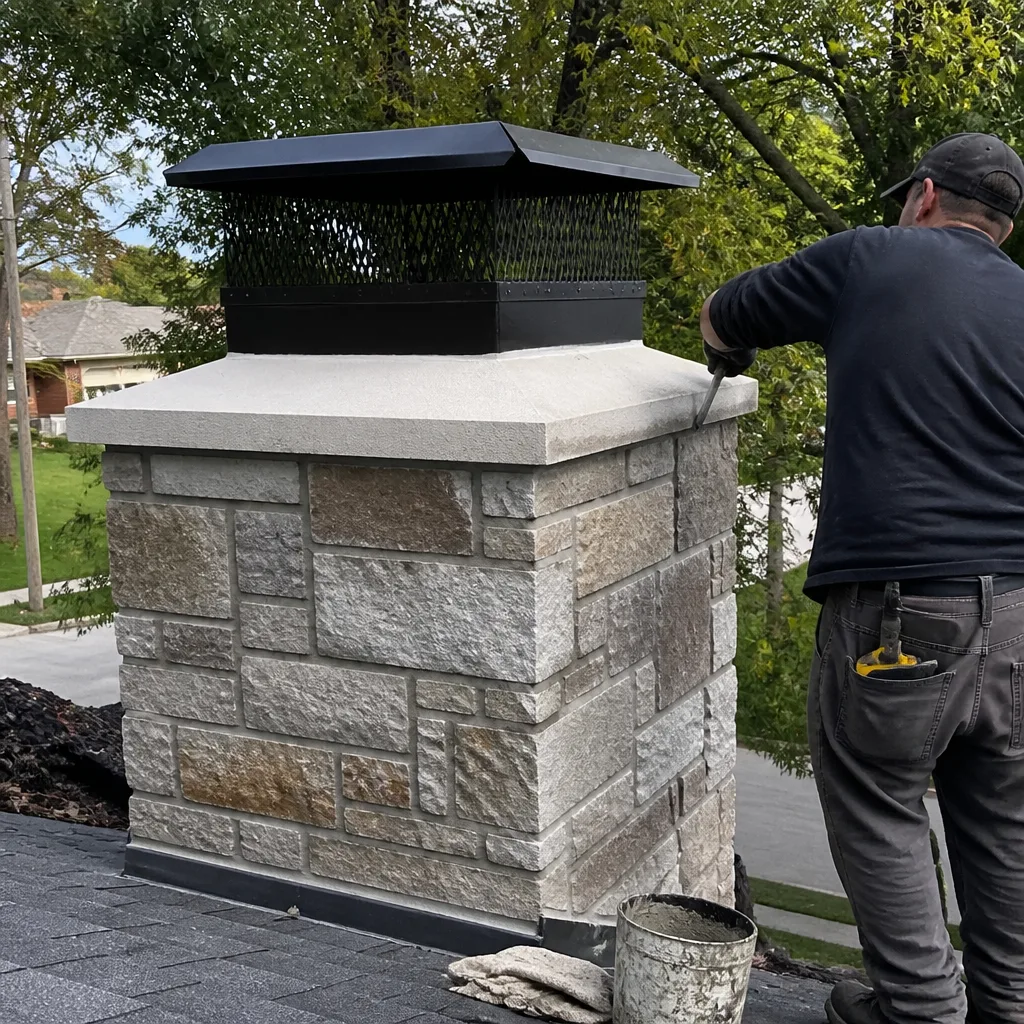 After
After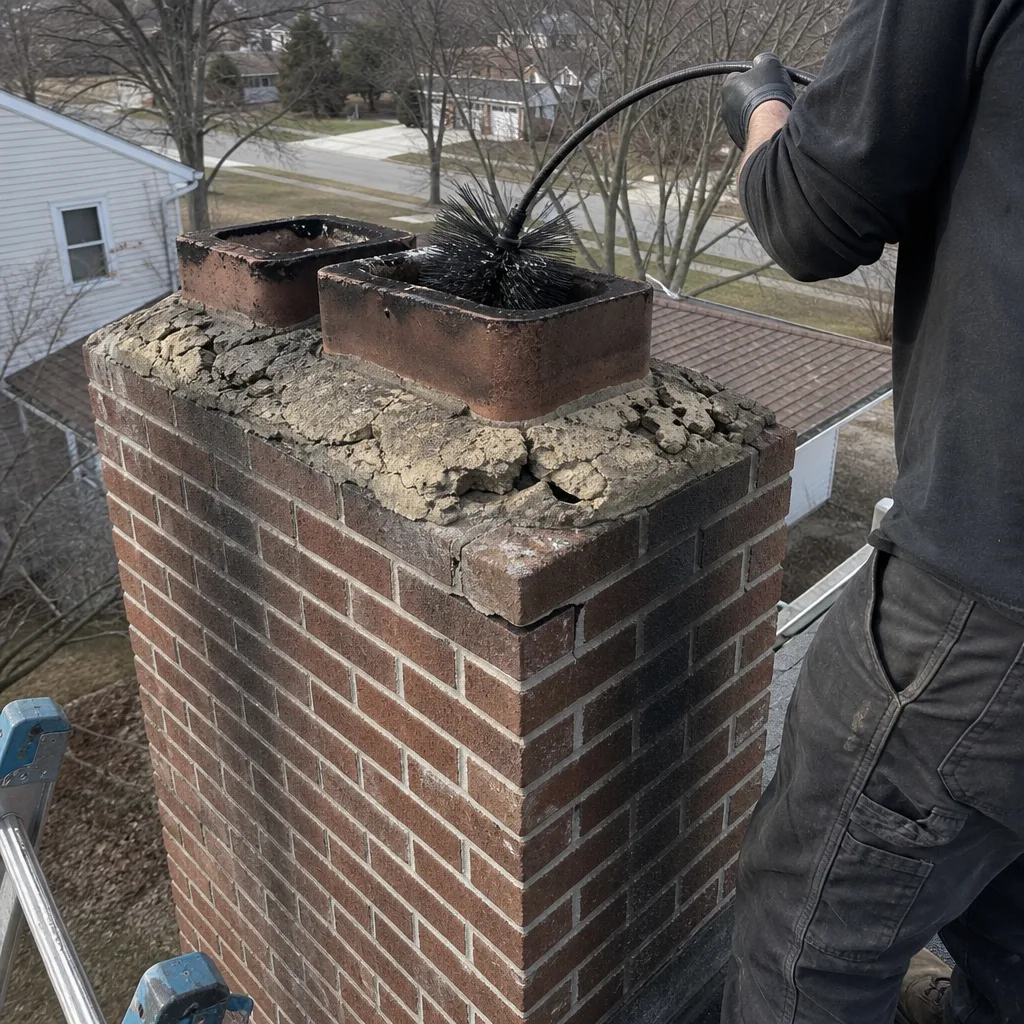 Before
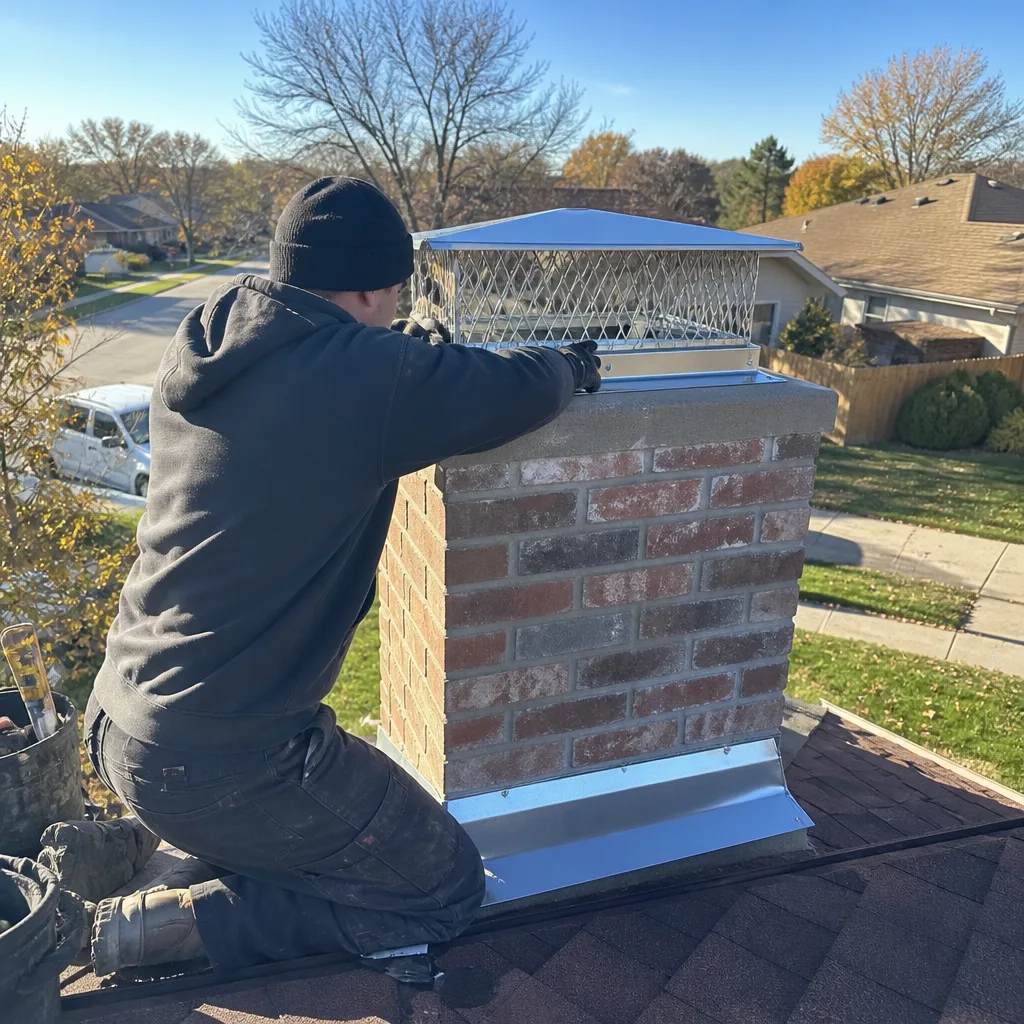 After
AfterChimney Cleaning Permits, Codes & Inspections in IL: What You Need to Know
Most Illinois homeowners assume chimney cleaning lives in the same permit-free zone as gutter cleaning or dryer vent service. That’s mostly right, until the sweep pulls the camera back up and shows you a cracked terra cotta liner or spalling brick in the smoke chamber. In Naperville and across DuPage County, relining a flue, rebuilding a crown, or even replacing certain appliance connectors triggers permit and inspection requirements that catch homeowners off-guard. This guide maps exactly where routine maintenance ends and regulated work begins, what documentation Illinois fire marshals and insurers actually require, and how to protect yourself when a cleaning uncovers something bigger. For more context, see our Complete Guide to Chimney Cleaning in Naperville.
Quick Answer
Chimney cleaning and sweeping in Illinois generally require no permit. However, liner replacement, masonry repair, cap installation that alters structure, and appliance connector work typically require permits under Illinois building code and local amendments in DuPage County. A documented Level 2 camera inspection serves as your evidence record for both code compliance and insurance claims. Learn to spot trouble early with our Chimney Cleaning Warning Signs: A Naperville Homeowner’s Reference Guide.
Table of Contents
- Permit-Exempt vs. Permit-Required Chimney Work in Illinois
- NFPA 211: The Standard Illinois Actually Uses
- How Naperville City Code and DuPage County Requirements Interact
- What Your Insurance Company Requires After a Chimney Fire or Before a Wood-Burning Rider
- How a Level 2 Inspection Report Protects You in Code Disputes and Claims
- Common Mistakes to Avoid
- When to Call a Professional
- Frequently Asked Questions
 Before
 After
AfterPermit-Exempt vs. Permit-Required Chimney Work in Illinois
Illinois operates under the Illinois State Plumbing and Building Codes, with counties and municipalities free to adopt stricter amendments. DuPage County, where Naperville sits, exercises that authority actively. The result: work that passes without paperwork in rural Illinois may need a permit in Naperville, Wheaton, or Downers Grove.
Work That Typically Requires No Permit
- Routine chimney sweeping and cleaning (brushing, vacuuming, removing soot and Class I or II creosote)
- Visual exterior inspection from ground level or roof
- Installation of a standard chimney cap that does not alter flue opening dimensions or require structural modification
- Replacement of a damaged damper with a same-size unit
- Firebox cleaning and minor refractory panel replacement (non-structural)
We’ve performed thousands of these no-permit services in Naperville since 2009. The key distinction: the work does not alter the structure, appliance, or venting configuration of the system.
Work That Typically Requires a Permit
| Service | Permit Required? | Typical Authority |
|---|---|---|
| Flue liner replacement or relining | Yes | City building department |
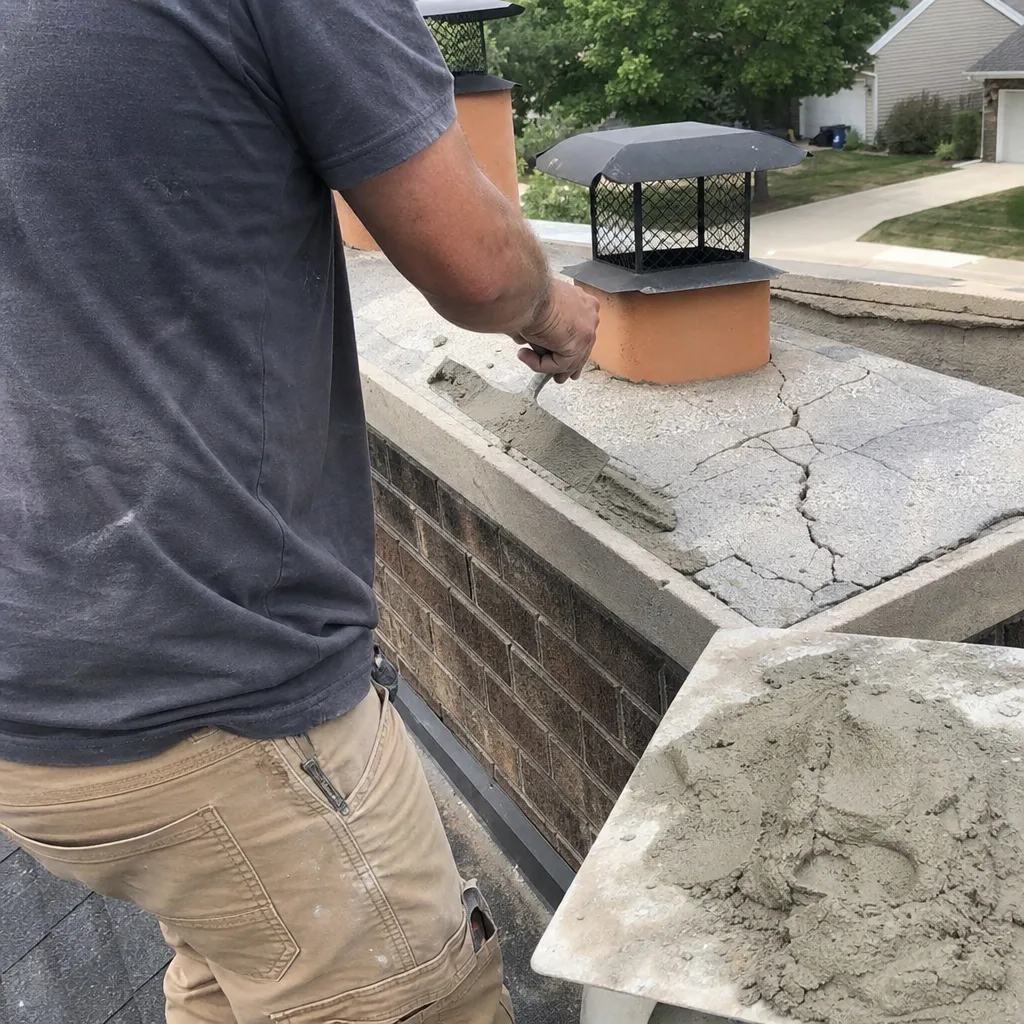
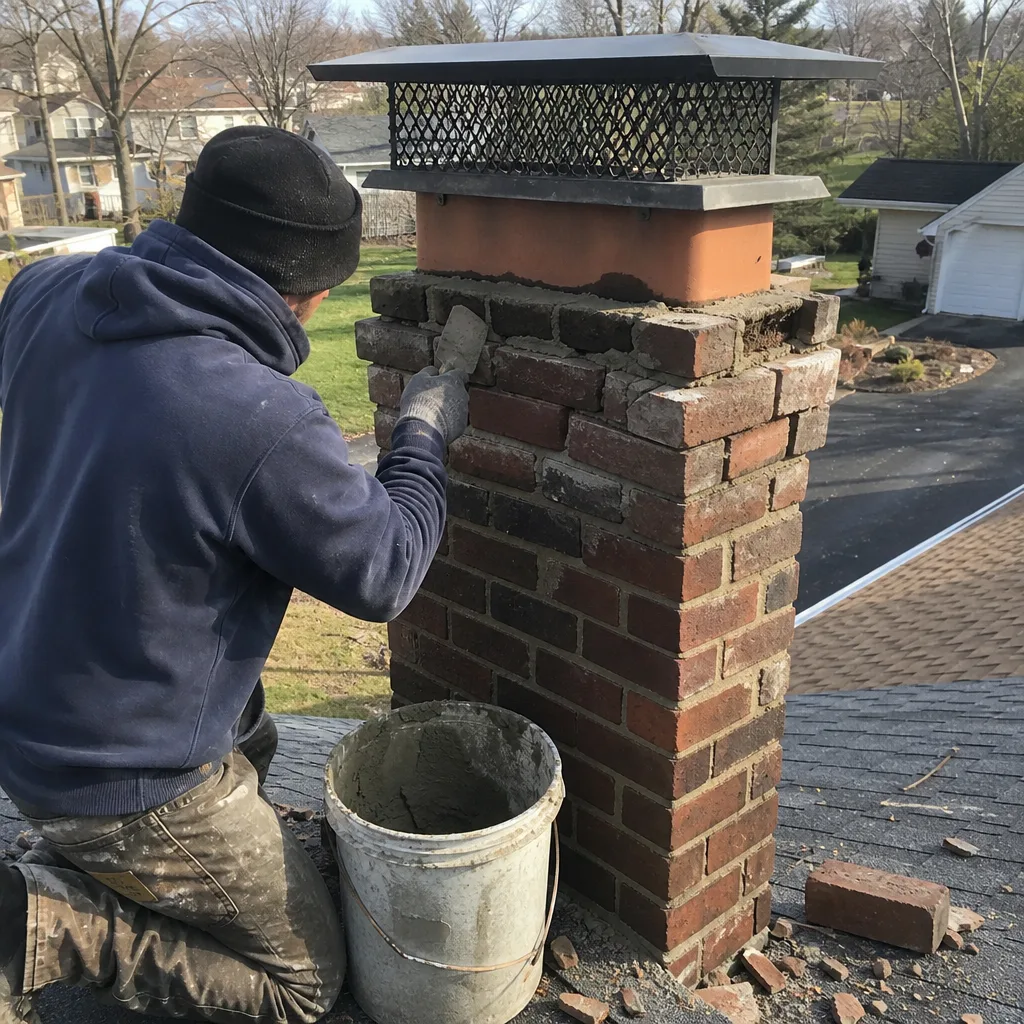
| Masonry repair (tuckpointing, crown rebuild, brick replacement) | Yes, if structural | City building department |
| Chimney cap installation altering flue dimensions | Yes | City building department |
| Appliance connector replacement (stove pipe, fireplace insert venting) | Yes | City building department |
| Chimney height modification | Yes | City building department + possible zoning |
| Factory-built chimney installation or modification | Yes | City building department |
The permit threshold is structural change or alteration to the approved venting system. In Naperville specifically, the City of Naperville Building Division requires permits for any work affecting “the structural integrity or venting performance of a chimney or fireplace system” per local amendments to the International Building Code.
Here’s where homeowners get surprised: a routine chimney cleaning in Naperville that reveals a failed liner doesn’t just become a repair job. It becomes a permitted project with inspection scheduling, documentation requirements, and potential delays if the work doesn’t pass. We’ve seen homeowners in the Ashbury and Cress Creek neighborhoods blindsided by this when they assumed “cleaning day” would stay simple.
The Hidden Trigger: What Your Sweep Finds Dictates What Comes Next
Illinois law doesn’t require a permit to look. It requires a permit to fix what you found in many cases. This creates a decision point mid-service that separates reputable sweeps from bait-and-switch operators.
At Level Two Chimney Naperville, our protocol under Haven Standard Clause 1 is to present a written price before any work begins. If the camera scan during your cleaning reveals permit-triggering damage, we stop, show you the footage, explain the permit requirement, and deliver a written scope that separates the cleaning (done) from the repair (quoted separately, permit identified). No surprises. No “we’re already here” pressure.
NFPA 211: The Standard Illinois Actually Uses

Every Illinois fire marshal, home insurer, and municipal building inspector references NFPA 211: Standard for Chimneys, Fireplaces, Vents, and Solid Fuel-Burning Appliances. This isn’t a contractor marketing claim. It’s the incorporated standard in Illinois fire codes and the explicit reference in most homeowners insurance policies with wood-burning appliance riders.
What NFPA 211 Actually Requires
The standard mandates three inspection levels:
- Level 1: Visual inspection of readily accessible portions. Appropriate for annual maintenance when no changes have occurred. No tools, no camera, no roof work.
- Level 2: Internal camera scan of the flue, inspection of accessible attics and crawl spaces, examination of appliance connections. Required upon sale or transfer of property, after chimney fire or malfunction, or when any changes are made to the system. This is the inspection standard we named our company after.
- Level 3: Destructive inspection involving removal of building materials to access concealed areas. Required when Level 2 indicates a serious hazard that cannot be evaluated otherwise.
Here’s the critical detail most competitors bury: NFPA 211 Section 14.2 specifies that a Level 2 inspection includes “video scanning or other equivalent means of inspection” of the interior flue surfaces. The flashlight-and-mirror method doesn’t satisfy the standard. We’ve been documenting every inspection with camera footage since 2009, years before insurers or regulators began requesting it. That practice became Haven Standard Clause 4.
How Illinois Fire Marshals Apply NFPA 211
The Illinois State Fire Marshal’s Office doesn’t send inspectors to your home for routine chimney checks. Their role is code enforcement after incidents: chimney fires, carbon monoxide poisonings, or insurance disputes. When they investigate, they ask one question first: “Was the system inspected to NFPA 211 standards, and is there documentation?”
In DuPage County, local fire departments in Naperville, Wheaton, Glen Ellyn, and Lisle have adopted NFPA 211 by reference in their municipal codes. This means compliance isn’t optional if you’re in their jurisdiction. A sweep who claims “we go beyond the standard” is often admitting they don’t know what the standard actually requires.
The Insurance Connection
Illinois insurers writing wood-burning appliance riders increasingly require proof of NFPA 211 Level 2 inspection within 12 months of policy issuance or renewal. Some specify camera documentation. We provide this as standard on every visit, not as an upsell. If your sweep hands you a one-page checklist with checkboxes and no photos, you don’t have what your insurer needs if a claim arises.
How Naperville City Code and DuPage County Requirements Interact
Naperville presents a layered regulatory environment that confuses even experienced contractors. Here’s how the jurisdictions actually stack up.
County vs. City: Who Has Authority?
DuPage County adopts the Illinois State Building Code with amendments focused on floodplain management, energy efficiency, and fire prevention in unincorporated areas. Naperville, as an incorporated home-rule municipality, enforces its own building code through the City of Naperville Building Division, located at 400 S. Eagle Street.
For chimney work, the practical rule is simple: if your property is within Naperville city limits, you deal with Naperville. If you’re in unincorporated DuPage County near Naperville’s borders (areas near Route 59 and 75th Street, for example), DuPage County Building Services handles permits.
Naperville-Specific Requirements
Naperville’s amended building code includes several chimney-specific provisions:
- Permit application requires a site plan for exterior masonry work showing setback compliance
- Factory-built chimneys require manufacturer installation instructions on file with the permit
- Liner replacements require sizing calculations demonstrating adequate flue area for the connected appliance
- Final inspection must be scheduled within 180 days of permit issuance or the permit expires
We’ve navigated these requirements for Naperville homeowners in neighborhoods from Springbrook to Tall Grass to South Pointe. The 180-day expiration catches people who get a permit, delay the work through winter, and discover they need to reapply in spring.
When You Need Both Offices
Rare but real scenarios where both jurisdictions matter:
- Properties near waterways: DuPage County’s stormwater management requirements may overlay Naperville’s building permit if your chimney work affects drainage patterns (crown slope modification, for example).
- Historic districts: Naperville’s Historic Preservation Commission review runs parallel to building permits for exterior-visible work on designated properties, primarily in the downtown Naperville and Nichols Library areas.
- Air quality alerts: While not permit-related, DuPage County’s occasional winter wood-burning advisories create compliance obligations separate from city code.
Our experience: most Naperville homeowners never need to contact DuPage County directly for chimney work. The exception is properties on the unincorporated fringe, where we’ve helped clients determine jurisdiction by checking parcel records before quoting.
Practical Steps for Naperville Permit Compliance
- Verify your property’s incorporation status through the DuPage County GIS portal or Naperville’s address lookup tool
- For permit-required work, submit through the Naperville e-Plan Room or in person at 400 S. Eagle Street
- Schedule rough and final inspections through the same office; inspections typically occur within 2-3 business days of request
- Retain the Certificate of Completion; it’s required for property sale disclosure and insurance documentation
We handle permit submission as part of our project scope for chimney repair work in Naperville when we perform the service. Homeowners who DIY or use unpermitted contractors bear the compliance burden themselves, and unpermitted work must be disclosed at sale.
What Your Insurance Company Requires After a Chimney Fire or Before a Wood-Burning Rider
Illinois homeowners insurance treats chimneys as heating systems, not decorative features. This classification matters when claims arise.
After a Chimney Fire: Documentation Requirements
If you’ve had a chimney fire, even a small one you extinguished yourself, your insurer will require:
- Proof of professional inspection to NFPA 211 standards within 30 days of the incident
- Written scope of damage with repair estimates
- Documentation that the system is safe to operate or explicitly restricted from use
- Photos or video of internal flue damage
The insurer’s adjuster isn’t a chimney expert. They rely on your contractor’s documentation to determine whether damage is structural (covered under dwelling coverage) or maintenance-related (typically excluded). A Level 2 camera inspection with timestamped footage provides the evidence standard that holds up in dispute.
We’ve assisted Naperville homeowners in White Eagle and Stillwater with post-fire documentation for claims with major Illinois insurers. In every case, the camera record was the difference between covered replacement and denied coverage based on “pre-existing condition” arguments.
Before Adding a Wood-Burning Rider
Standard Illinois homeowners policies cover accidental fire from any cause. Wood-burning appliance riders extend coverage to chimney-specific damage and liability but require pre-issuance proof of system safety.
Typical rider requirements:
| Requirement | What It Means Practically |
|---|---|
| NFPA 211 Level 2 inspection within 12 months | Camera scan, not visual checklist |
| Documentation of liner condition and material | Terra cotta, stainless steel, or proprietary (HeatShield, etc.) |
| Clearance verification to combustibles | Measured, not estimated |
| Written certification of safe operation | From qualified sweep, not self-certification |
Some insurers now specify annual re-inspection for rider renewal. We maintain inspection records for repeat clients and can provide dated documentation on request.
The Coverage Gap Most Homeowners Miss
Illinois policies typically exclude damage from lack of maintenance or improper installation. If your chimney fire resulted from Class III glazed creosote buildup, and you have no record of professional cleaning, your claim faces denial regardless of rider status. The inverse is also true: documented annual cleaning and inspection creates a maintenance record that supports coverage.
Our 38,000+ documented inspections since 2009 include date-stamped photo records that have supported successful insurance claims. We don’t guarantee coverage, we guarantee evidence.
How a Level 2 Inspection Report Protects You in Code Disputes and Claims
Documentation is the only asset that appreciates after the work is done. A Level 2 inspection report with camera footage functions as a time-stamped evidence record for three scenarios that matter to Illinois homeowners.
Scenario 1: The Post-Sale Dispute
Illinois residential property disclosure law requires sellers to report known defects in heating systems, including chimneys. A pre-sale Level 2 inspection with clean documentation protects sellers from post-closing claims. We’ve provided these reports for Naperville home sales in Hobson West, East Highlands, and the Historic District, where buyers’ inspectors sometimes flag chimneys aggressively.
The report shows what existed, when it was examined, and by what method. If a buyer’s inspector claims “liner damage” that our camera didn’t show six months prior, we have evidence. If we did find damage and documented it, the seller’s disclosure is defensible.
Scenario 2: The Code Enforcement Inquiry
Naperville’s building division can require inspection of chimney systems after complaints, permit violations, or fire incidents. A prior Level 2 report demonstrates proactive compliance. More importantly, it establishes a baseline condition that distinguishes pre-existing wear from new damage.
In 2023, we supported a Naperville homeowner in Breckinridge whose neighbor complained about smoke odor. The city required inspection. Our two-year-old report showed proper draft and no flue obstruction; the issue was the neighbor’s negative air pressure from a new HVAC installation. Documentation resolved the dispute without repair costs.
Scenario 3: The Insurance Claim Challenge
Insurers routinely request “prior maintenance records” when evaluating chimney fire claims. A documented inspection history shows due diligence. Without it, adjusters apply depreciation schedules more aggressively or deny based on maintenance exclusion.
The specific elements that strengthen claims:
- Timestamped video footage of flue interior (Haven Standard Clause 4)
- Written scope and price for any recommended work (Clause 1)
- Technician identification and license information
- Equipment calibration records (for combustion analysis, when performed)
What Our Reports Actually Include
Every Level Two Chimney Naperville inspection delivers:
- Written price before work starts, with scope itemized (Haven Standard Clause 1)
- Interior flue video scan with narration explaining findings
- Still photos of critical areas: liner joints, smoke chamber, damper, crown, cap
- Written condition assessment with NFPA 211 terminology
- Recommended actions prioritized by safety urgency, not sales pressure
- 365-Day Done Right Promise documentation
Materials we specify come from DuraFlex for stainless liners, HeatShield for cerfractory resurfacing, and Famco or Copperfield for caps and accessories, sourced through our buying network to keep pricing transparent. We don’t hide material brands behind private labels.
For fireplace services in Naperville, this documentation becomes part of your home’s permanent maintenance record, transferable to future owners and referenceable for any code or insurance question.
Common Mistakes to Avoid
- Assuming “no permit needed” applies to everything your sweep recommends. In Naperville, a cleaning that reveals liner damage becomes a permitted repair project. Ask explicitly: “Does this work require a permit, and who files it?”
- Accepting a one-page checklist as “inspection documentation.” Illinois insurers and fire marshals require photo or video evidence. A checkbox form without visual record won’t support a claim or dispute.
- Hiring a sweep who can’t name the applicable code. If they say “we follow all codes” but can’t cite NFPA 211 or distinguish city from county jurisdiction, they don’t know what they’re promising.
- Delaying permit-required work past permit expiration. Naperville permits expire after 180 days. We’ve seen homeowners pay twice for permit fees because they postponed liner replacement through winter.
- Failing to disclose unpermitted work at sale. Illinois disclosure forms specifically ask about unpermitted improvements. Unpermitted chimney work discovered during buyer inspection can delay closing or trigger renegotiation.
- Skipping the Level 2 inspection before buying a home with a fireplace. Naperville’s competitive market pushes buyers to waive inspections. A $300-400 Level 2 camera inspection can reveal $3,000-8,000 in hidden liner or masonry issues that a general home inspector won’t catch.
- Relying on “certified” claims without verification. Ask for license numbers, verify through the City of Naperville or Illinois Department of Financial and Professional Regulation, and confirm insurance status. We display license information on every page and provide it on request.
When to Call a Professional
Call a qualified sweep when your annual cleaning reveals anything beyond surface soot, when you’re buying or selling a home with a fireplace, after any chimney fire or smoke backup event, or when your insurer requests documentation for a rider or claim. Our Chimney Cleaning & Sweep Maintenance Checklist for Naperville Homeowners helps you stay on track. In Naperville’s freeze-thaw climate, masonry damage accelerates rapidly; what looks like minor spalling in October can become structural compromise by March.
Level Two Chimney Naperville offers free estimates in Naperville and surrounding DuPage County communities. Every estimate includes a written price, written scope, and explanation of any permit requirements before work begins. Call (331) 265-1700 or reach our live answer team 24 hours a day.
Frequently Asked Questions
No. Routine chimney sweeping and cleaning require no permit in Naperville or anywhere in Illinois. The work is classified as maintenance, not construction. If your sweep discovers damage requiring liner replacement, masonry repair, or structural modification, those repairs will need permits. Call (331) 265-1700 for a free estimate that identifies permit requirements upfront.
A standard chimney sweep and Level 2 inspection in the Naperville market typically runs $250-$400, depending on system accessibility, number of flues, and creosote accumulation level. This includes camera documentation under Haven Standard Clause 4. We deliver a written price before work starts, with no “trip charge” surprises. Call (331) 265-1700 for exact pricing for your system.
NFPA 211 recommends annual inspection for all chimney systems, and cleaning “as necessary” based on creosote accumulation. In practice, Naperville homeowners burning seasoned hardwood 2-3 times weekly typically need annual sweeping. Those with gas inserts may extend to every 2-3 years with inspection, though we still recommend annual checks for venting integrity. The freeze-thaw cycles in DuPage County make annual exterior assessment valuable even for low-use systems.
A cracked or deteriorated terra cotta liner is a genuine safety hazard, not a sales tactic. Combustible gases and sparks can reach framing through liner gaps, and creosote accumulates in cracks where cleaning can’t reach. The legitimate concern is verification: you should see camera footage of the damage before authorizing work, and the footage should match the written scope. Our Haven Standard requires photo evidence before any liner recommendation. We also offer free second opinions on any competitor’s written estimate.
Skipped maintenance leads to progressive creosote buildup, increasing fire risk and reducing draft efficiency. In Naperville’s climate, moisture intrusion from damaged crowns or caps accelerates masonry deterioration during winter freeze-thaw cycles. The financial risk isn’t just repair cost: insurers may deny chimney fire claims based on maintenance exclusion if you have no inspection record. Annual cleaning and documentation is cheaper than any single repair or denied claim. Explore more guides & resources to keep your system safe year-round.
A Level 1 inspection is visual, using only existing access points, appropriate for annual maintenance on unchanged systems. A Level 2 inspection adds internal camera scanning of the flue, examination of attics and crawl spaces for clearances, and assessment of appliance connections. Illinois insurers, fire marshals, and real estate transactions require Level 2 documentation. Level Two Chimney Naperville performs Level 2 as our standard on every visit, not as an upgrade.
The Bottom Line
Chimney cleaning in Illinois lives in a permit-free zone until it doesn’t. The boundary isn’t arbitrary: it’s the line between maintenance and structural modification, between looking and altering. Naperville and DuPage County enforce that boundary more actively than rural Illinois, and homeowners who understand the distinction avoid mid-project surprises, insurance disputes, and sale complications. The protection isn’t guessing right, it’s documentation: a Level 2 camera inspection with written scope, written price, and written warranty, maintained as a permanent record. That’s been our practice since 2009, codified as the Haven Standard, applied to every one of 38,000+ chimneys we’ve served.
Written by Corrine Halstead, Owner at Level Two Chimney Naperville, serving Naperville since 2009.