
Last updated September 22, 2026
Level 1 sweep and inspection to the NFPA 211 annual standard - flue, crown, cap, and flashing checked and photographed
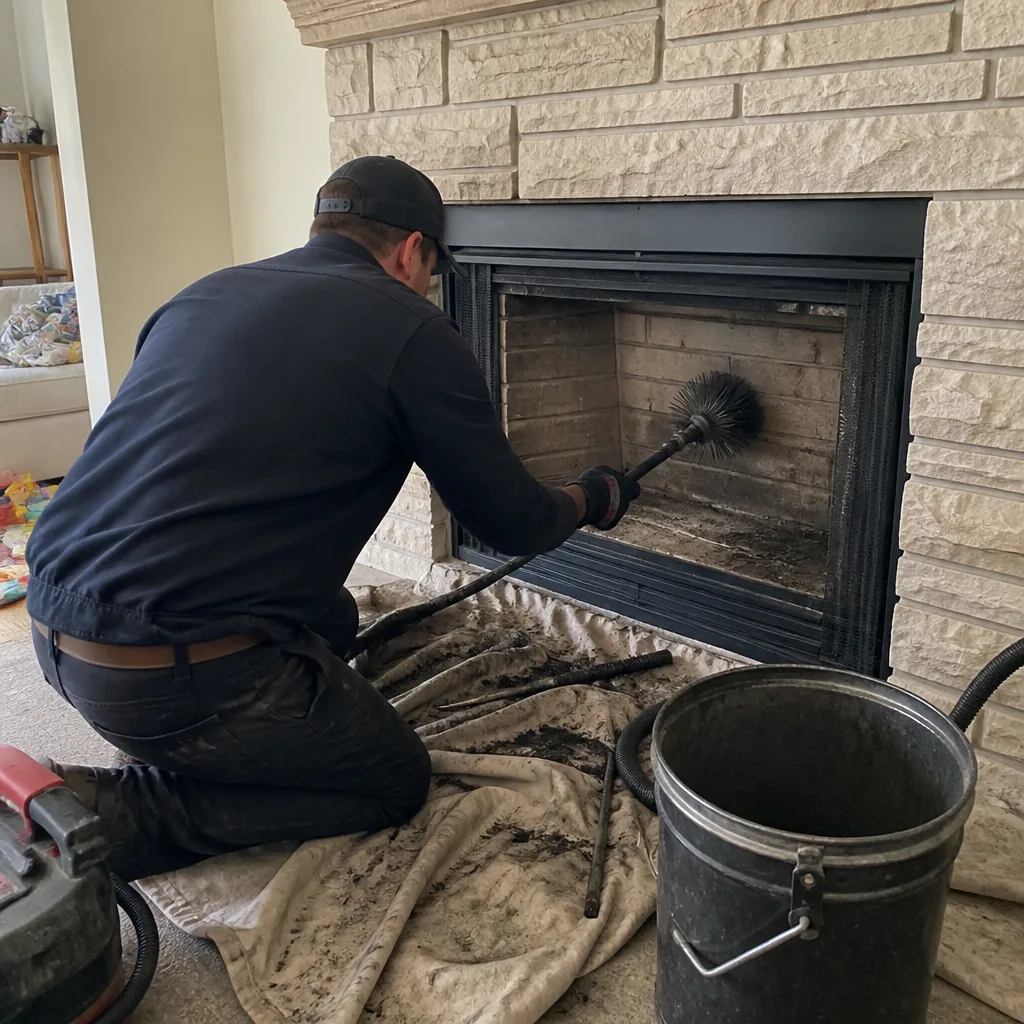
Chimney sweep logs do not sweep chimneys. They loosen some creosote - which then falls where a brush and vacuum still have to collect it.
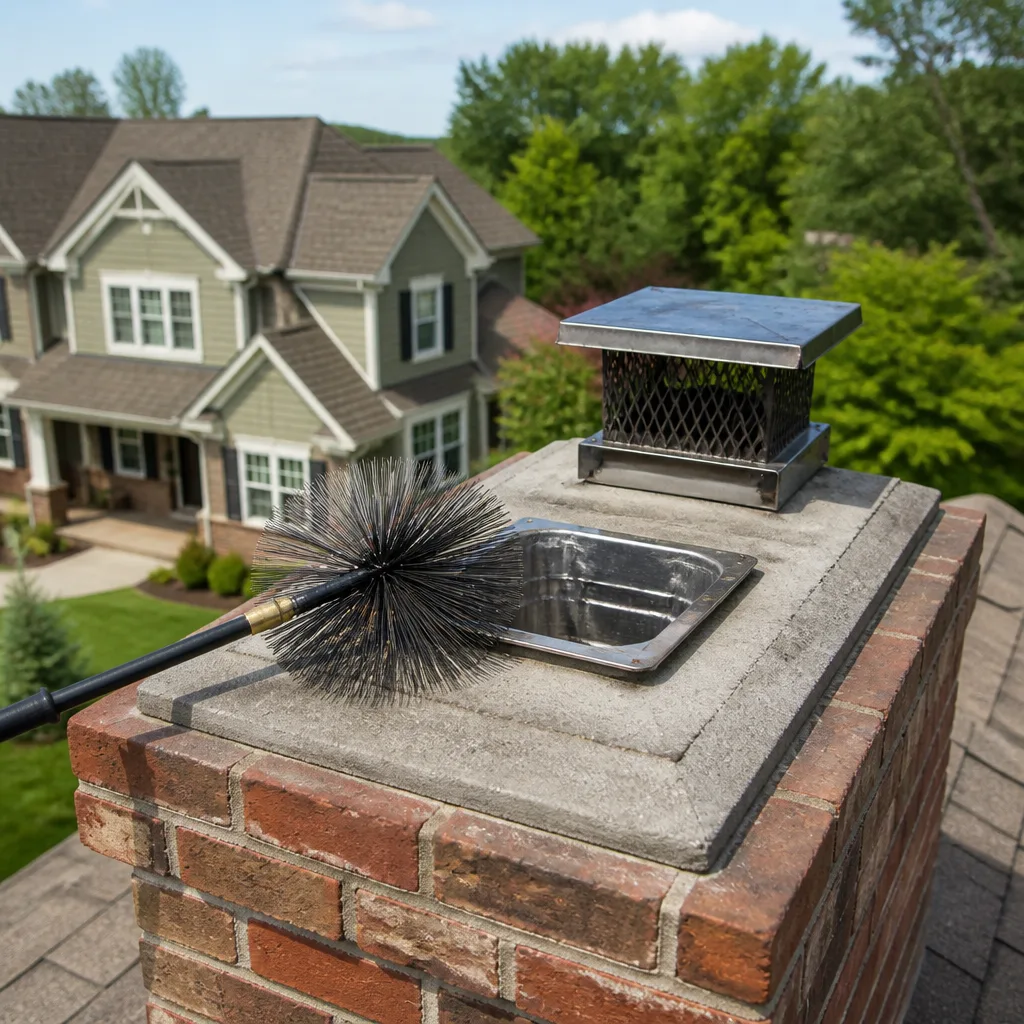
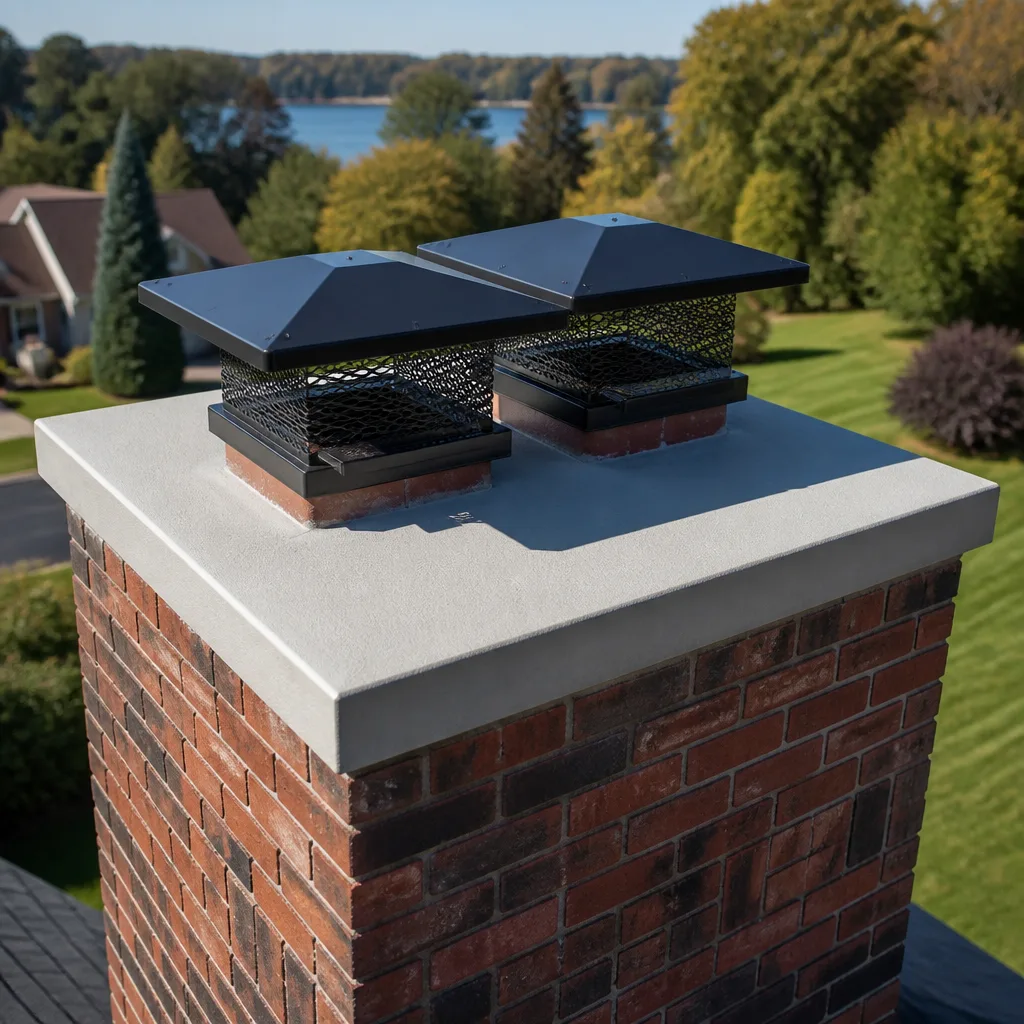
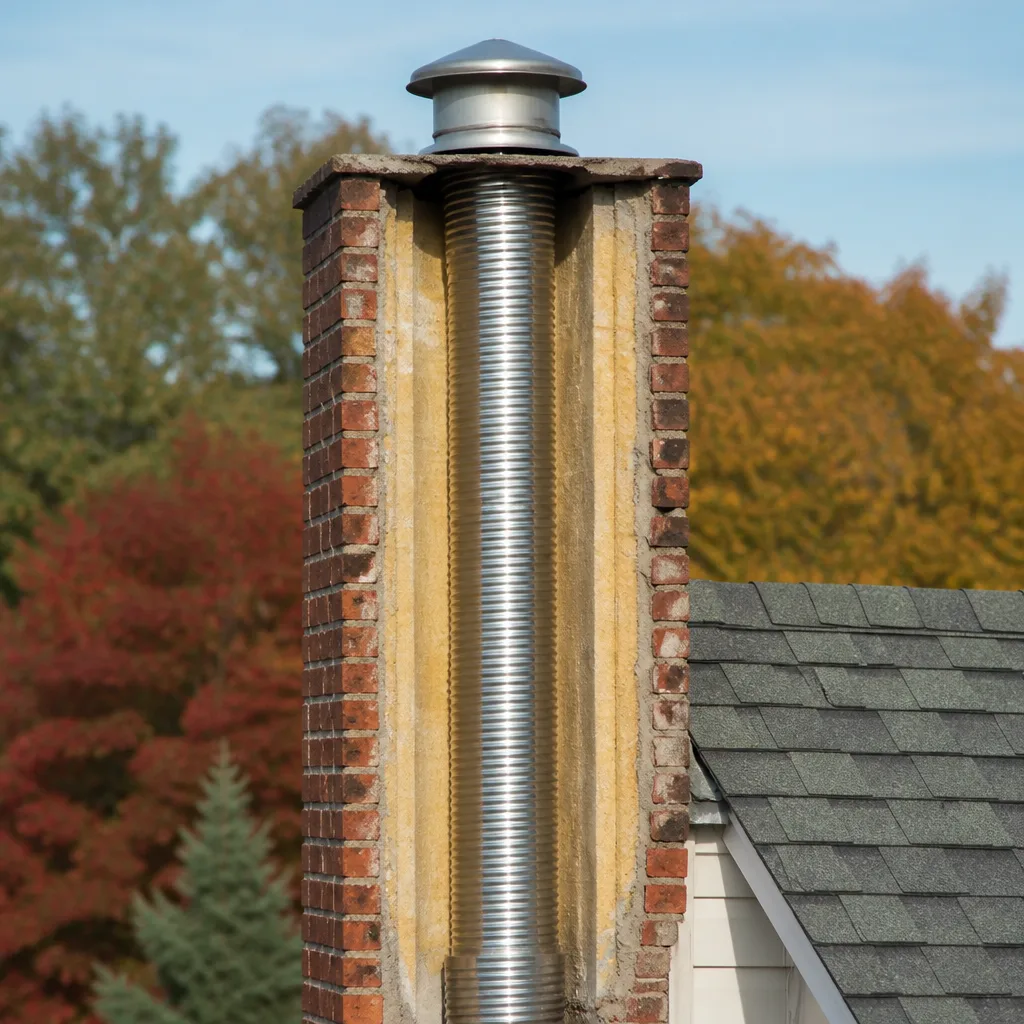
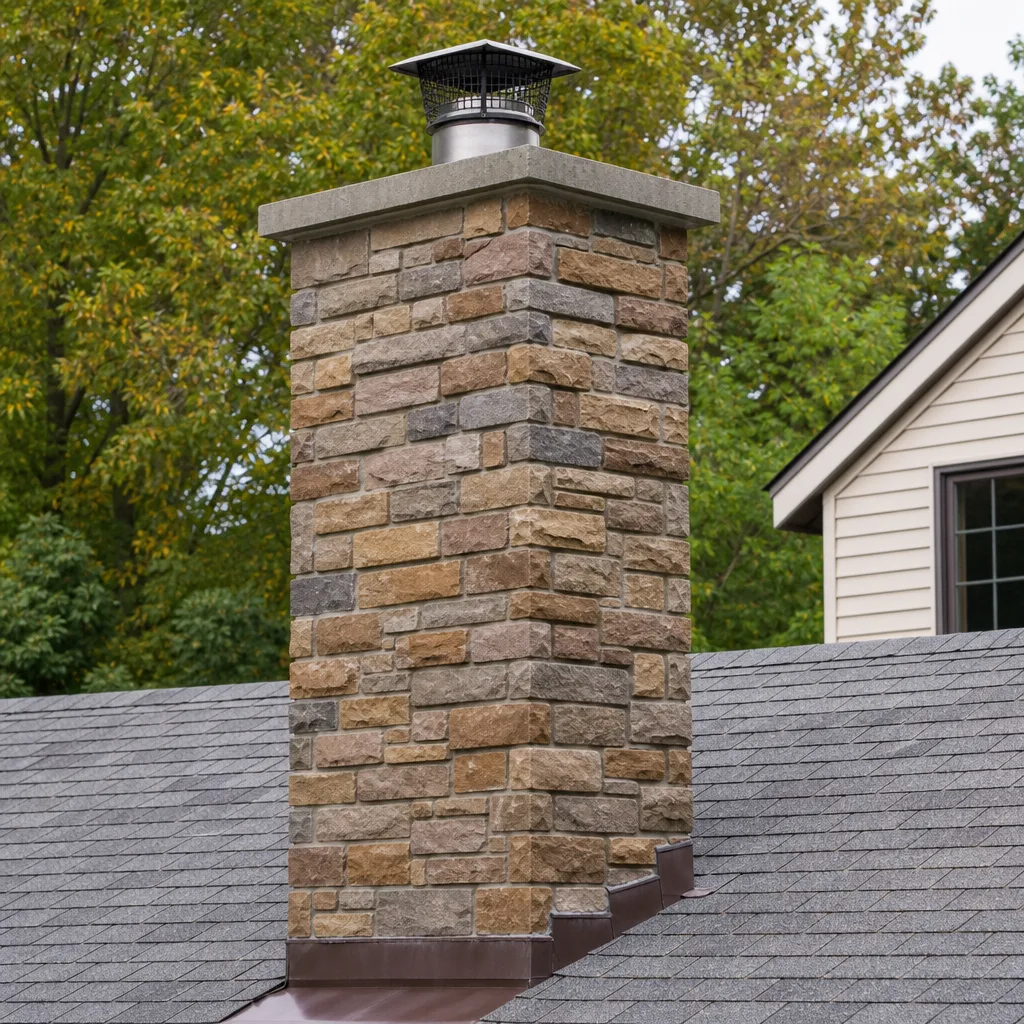
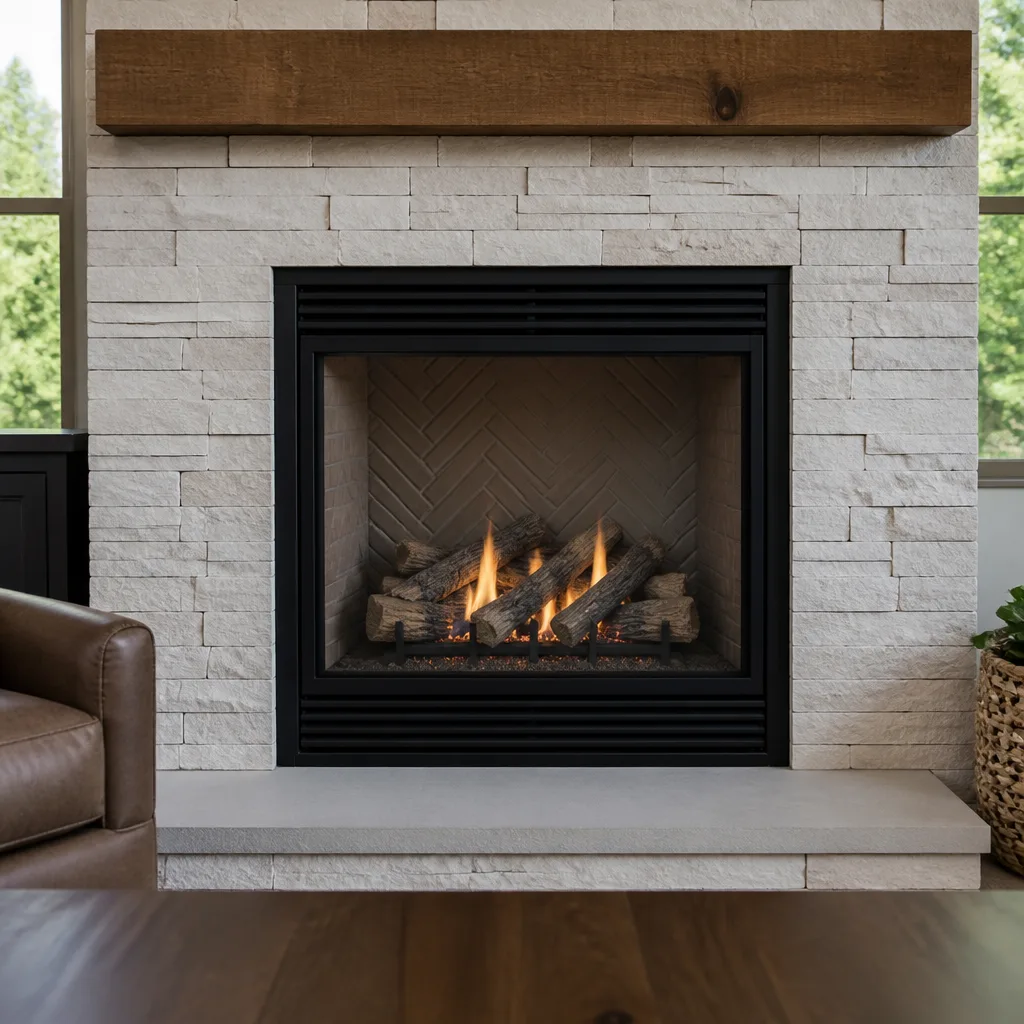
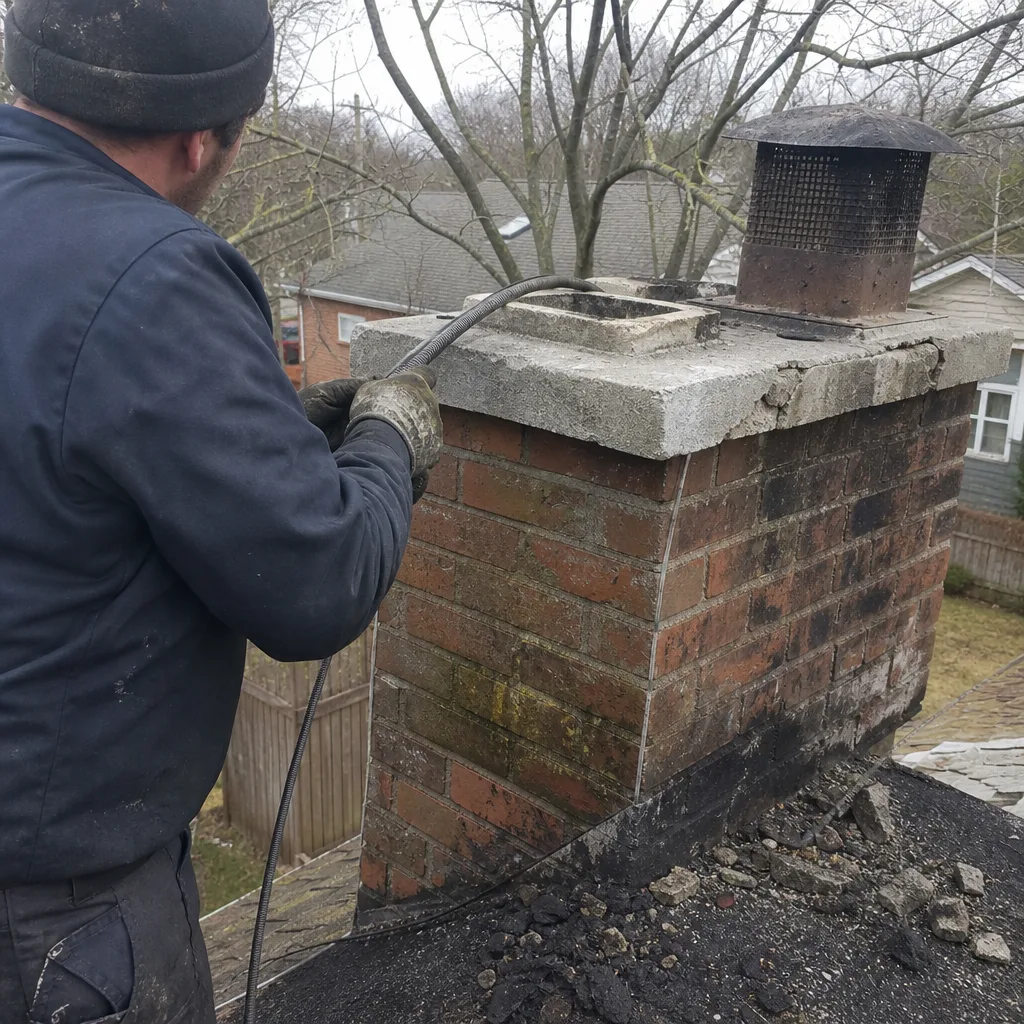 Before
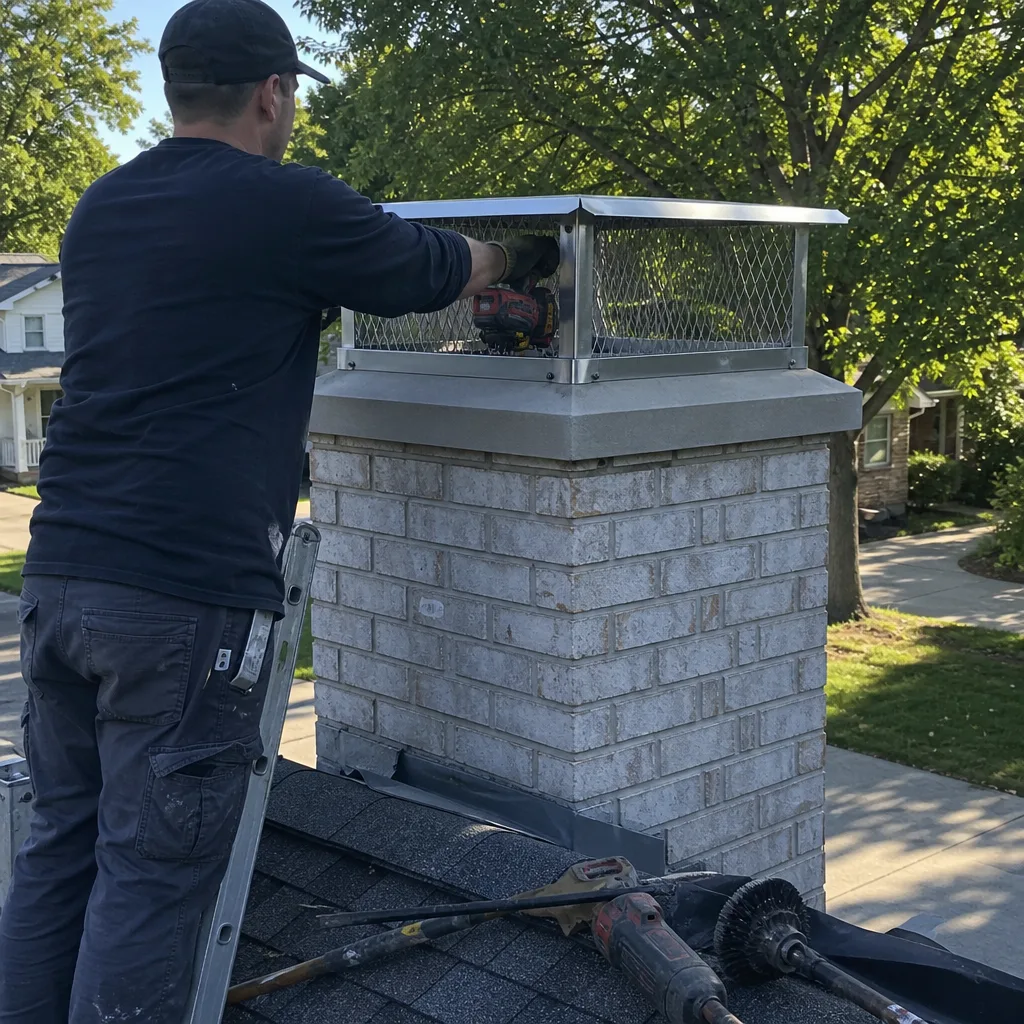 After
After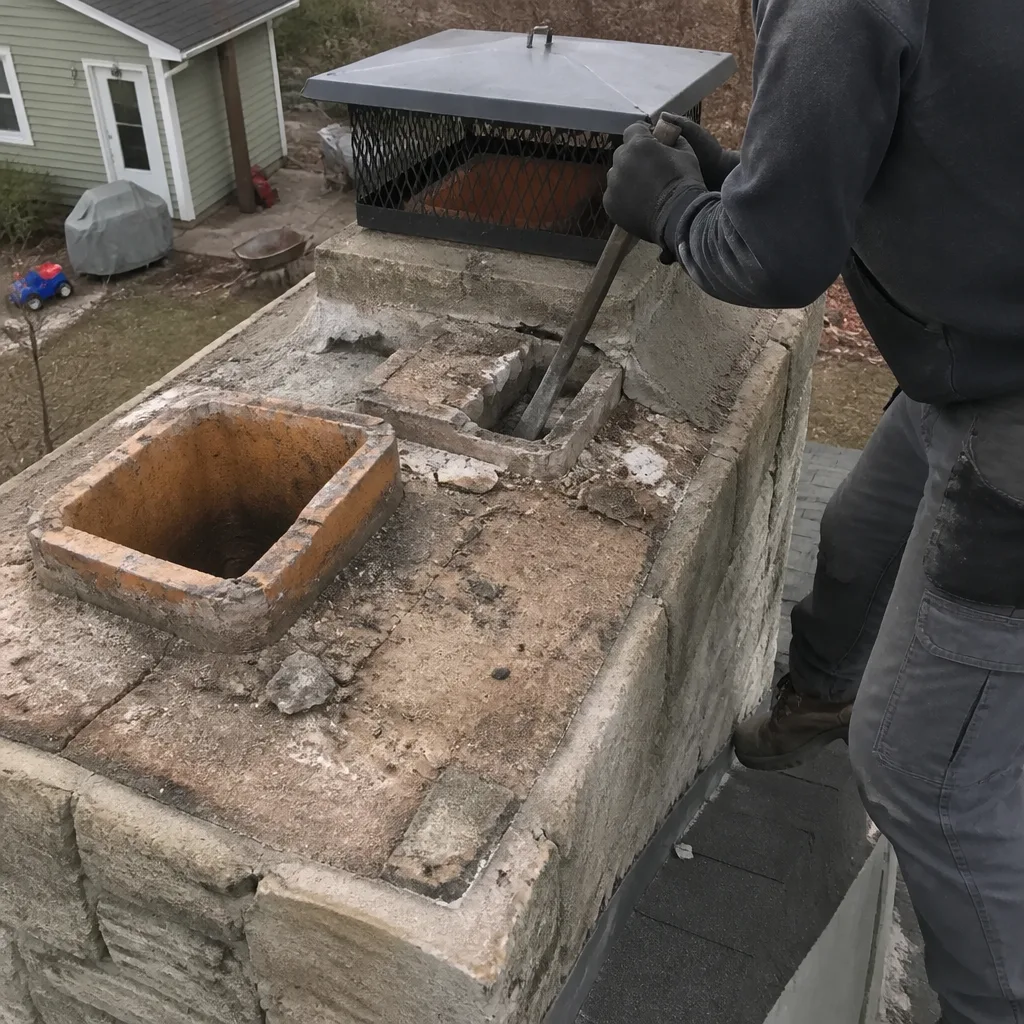 Before
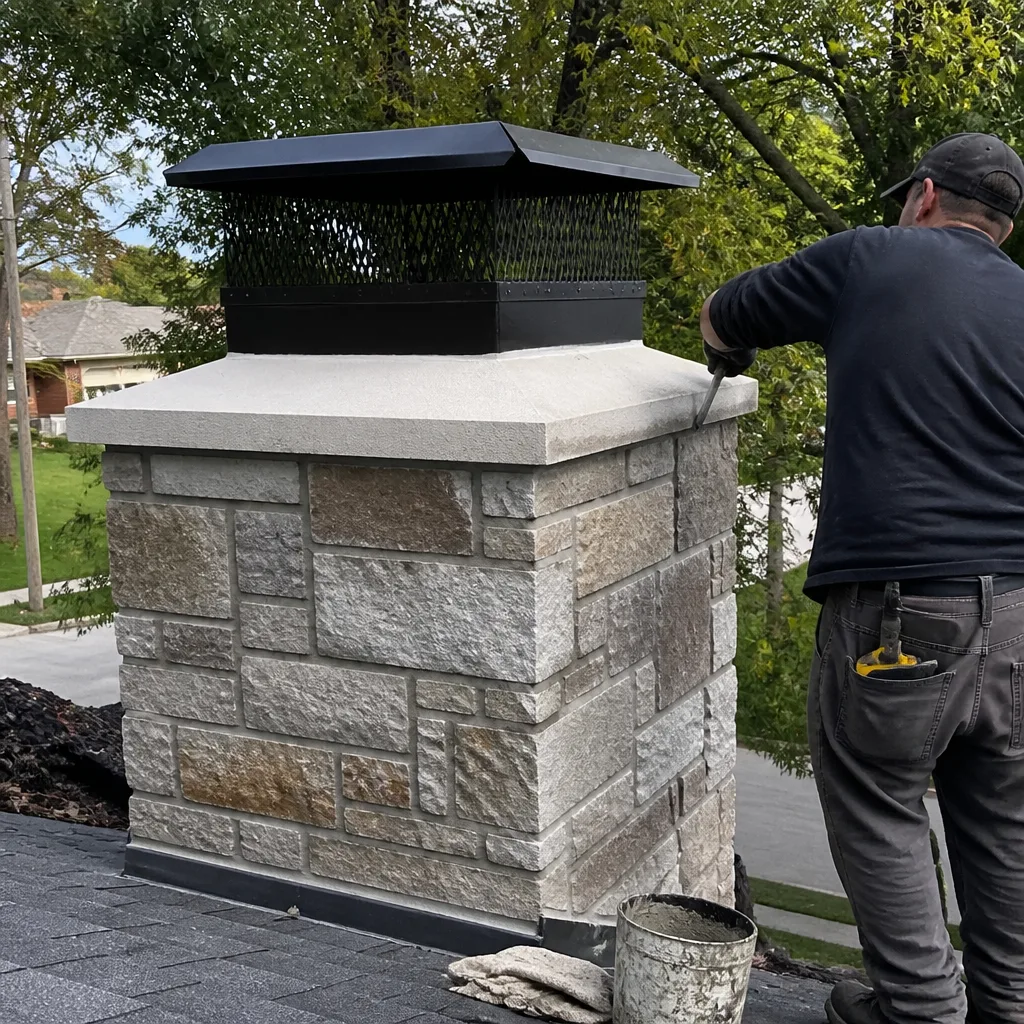 After
After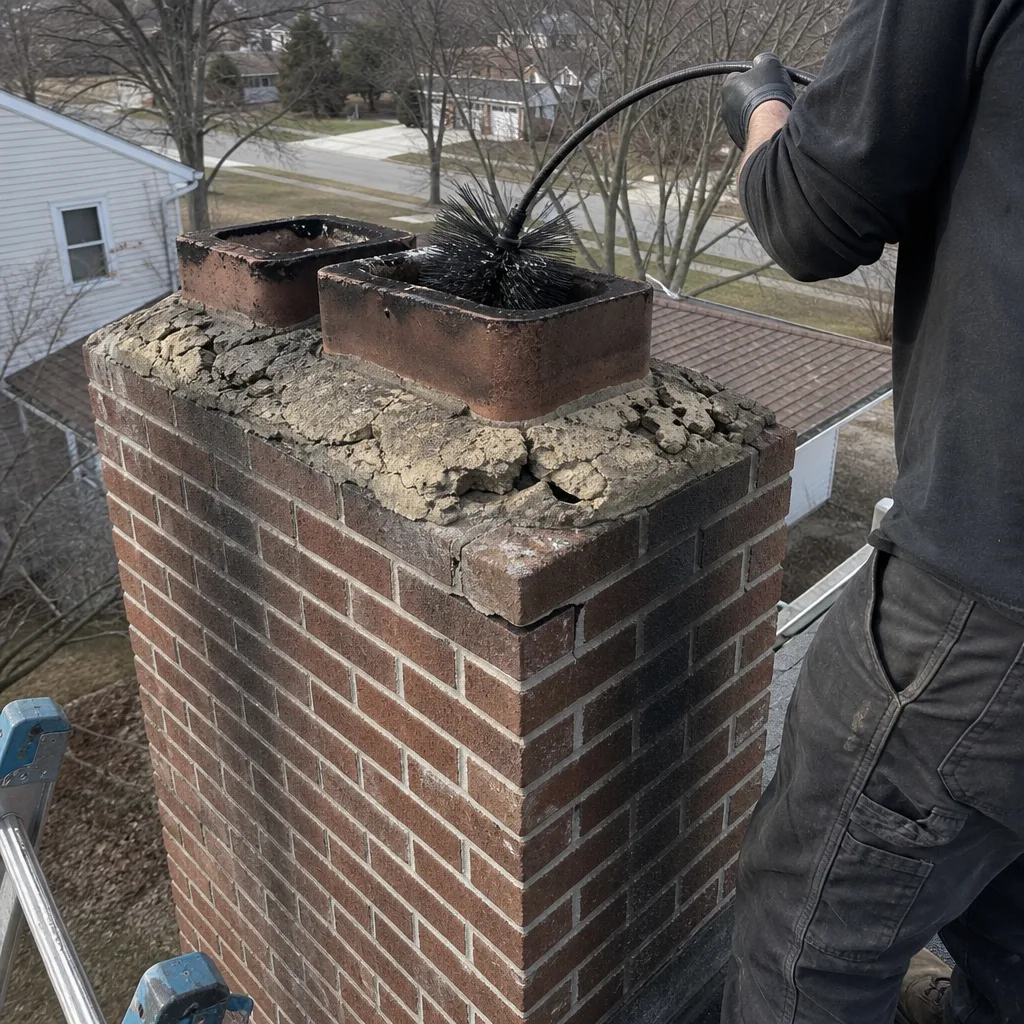 Before
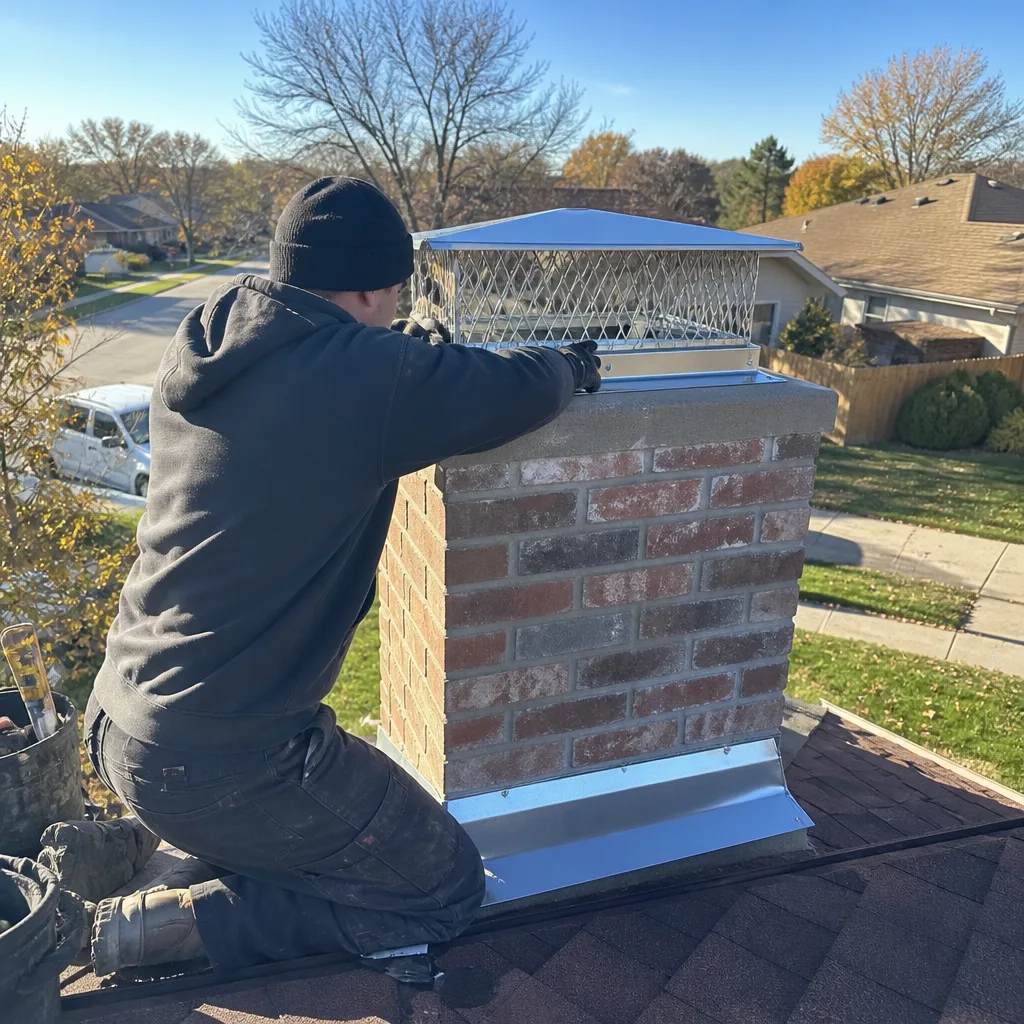 After
AfterChimney Cleaning & Sweep Maintenance Checklist for Naperville Homeowners
Creosote doesn’t wait for your annual appointment. In a single heavy-use heating season, it can progress from Stage 1 brushable flake to Stage 3 glazed tar requiring chemical treatment, especially in Naperville’s cold, damp shoulder seasons when homeowners run fires longer into spring than they expect. Most chimney guides treat the professional sweep as the entire maintenance plan. That’s backwards. A useful checklist tells you what to look for yourself, when to worry, and when a pro visit is actually necessary. This guide gives Naperville homeowners a 12-month owner-level inspection cadence with specific pass/fail indicators at each step. The professional sweep is one item on this list, not the whole list.
Quick Answer
Naperville homeowners should inspect their chimney system monthly during burning season (October through March), perform a pre-season damper draw test, and schedule Chimney Cleaning & Sweep services with a professional NFPA 211 Level 2 inspection and camera scan annually. Between visits, check the firebox for cracked bricks, the damper for smooth operation, and the exterior crown for standing water or hairline cracks. Creosote buildup beyond 1/8 inch, any smoke backup into the room, or visible deterioration of the flue liner visible from below means it’s time to call before the next scheduled sweep.
Table of Contents
- Understanding Creosote: The Three Stages Homeowners Can Self-Triage
- Monthly Owner Inspection Checklist During Burning Season
- Seasonal Cadence: A 12-Month Naperville Maintenance Calendar
- The Pre-Season Damper Draw Test Every Homeowner Should Run
- Gas Fireplace Maintenance Sub-Checklist for Naperville’s Newer Builds
- The Five Documents Your Sweep Should Hand Over
- Naperville-Specific Risks: Climate, Codes, and Common Local Issues
- Common Mistakes to Avoid
- When to Call a Professional
- Frequently Asked Questions
- The Bottom Line
 Before
 After
AfterUnderstanding Creosote: The Three Stages Homeowners Can Self-Triage
Not all buildup is equal. Knowing which stage you’re looking at determines whether you can wait for your scheduled sweep or need to stop burning and call. For a deeper dive, see our Chimney Cleaning Warning Signs: A Naperville Homeowner’s Reference Guide.
Stage 1: Soot and Flake Creosote
This is loose, dry, and black or gray. It brushes off easily with a chimney brush and looks like fine ash or flaky residue on the firebox walls. Stage 1 is normal. If this is what you’re seeing during your monthly peek up the flue with a flashlight, your burn habits are reasonable and your annual sweep will handle it. In Naperville, we see Stage 1 in homeowners who burn seasoned hardwood (oak, hickory, maple) with the damper fully open and plenty of combustion air.
Stage 2: Tar-Glazed or Puffy Creosote
Stage 2 looks like crunchy, porous black bubbles or a hard, shiny coating. It won’t brush off. This forms when wood isn’t fully seasoned, when fires are smoldered overnight with restricted air, or when the flue temperature stays too low. Naperville’s older neighborhoods near the DuPage River, like East Highlands or the Historic District, often have exterior masonry chimneys that run cold. A cold flue equals Stage 2. If you see this during your monthly inspection, schedule a sweep before your next heavy-use period. Stage 2 can be removed with mechanical tools, but it’s past DIY territory.
Stage 3: Glazed or Hardened Creosote
Stage 3 is a dense, shiny, rock-hard coating, usually dark brown to black. It looks like enamel or obsidian. This requires chemical treatment to soften before removal, sometimes over multiple visits. Stage 3 is a fire hazard. The ignition temperature drops and the material becomes fuel. If you see this, stop burning immediately. In our experience across Naperville’s 38,000+ inspections, Stage 3 most often appears in homeowners who bought a house with an existing insert and don’t know its burn history, or who’ve skipped 2+ years of professional sweeping.
Here’s the self-triage method: shine a flashlight up the flue from the firebox. If you can scratch the buildup with a fireplace poker and it flakes off, you’re at Stage 1. If it chips but doesn’t powder, you’re at Stage 2. If your poker skates across it like glass, you’re at Stage 3. That single test tells you whether to keep burning, schedule soon, or stop now.
Monthly Owner Inspection Checklist During Burning Season

These checks take ten minutes and require no tools beyond a flashlight and your fireplace poker. Do them monthly from first fire to last.
Firebox Inspection
- Check firebrick or refractory panels for cracks wider than a credit card edge. Hairline cracks are normal thermal expansion. Gaps that let flame reach the metal or masonry behind them are not.
- Look for mortar loss between bricks. Poke gently with your poker. Crumbling mortar means heat is reaching places it shouldn’t.
- Inspect the hearth extension. It should extend at least 16 inches in front of the opening and 8 inches to each side for fireplaces, 18 inches for stoves. Naperville’s 1980s and 1990s builds in subdivisions like Cress Creek sometimes have hearths that don’t meet current clearances.
Damper and Smoke Chamber
- Open the damper fully. It should move smoothly without grinding or catching. A damper that sticks partially open wastes heat; one that sticks closed risks smoke backup.
- Look up into the smoke chamber (the area above the damper, below the flue). It should be smooth, not corbeled brick with exposed mortar joints. Rough smoke chambers trap creosote. The NFPA 211 calls for parging (smoothing) when joints exceed 1/2 inch depth.
- Check for debris: bird nests, leaves, or squirrel caching. Naperville’s mature tree canopy in neighborhoods like Hobson West and White Eagle means more leaf litter and more wildlife access.
Exterior Ground-Level Check
- Walk outside and look at the chimney crown (the concrete cap on top). From the ground, you’re checking for visible cracks, missing chunks, or standing water after rain. The crown should slope away from the flue opening.
- Check flashing where the chimney meets the roof. Look for lifted edges, rust streaks, or gaps. Naperville’s freeze-thaw cycles in late winter and early spring destroy flashing faster than continuous cold climates.
- Confirm the cap is present and intact. A missing cap is an open invitation for water, animals, and debris.
Creosote Thickness Check
Using your poker, gently scrape the flue wall through the damper opening. If the buildup exceeds 1/8 inch, schedule a sweep regardless of stage. That’s the NFPA 211 threshold for mandatory cleaning.
Seasonal Cadence: A 12-Month Naperville Maintenance Calendar
Naperville’s climate demands a different rhythm than warmer regions. Our shoulder seasons are wet and unpredictable, and the first cold snap often catches homeowners who haven’t prepped.
September: Pre-Season Preparation
- Run the damper draw test (detailed in the next section).
- Schedule your professional NFPA 211 Level 2 inspection if you haven’t already. September booking avoids the October rush and gives time to address any issues before first fire.
- Inspect your wood supply. Seasoned hardwood should have cracks at the ends, bark that separates easily, and a hollow sound when knocked together. Moisture content below 20% is the target. Naperville’s humidity means covered storage is essential; even seasoned wood reabsorbs moisture if left uncovered.
October Through March: Monthly Owner Inspections
Run the monthly checklist above. Also:
- After every third fire, check ash depth. Keep it under 2 inches for fireplaces, 1 inch for stoves. Excess ash restricts combustion air and cools the fire, increasing creosote.
- Monitor burn quality. A good fire produces thin, wispy smoke from the chimney top. Thick, brown smoke means incomplete combustion and rapid creosote formation.
- After heavy windstorms, common in Naperville’s open prairie exposure, do an extra exterior check for cap displacement or flashing damage.
April: Post-Season Shutdown
- Remove all ashes to a metal container with a tight lid. Store outside, away from structures, for at least 3 days before disposal. Live embs hide in ash for days.
- Close the damper to prevent conditioned air loss and animal entry during warm months.
- Do a final exterior inspection. Spring rains reveal leaks that winter dryness masked. Check the attic for water stains near the chimney if accessible.
May Through August: Off-Season Monitoring
- Check the chimney cap and crown after severe storms. Naperville’s summer thunderstorms can deposit debris or damage caps.
- Monitor for animal activity. Squirrels and raccoons scout nesting sites in late summer. A cap with intact mesh prevents entry.
- If you’re considering a liner replacement or repair, summer is the booking window. Crews have better availability, and mortar and crown materials cure properly in warm, dry conditions.
The Pre-Season Damper Draw Test Every Homeowner Should Run
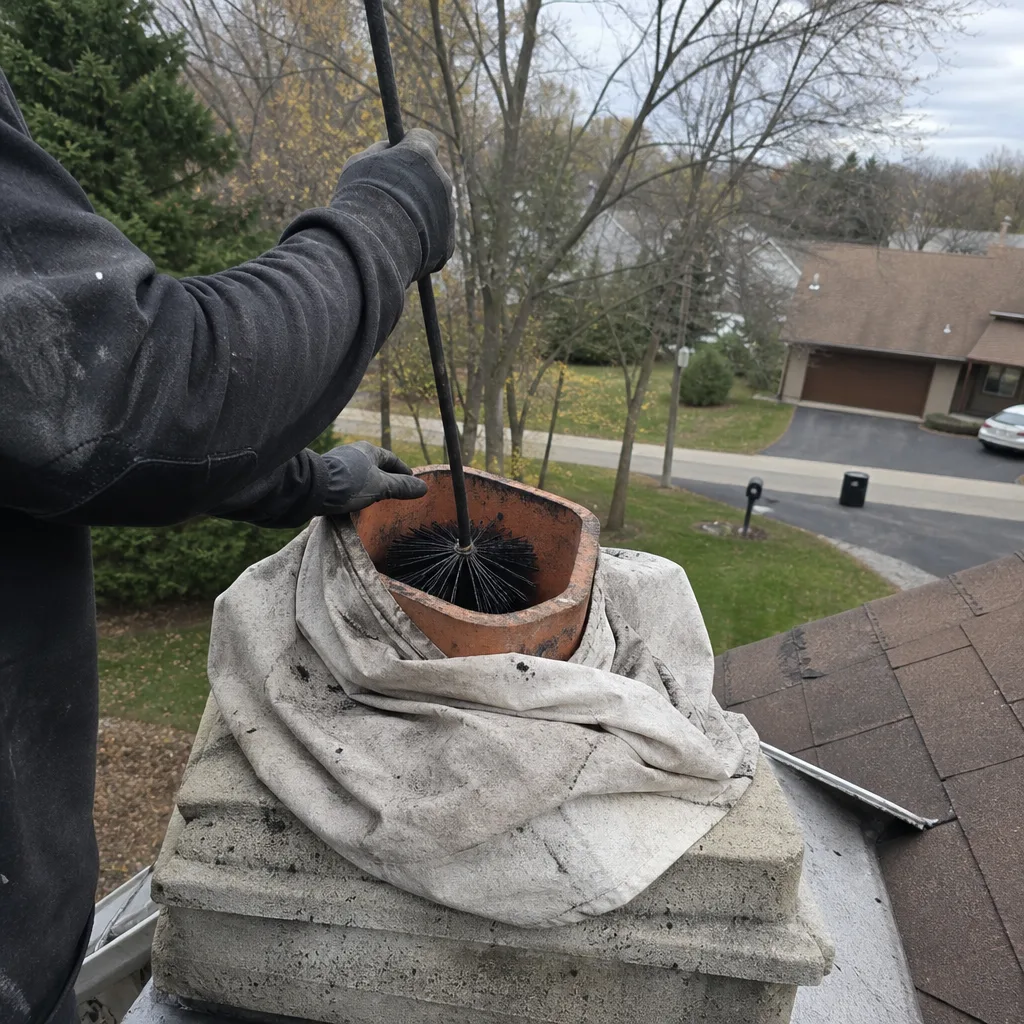
This test catches blockages and draft problems before you light the first fire. It takes five minutes and requires newspaper and a match.
- Open the damper fully. Wait 10 minutes with the room at normal temperature. This allows the air column in the flue to stabilize.
- Roll a single sheet of newspaper into a tight torch. Light the top end.
- Hold the burning newspaper up toward the damper opening, near the smoke chamber. Do not let it touch the damper or flue walls.
- Observe the smoke behavior. Proper draft pulls smoke cleanly up the flue with no spillage into the room. The flame should lean toward the flue opening.
Pass/fail indicators:
- Pass: Smoke streams upward immediately. No odor of smoke in the room. This is normal operation.
- Fail – smoke rolls into room: Indicates blockage, cold flue, or negative pressure in the house. Common in Naperville’s tightly sealed newer builds in subdivisions like Tall Grass or Ashwood Creek, where exhaust fans and HVAC create pressure imbalances. Try opening a window in the same room and retest. If smoke still backs up, call before burning.
- Fail – no movement, smoke hovers: Indicates complete blockage or a severely cold flue. Do not attempt to burn. This is how carbon monoxide incidents begin.
Cold flue syndrome is real in Naperville. An exterior chimney on a north or west wall, common in 1970s and 1980s split-levels near Naper Boulevard and Ogden Avenue, can stay cold enough that the initial fire’s smoke doesn’t rise. The newspaper test reveals this safely, without filling your living room with smoke from a full fire.
If your home has a basement fireplace with an exterior chimney, run this test twice: once with the basement HVAC off, once with it running. The air handler can flip the pressure dynamic.
Gas Fireplace Maintenance Sub-Checklist for Naperville’s Newer Builds
Most chimney guides ignore gas fireplaces entirely. That’s a significant gap in Naperville, where builds from 2015 onward are predominantly gas. Gas systems have different failure modes than wood, and “it lights, so it’s fine” is a dangerous assumption.
Monthly Checks During Heating Season
- Verify the pilot flame (if standing pilot) is sharp blue with minimal yellow. A lazy, yellow pilot indicates incomplete combustion and possible venting issues.
- Run the unit for 10 minutes and smell-test near the fireplace and at the exterior vent termination. Any odor of gas or combustion products in the room means shutdown and call. Carbon monoxide from gas appliances is odorless, but incomplete combustion often produces other detectable byproducts first.
- Check the exterior vent termination for obstructions: snow, ice, landscaping mulch, or animal nests. Naperville’s heavy snowfalls in winters like 2022-2023 buried vent terminations that homeowners didn’t think to clear.
Annual Professional Service
Gas fireplaces need annual service by a technician certified for the fuel type and appliance. This is not a sweep task; it’s a mechanical service. The technician should:
- Clean and inspect the burner, pilot assembly, and thermocouple/thermopile.
- Check gas pressure at the manifold per manufacturer specification.
- Inspect the venting system for proper slope, support, and termination clearance.
- Test spillage with a draft gauge.
- Clean the glass and inspect the gasket seal.
Specific to Direct-Vent and B-Vent Systems
Direct-vent systems use a sealed combustion chamber with a coaxial vent (intake air outer pipe, exhaust inner pipe). The gap between pipes must remain clear. We’ve found bird nests, wasp mud, and even tennis balls from neighboring yards blocking the intake in Naperville’s dense subdivisions.
B-vent systems rely on natural draft up a single-wall or double-wall pipe. They are more sensitive to negative pressure. If your B-vent fireplace backdrafts when the kitchen range hood runs, that’s a design or pressure problem, not a fireplace problem. It needs professional evaluation.
Log Set Realism Check
Vented decorative gas logs produce some combustion byproducts and moisture. The damper must remain blocked open (per code) or be removed. If you find the damper closed on a vented log set, that’s a red flag from a previous owner who didn’t understand the installation. In Naperville’s resale market, where homes turn over every 5-7 years in active subdivisions, we encounter this frequently.
Vent-free logs don’t use the chimney at all. They require specific room volume, oxygen depletion sensors, and strict maintenance. We’re not fans of vent-free in tight modern construction, but if you have them, the ODS pilot must be tested annually and the unit must never be run longer than manufacturer-specified continuous hours.
The Five Documents Your Sweep Should Hand Over
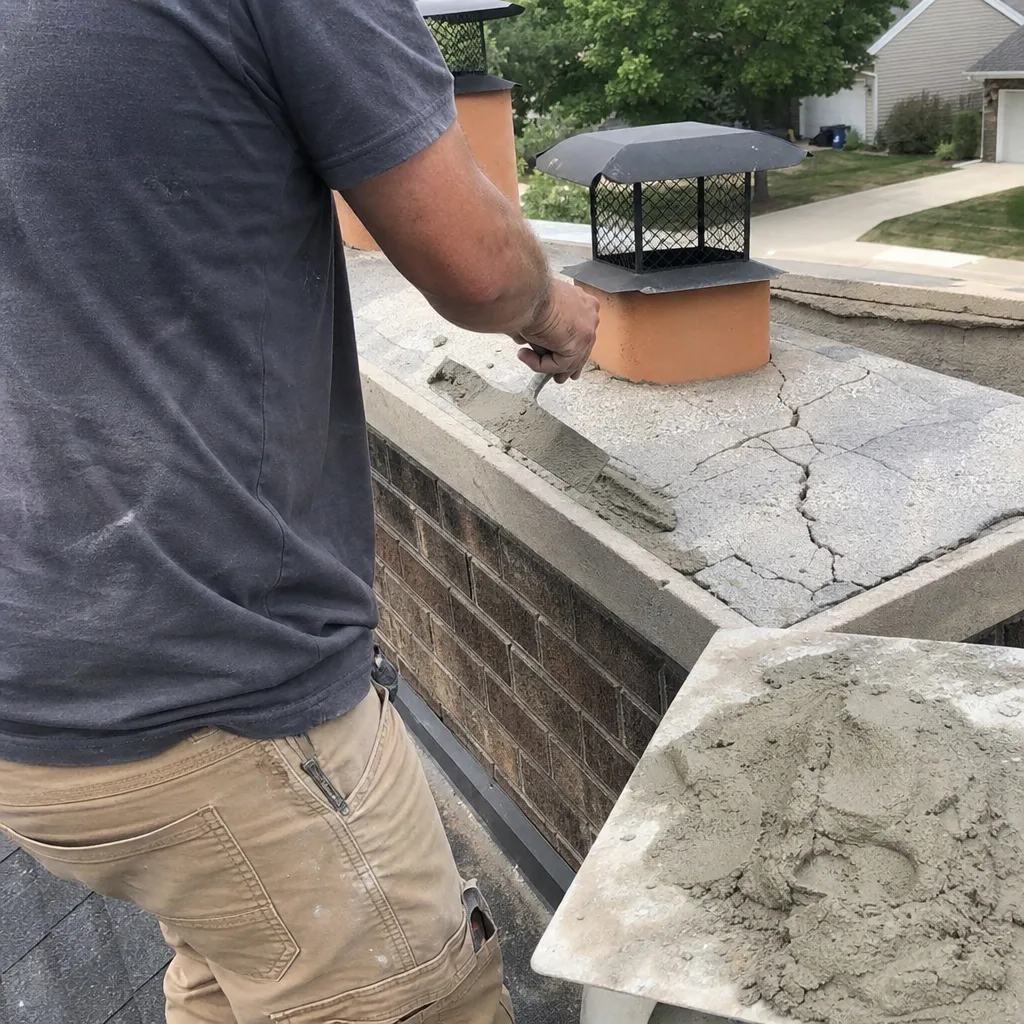
A professional visit isn’t complete when the truck leaves. It’s complete when you have documentation you can reference, share with your insurer, or use to verify the next technician’s findings. Under Clause 4 of the Haven Standard, a documented photo record is required on every job. But that’s one of five documents you should receive.
Here’s your checklist for job completion:
- Written Scope of Work - What was done, what was found, and what was recommended. Not a checklist with checkmarks. A narrative description: “Flue liner inspected via camera scan from firebox to crown. Liner is 316 stainless, 6-inch round, installed approximately 1995. No breaches, no deformation, joints aligned. Creosote deposit: Stage 1, approximately 1/16 inch, removed by rotary sweeping.” If your sweep hands you a carbon-copy checklist with “chimney swept” checked off, that’s not a scope.
- Before and After Photographs - Visual proof of the flue condition. The before photo shows what was there; the after shows what remains (ideally clean liner). These should be timestamped and geotagged. Clause 4 of the Haven Standard requires this archive; we’ve maintained it since 2009.
- Camera Scan Report or Video - For NFPA 211 Level 2 inspections, the camera scan is the inspection. The report should note the scan path, any anomalies found, and their locations (measured from the firebox or crown). A verbal “looks good” is not a report.
- Written Warranty or Guarantee - What happens if something goes wrong. Our 365-Day Done Right Promise covers this: if it’s not done right, we make it right. The warranty should specify duration, coverage, and how to invoke it.
- Itemized Receipt - What you paid for, line by line. This supports warranty claims, home sale disclosures, and tax records for rental properties.
If your sweep can’t produce all five, you’re not getting a documented service. You’re getting a handshake and a hope. In Naperville’s active real estate market, where pre-sale inspections are common, missing documentation can delay closings or trigger renegotiation.
We deliver all five on every job, with the written price established before work starts per Haven Standard Clause 1. No exceptions.
Naperville-Specific Risks: Climate, Codes, and Common Local Issues
Naperville’s geography and housing stock create specific chimney vulnerabilities that generic checklists miss.
Freeze-Thaw Damage
Naperville sits in USDA Hardiness Zone 5b, with average winter lows near -10°F and frequent freeze-thaw cycles in late winter. Water enters micro-cracks in masonry, expands when frozen, and spalls (flakes off) the brick face. We’ve replaced crowns and rebuilt chimney tops in neighborhoods from Downtown to South Pointe where freeze-thaw destroyed 20 years of masonry in 3 seasons. The fix is crown maintenance and water repellent application, not waiting for visible damage.
Clay Liner Deterioration in Pre-1990 Construction
Naperville’s 1960s-1980s housing boom used clay tile flue liners, often single-wythe (one tile thick). These crack from thermal shock or settle with the house. In the East Highlands and near North Central College, we regularly find clay liners with missing tiles or shifted joints that create gaps to combustible framing. A camera scan finds this; a flashlight look from below does not.
Gas Conversion Legacy Issues
Many Naperville homeowners converted wood fireplaces to gas inserts in the 1990s and 2000s. Some conversions used liners too small for the appliance input, or connected B-vent appliances to existing masonry chimneys without proper sizing. The result is chronic condensation, liner corrosion, or drafting problems. If your converted fireplace has ever shown moisture stains, rust particles, or odd odors, the original conversion may need review.
Local Code and Permit Context
Naperville follows the 2021 International Residential Code with amendments, including specific requirements for chimney clearance to combustibles and fireplace hearth dimensions. Liner replacements and chimney rebuilds require permits through the City of Naperville Development Services Department. Any sweep or mason who says permits aren’t needed for liner work is incorrect. We pull permits as standard practice; the documentation becomes part of your five-document packet.
Neighborhood-Specific Patterns
In Cress Creek and White Eagle, 1980s-1990s construction with exterior chimneys on north walls shows higher rates of cold flue syndrome and Stage 2 creosote. In the Historic District, original 1880s-1920s masonry often lacks liners entirely or has unlined brick flues that no longer meet code for wood burning. In newer subdivisions like Tall Grass and Ashwood Creek, tightly sealed construction creates negative pressure issues that affect both wood and gas fireplace drafting.
Common Mistakes to Avoid
- Assuming gas fireplaces need no maintenance. They don’t produce creosote, but they do produce condensation, corrosion, and mechanical wear. Annual service by a gas-certified technician is non-negotiable for safety.
- Burning unseasoned wood because “it’s all I could get.” Wood with moisture above 25% creates Stage 2-3 creosote in weeks, not months. In Naperville, buy wood by spring and store it covered, off the ground, with air circulation, for at least 6 months.
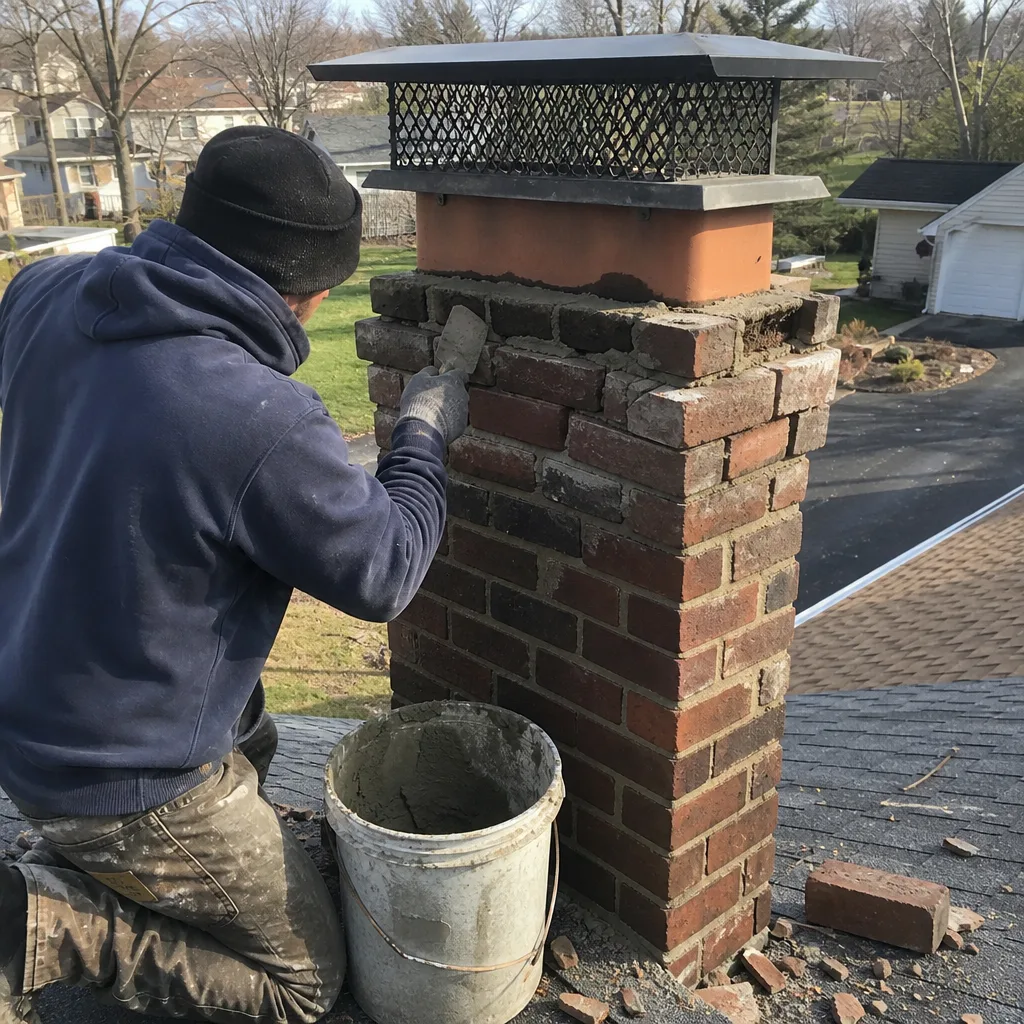
- Skipping the post-storm exterior check. Our prairie wind exposure means cap displacement and flashing damage happen more often than homeowners realize. A 10-minute walk-around after 50+ mph winds catches problems before water enters.
- Accepting “it looks fine” as an inspection result. Without a camera scan of the full flue length, you’re trusting a flashlight and optimism. The NFPA 211 Level 2 standard exists because most serious defects are not visible from below.
- Delaying sweep because “we barely used it.” Even occasional fires produce creosote. And animals, debris, and moisture damage accumulate regardless of use. Annual inspection is the standard; usage frequency adjusts cleaning frequency, not inspection frequency.
- DIY sweeping with a hardware store brush. A homeowner brush reaches only the flue center, misses the smoke chamber entirely, and can’t evaluate liner condition. Worse, dislodging creosote without proper vacuum containment deposits it in your home. This is not a recommended DIY task.
- Ignoring the damper draw test because “it worked last year.” Blockages form in off-seasons. Birds nest in May; squirrels cache in September. The first fire of the season should never be the test of whether the flue is open.
When to Call a Professional
Call before your next fire if you find: creosote exceeding 1/8 inch, any Stage 2 or 3 buildup, cracks in the firebox that expose metal or framing, a damper that won’t fully open or close, smoke backup during the newspaper draw test, water stains near the chimney in attic or ceiling, or missing or damaged chimney cap or crown. These are not “watch and wait” conditions.
Also call if your home is new to you and you have no documentation of the last professional service. In Naperville’s resale market, chimney condition is a common inspection finding. Getting ahead of it protects your closing timeline.
Chimney Cleaning & Sweep in Naperville from Level Two Chimney Naperville includes the NFPA 211 Level 2 camera inspection, rotary sweeping as needed, and the full five-document record on completion. We offer free estimates in Naperville. Call (331) 265-1700 to schedule or to request a free second opinion on any written estimate you’ve received.
Frequently Asked Questions
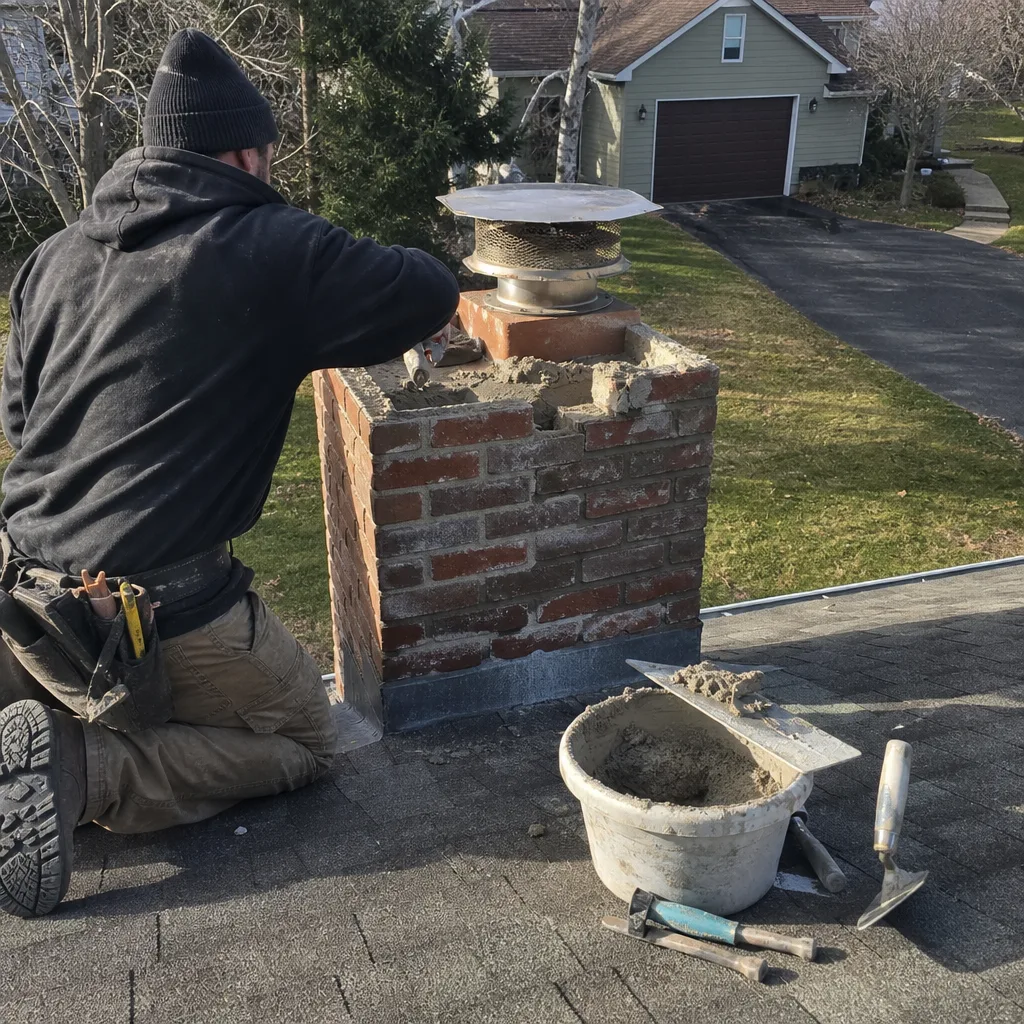
A professional chimney sweep with NFPA 211 Level 2 camera inspection in Naperville typically ranges from $250 to $450 for a standard fireplace system, depending on accessibility, creosote stage, and whether the flue is lined or unlined. Add $100 to $200 for each additional flue (furnace, second fireplace). We provide a written price before any work starts, with no variation after arrival. Call (331) 265-1700 for an exact quote on your system - estimates are free.
You need a new liner if the existing one is cracked, breached, missing sections, or improperly sized for the appliance it serves. We never recommend liner replacement without camera evidence you can see for yourself. In many Naperville homes with clay tile liners from the 1970s-1990s, the liner is intact and simply needs cleaning. When replacement is necessary, we specify why, show you the breach or deformation on camera, and provide a written scope with materials from Level Two Chimney Naperville home sourcing through HeatShield, Olympia Chimney, or DuraFlex depending on application. If the liner is sound, we’ll tell you plainly.
The NFPA 211 standard calls for annual inspection of all chimney systems, with cleaning frequency determined by creosote accumulation, not calendar alone. Most Naperville homeowners who burn 2-3 times weekly during heating season need annual sweeping. Occasional users may inspect annually and clean every 2-3 years if creosote stays below 1/8 inch. Gas fireplaces need annual mechanical service but not sweeping. The key is the inspection, not assumption.
Skipped maintenance leads to three predictable outcomes: creosote accumulation increases fire risk (chimney fires exceed 2,000°F and can crack masonry or ignite adjacent framing), moisture intrusion degrades liners and masonry (freeze-thaw in Naperville accelerates this), and blockages from debris or animal nests cause smoke backup and carbon monoxide exposure. These are not hypothetical risks. They’re the reason the NFPA 211 standard exists. The cost of prevention is a fraction of the cost of remediation or property loss.
We don’t recommend it. A homeowner brush kit can’t reach the smoke chamber, can’t evaluate liner condition, and typically lacks proper dust containment. More critically, you won’t know what you missed. The value of professional service is the camera inspection and documented record, not just the brushing. If cost is a concern, our written price is established upfront with no obligation. We also offer free second opinions on competitor quotes.
A Level 1 inspection is a visual examination of readily accessible portions of the chimney exterior and interior, appropriate for continued use under unchanged conditions. A Level 2 inspection adds a camera scan of the full flue interior, accessible portions of the attic and basement, and evaluation of clearances to combustibles. It’s required at property sale, after chimney fire or seismic event, or when the appliance or fuel type changes. Level Two Chimney Naperville performs Level 2 as our default on every visit - we made this standard in 2009, years before it became common practice, and codified it as Clause 4 of the Haven Standard.
A brief dust-burn smell on first seasonal use is common and usually harmless - it’s dust accumulation on the burner and logs. Persistent odor, soot smell, or any odor while the unit is running indicates incomplete combustion, venting problems, or gas leak. Shut down and call a gas-certified technician. Don’t assume it’s normal. Carbon monoxide from gas appliances is odorless and dangerous; any combustion odor is a warning of conditions that could produce it.
The Bottom Line
A chimney maintenance checklist that begins and ends with “call a sweep once a year” leaves homeowners blind for 364 days. The useful approach - the one we’ve refined across 38,000+ inspections since 2009 and detailed in The Complete Guide to Chimney Cleaning in Naperville - gives you specific owner-level checks, clear pass/fail criteria, and the knowledge to know when professional service is actually needed versus when you can keep burning safely.
Run your monthly inspections during burning season. Perform the pre-season damper draw test every September. Know your creosote stages. Demand the five documents after any professional visit. And understand that Naperville’s climate and housing stock create specific risks - freeze-thaw damage, clay liner deterioration, gas conversion legacies - that generic advice doesn’t address. For additional help, explore our more guides & resources.
When you do call a professional, the standard matters. Camera inspection, written price before work, documented record after. That’s Clause 4 of the Haven Standard. That’s what we’ve delivered since 2009.
Written by Corrine Halstead, Owner at Level Two Chimney Naperville, serving Naperville since 2009.