
Level 1 sweep and inspection to the NFPA 211 annual standard - flue, crown, cap, and flashing checked and photographed
Chimney sweep logs do not sweep chimneys. They loosen some creosote - which then falls where a brush and vacuum still have to collect it.
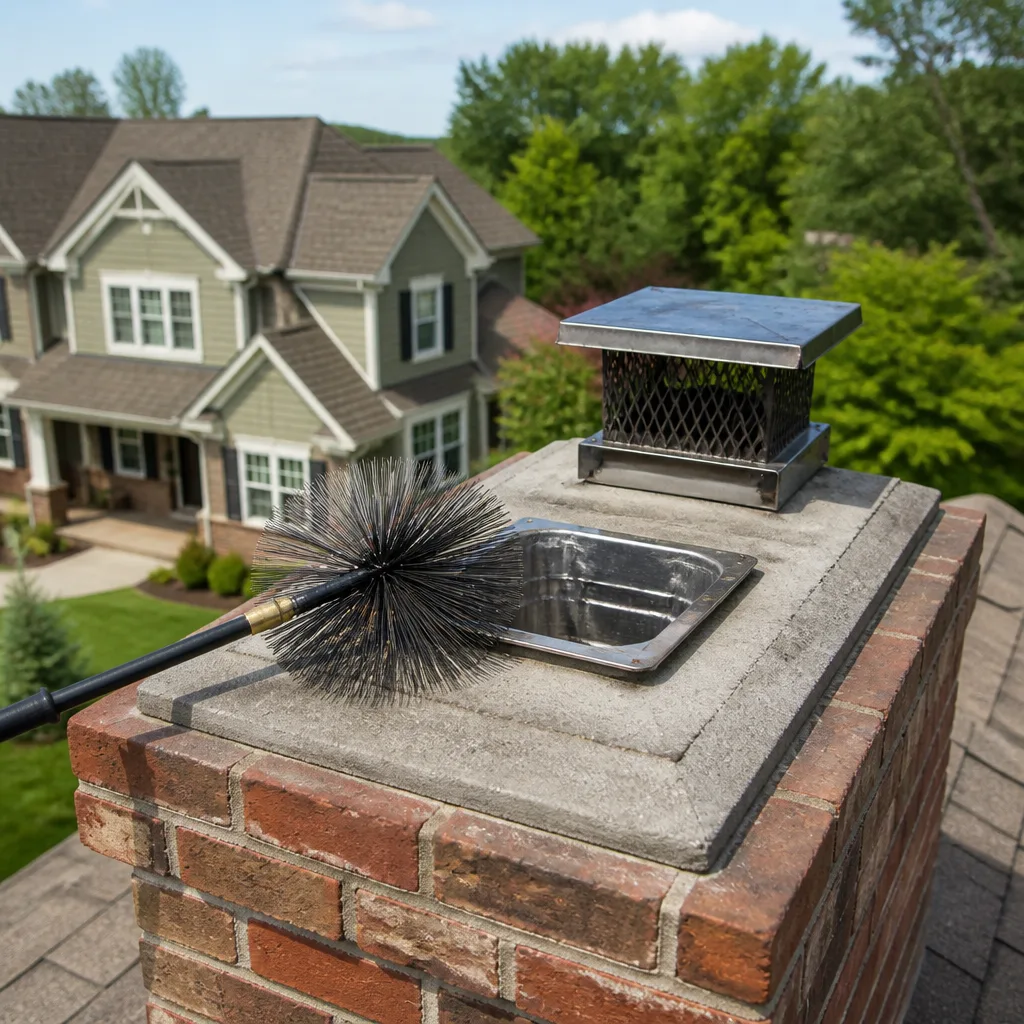
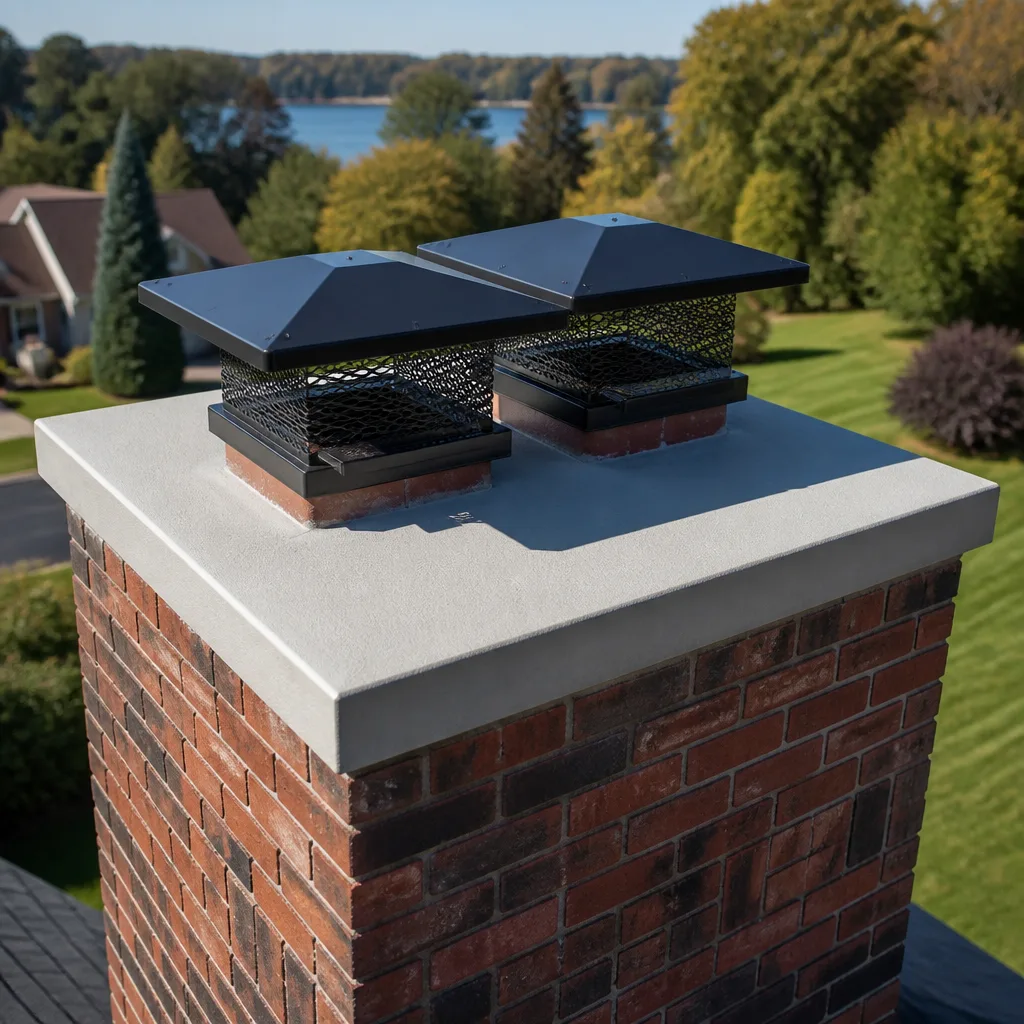
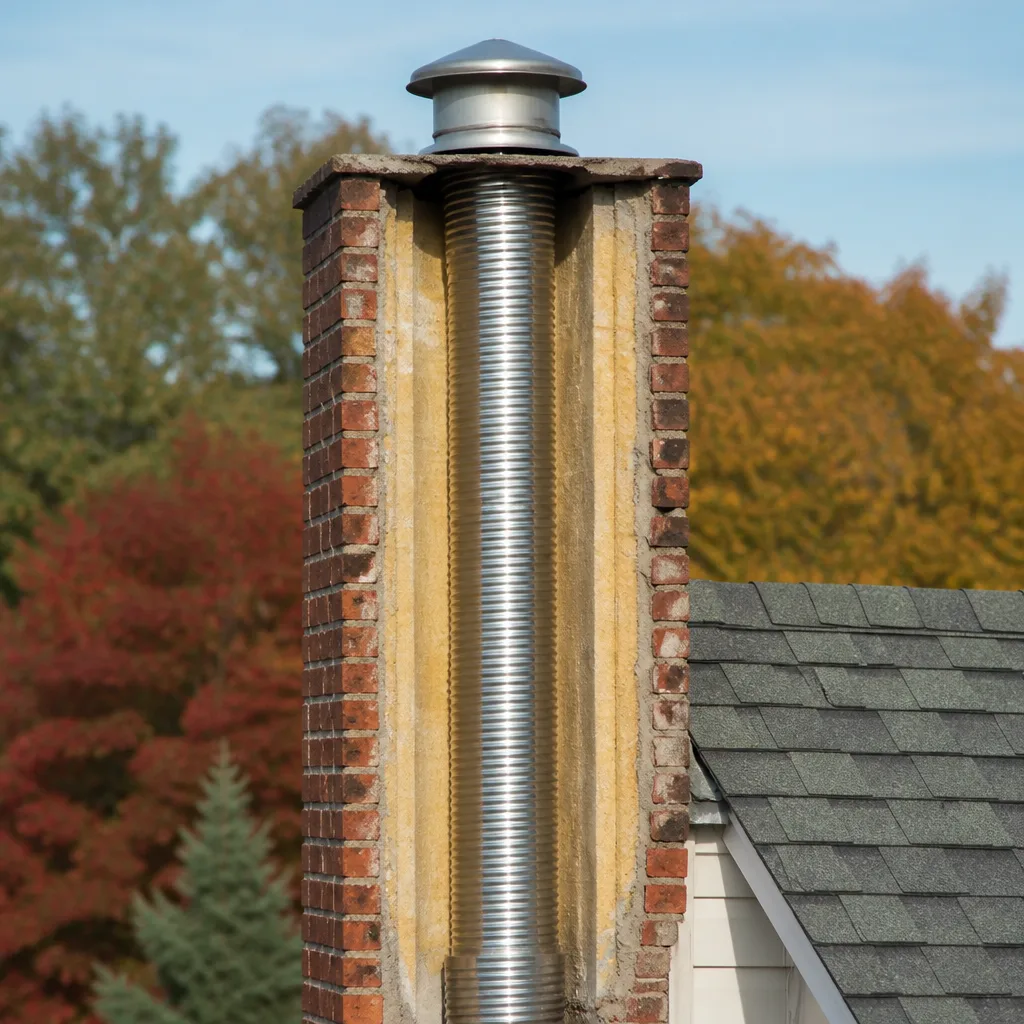
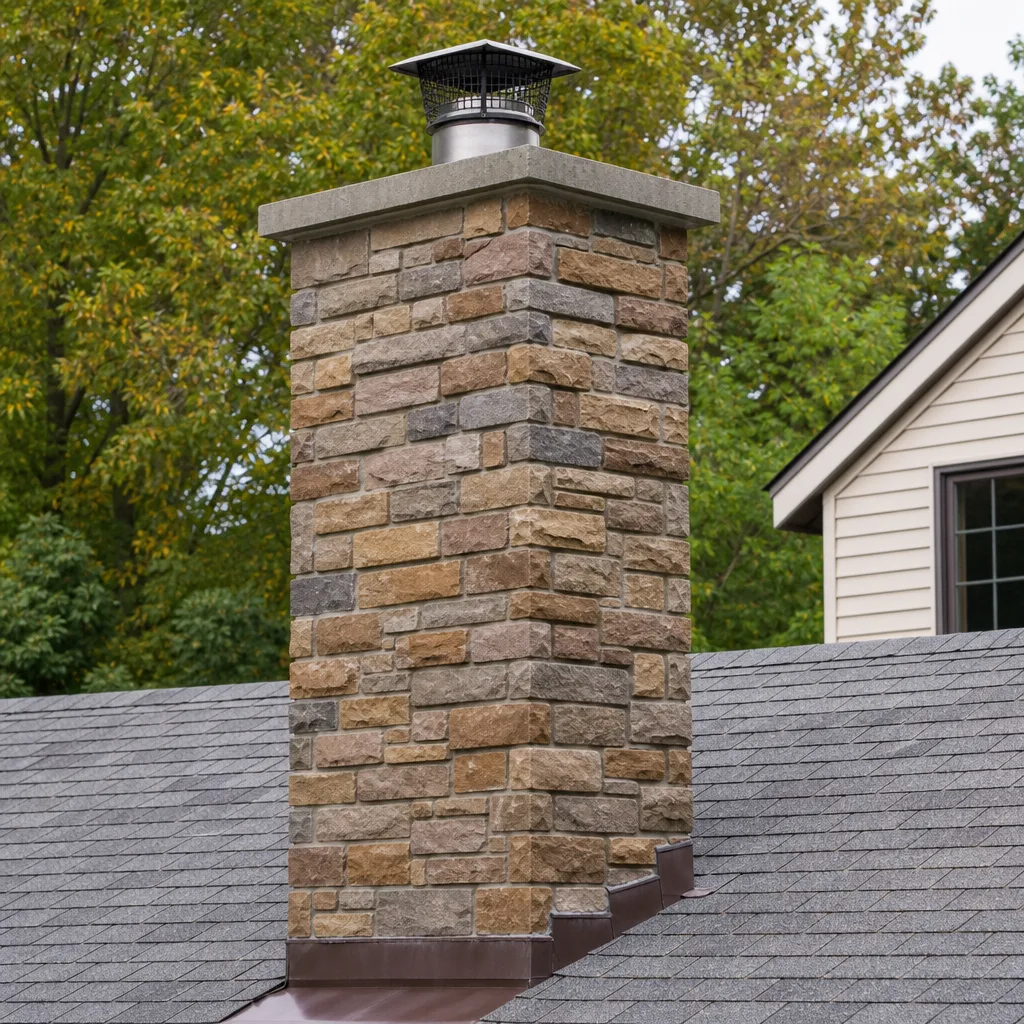
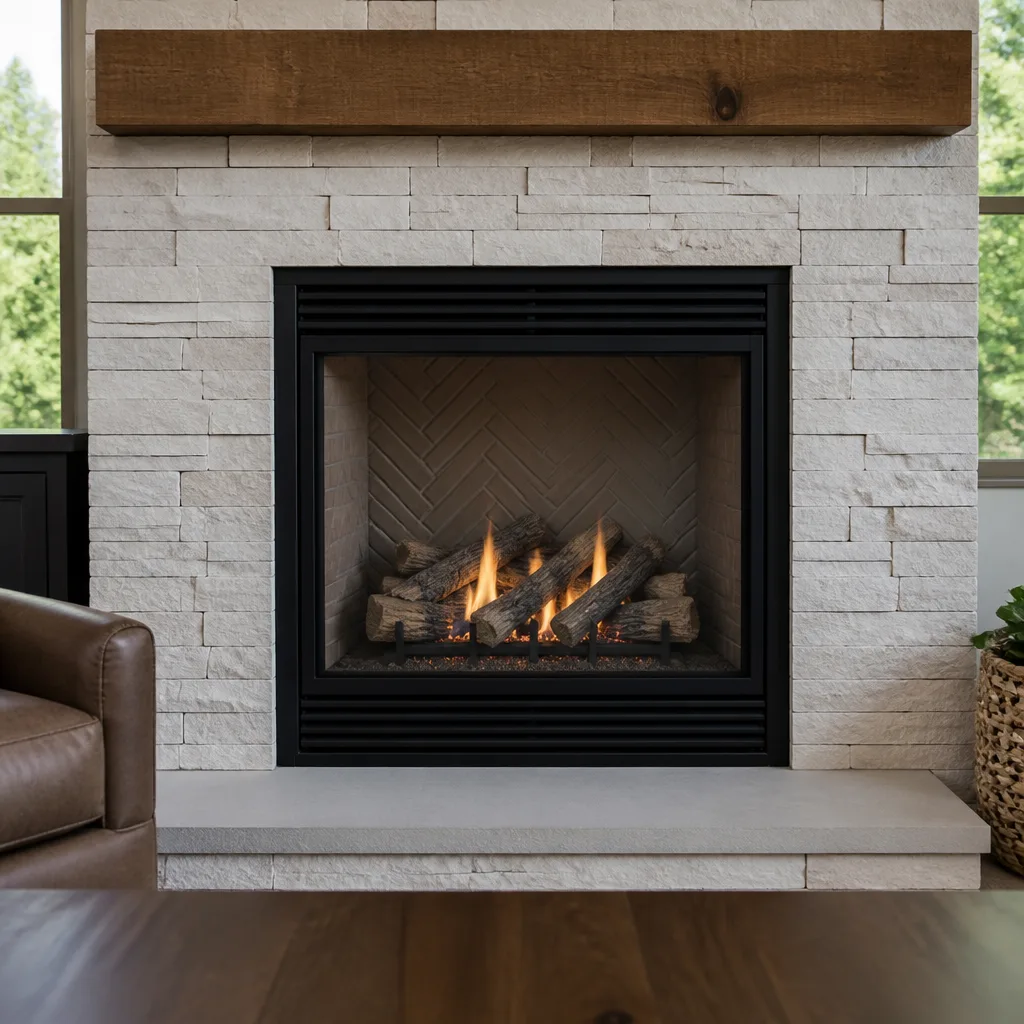
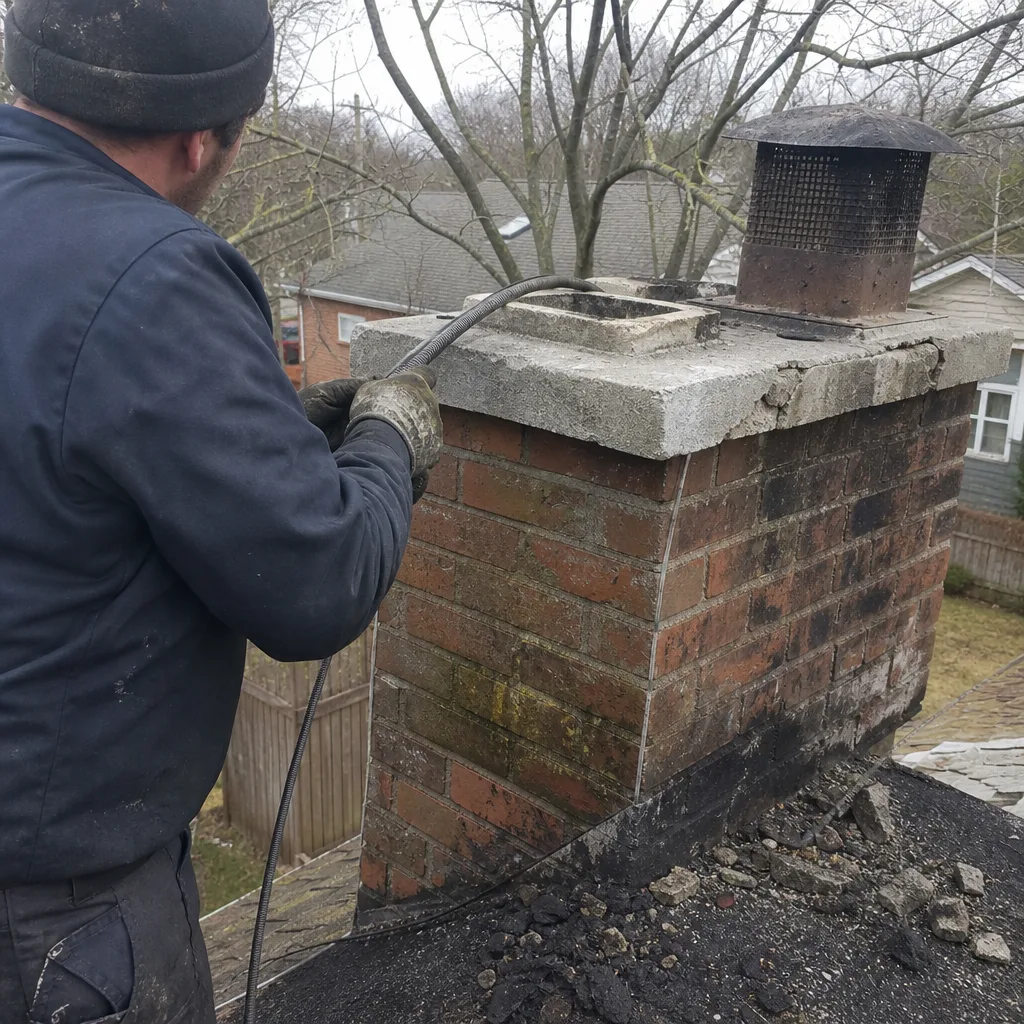 Before
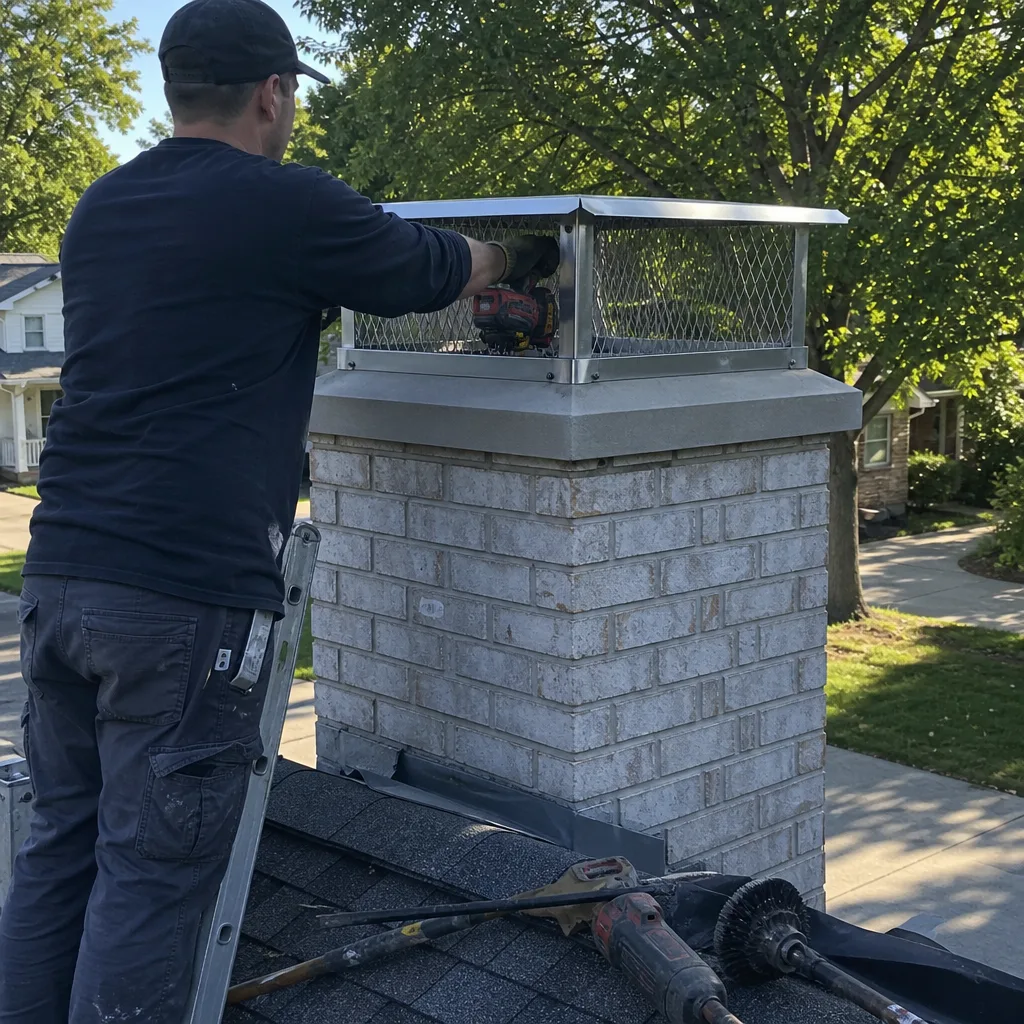 After
After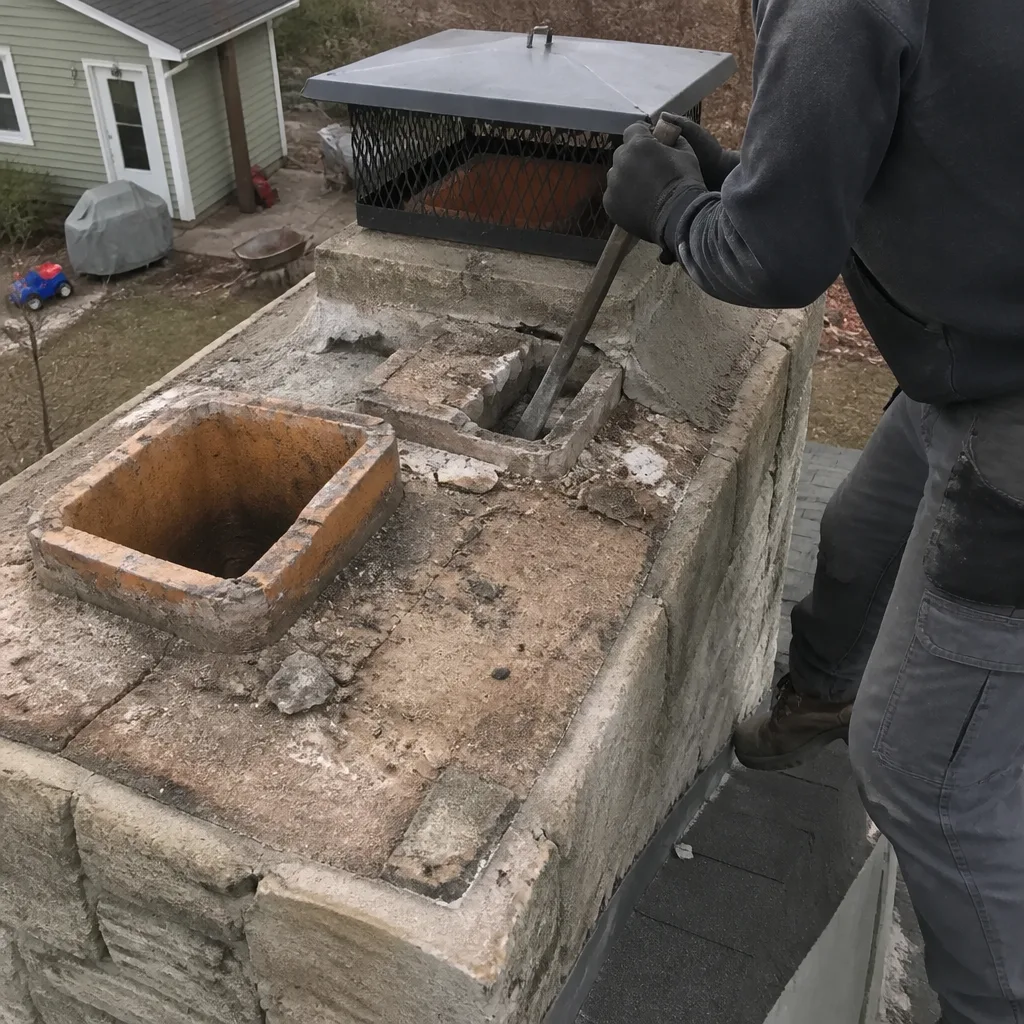 Before
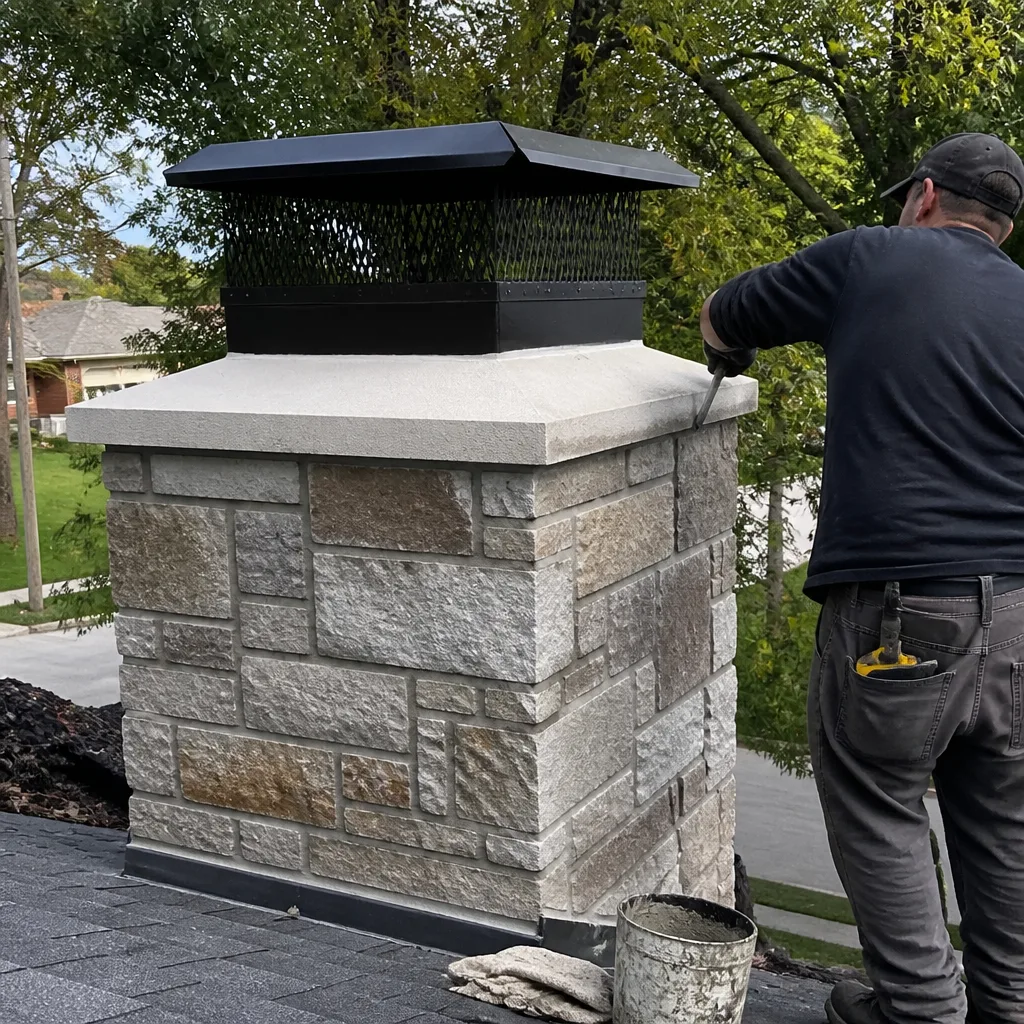 After
After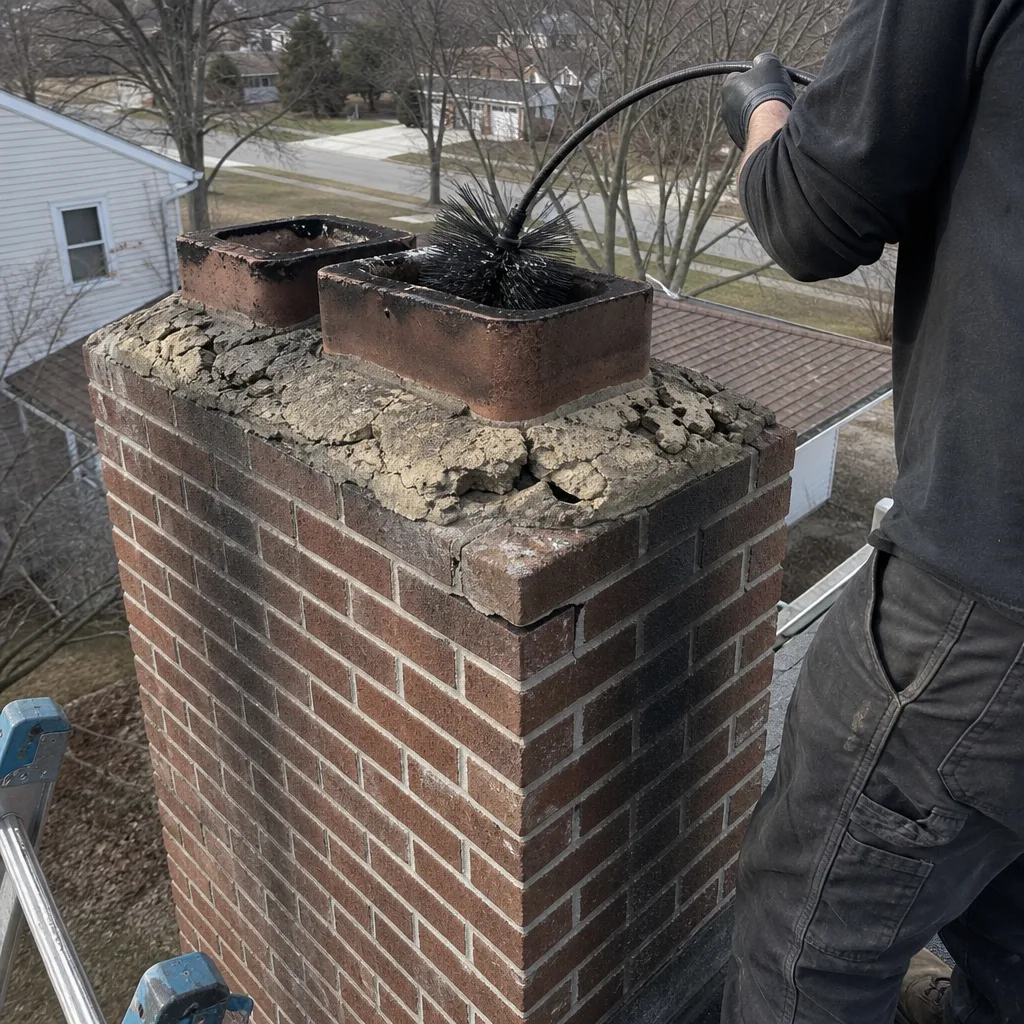 Before
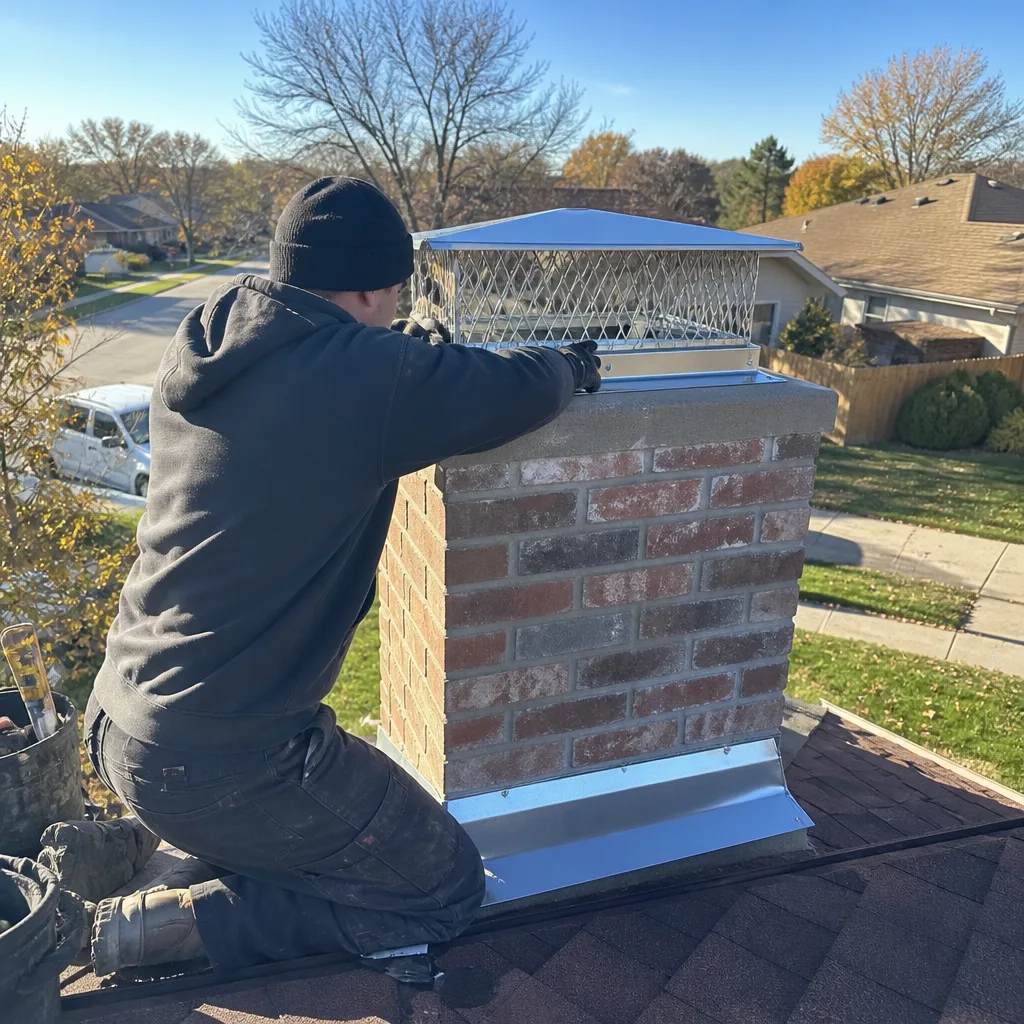 After
AfterCreosote Removal in Naperville, IL
Creosote removal in Naperville typically runs $150 to $850, depending on how heavily the deposit has built up and which removal method your flue requires. Most single-season cleanings fall in the lower end of that range; glazed or hardened Class III deposits that need chemical treatment and mechanical agitation push the cost higher. We give you the written price before anyone touches your chimney – that’s not a policy we added recently, it’s been the standard at Level Two Chimney Naperville since 2009.
If you’ve used your fireplace regularly this past season – or if you inherited a chimney from a previous owner and have no record of when it was last Fireplace Cleaning was done – there’s a reasonable chance creosote has been accumulating in your flue liner longer than you’d want. Creosote isn’t just a residue. At Class II and especially Class III, it’s a fuel source sitting inside your walls. Chimney fires in Naperville homes caused by ignited creosote can burn at temperatures exceeding 2,000°F, hot enough to crack terracotta liner tiles and breach the masonry surround that separates your flue from the framing of your house.
Our work starts with a camera scan – a full Level 2 Inspection with the camera running down the flue, not a flashlight look from the top. We’ve documented more than 38,000 chimney inspections and cleanings since opening, every one with a written scope and a photo record when the job is done. If you want a second opinion on a competitor’s written estimate, bring it to us – that’s always free. To schedule or ask a question, call (331) 265-1700 any hour of the day; a live person answers, not a recording.
Creosote removal is a core part of what we do under our Chimney Cleaning & Sweep in Naperville service, and this page covers the specifics: what we look for, how the process works, what it costs, and what you receive in writing when we’re finished.
What Creosote Actually Is – and Why the Class Matters
Creosote forms whenever combustion gases cool before they fully exhaust out of the flue. Wood smoke carries water vapor, unburned hydrocarbons, and carbon particles; when that mixture hits a cool liner surface – especially common during Naperville’s shoulder seasons when outdoor temperatures drop fast overnight – those compounds condense and stick. Over time, they oxidize and harden.
The industry classifies creosote in three stages, and the class determines the removal method:
- Class I (first-degree): Dusty, flaky, and gray or black. This is the easiest to remove and what a standard brushing clears. If you’re burning seasoned hardwood and using your fireplace correctly, this is what you should find after one season.
- Class II (second-degree): A harder, crunchy, tar-like layer that looks porous or honeycombed. Brushes alone don’t fully clear this. We use rotary tools and, in many cases, a chemical conditioner to fracture and loosen the deposit before mechanical removal.
- Class III (third-degree): Glazed, shiny, and dense – sometimes described as looking like hardened tar or lacquer coating the liner walls. This is the highest-risk classification. It ignites easily, burns intensely, and resists standard removal. Chemical application is required first, followed by mechanical agitation after the conditioner has had time to work. In some cases a second visit is necessary. If a previous chimney fire has already occurred, the liner itself may need inspection for heat damage before the flue is used again.
In Naperville, we see Class II deposits frequently in homes along the Fox River corridor and in older neighborhoods like Hobson West where wood-burning fireplaces were the primary heat source for decades before gas inserts became standard. We also see Class III in homes where a gas log set was installed over an existing wood-burning fireplace without proper flue sizing – the reduced exhaust volume doesn’t carry the moisture and residue out fast enough.
When You Need Creosote Removal
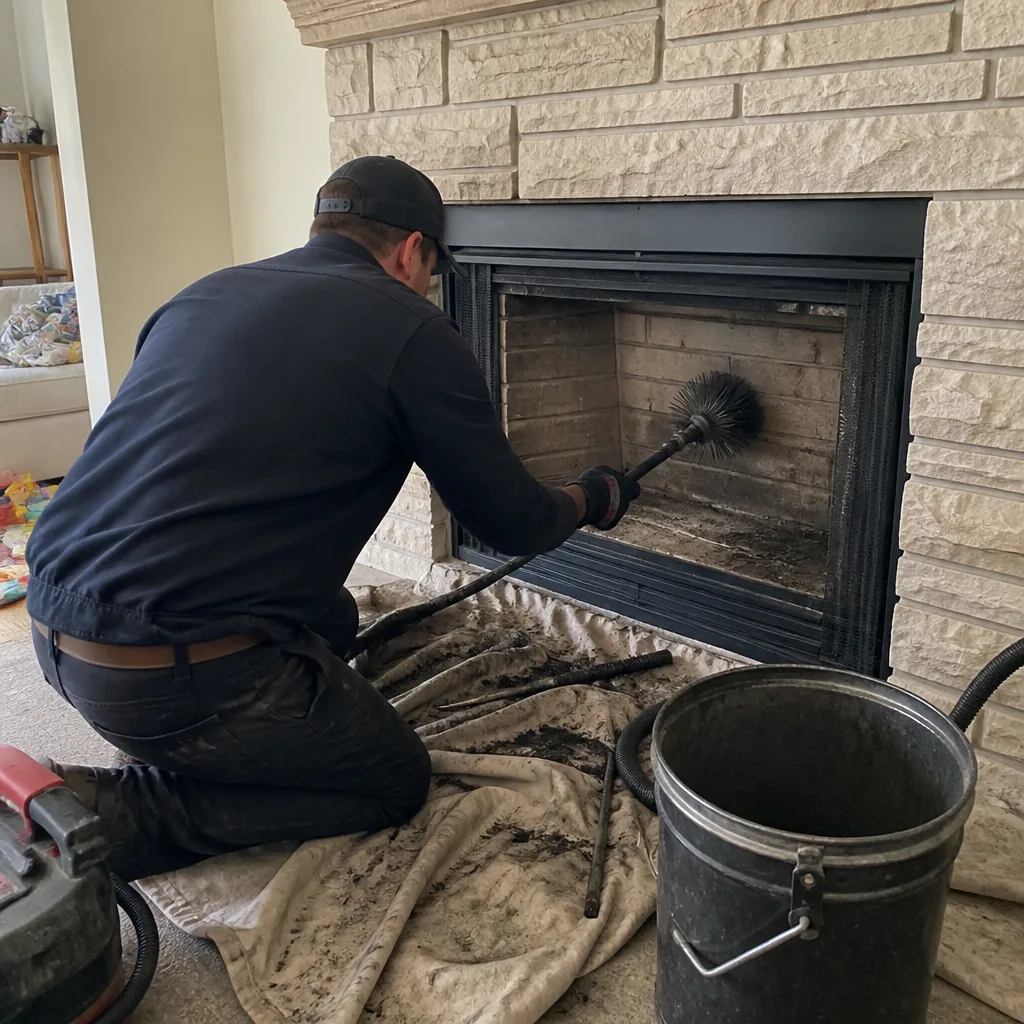
- Your fireplace smokes back into the room. Partial flue blockage from creosote buildup is one of the most common causes of smoke spillage in Naperville homes. If you’re opening a window to compensate, the flue needs attention before the next fire.
- You smell a sharp, acrid, or tar-like odor from the fireplace – even when it’s not lit. That smell in summer or during a rainstorm typically means Class II or Class III creosote is off-gassing through the flue system. It’s more pronounced in humid Illinois summers when moisture activates the deposit.
- It’s been more than 12 months since your last documented cleaning. The NFPA recommends annual inspection and cleaning regardless of use frequency. A chimney that wasn’t used at all still needs inspection; one used regularly needs cleaning.
- You’ve moved into a home and have no cleaning records. This is common with the resale market in Naperville’s Wheatland Township neighborhoods. Previous owners may have used the fireplace for years without a documented sweep. We’ve found Class III deposits in homes whose sellers insisted the chimney was “fine.”
- You heard a rumbling or roaring sound from the chimney during or after a fire. That’s a chimney fire. Even a small one. After any chimney fire, the flue must be inspected before it’s used again – the liner may have cracked, and the remaining creosote is now even more hazardous.
- Your camera inspection showed visible buildup on the liner walls. If another company or a home inspector flagged creosote in their report and you haven’t had it addressed, that’s the clearest possible signal. We can review any written estimate you’ve already received at no charge.
 Before
 After
AfterOur Creosote Removal Process
- Written price and scope before we start. Under Haven Standard Clause 1, you receive a written price, a written scope of work, and a written warranty before any technician begins. This is not conditional on what we find during the inspection – if the scope changes, the price conversation happens before the work changes, not after.
- Camera-scan inspection of the full flue system. We run the camera down the flue liner – from the firebox throat through the smoke chamber and up to the crown – and record footage as we go. This tells us which creosote class is present, where buildup is heaviest, and whether there’s any liner damage (cracked tile, open joints, spalling) that would affect removal approach or fire safety. You see what we see.
- Chimney prep and containment. Before any brushing or chemical application begins, we seal the firebox opening with a fitted dust barrier and lay down drop cloths. Your house stays clean. We use a HEPA-rated vacuum system to capture particulate as it’s dislodged from the flue walls.
- Removal – matched to the creosote class found. For Class I, this is rotary brush work from the top down, followed by vacuuming from the firebox. For Class II, we combine mechanical agitation with a chemical conditioner – typically applied, given time to work, then cleared. For Class III, chemical application is the first step, often with a follow-up visit to complete mechanical removal after the hardened glaze has been fractured. We’ll tell you which class we found and which method we’re using before we start. If Class III is present, we’ll also explain the liner assessment that follows.
- Post-removal camera confirmation and documentation. Once removal is complete, the camera goes back in. We confirm the liner walls are clear, note any residual areas that need monitoring, and photograph the final condition. This is the documented photo record required under Haven Standard Clause 4 – not an optional add-on, included as standard on every job.
- Written summary and next-step recommendations. You receive a written record of what was found, what was done, the creosote class that was present, and any follow-up items – whether that’s a liner repair, a cap replacement, or simply “come back in 12 months.” If we find something beyond the original scope, we quote it in writing before doing anything.
Creosote Removal Pricing in Naperville

Here are the ranges we work within for Naperville-area homes. These are real numbers, not minimums designed to get us in the door.
| Service | Typical Range | Notes |
|---|---|---|
| Class I creosote removal (standard annual cleaning) | $150 – $300 | Included as part of routine chimney sweep |
| Class II creosote removal (mechanical + chemical conditioner) | $300 – $550 | Single visit; includes camera confirmation |
| Class III creosote removal (glazed deposit, chemical + multi-stage mechanical) | $550 – $850+ | May require two visits; liner assessment included |
| Camera inspection (NFPA 211 Level 2) | Included on all visits | Not a separate line item; standard under Haven Clause 4 |
| Free second opinion on written estimate | $0 | Bring any competitor’s written quote |
What moves the price within those ranges: flue height and access (a two-story home with a tall exterior chimney takes longer to set up and clear than a single-story ranch), the degree of deposit concentration, and whether the liner condition requires a full Level 2 documentation pass rather than a confirmation sweep. We don’t add fees at the end for what we find mid-job. The written price reflects the full scope – if something changes the scope, the conversation happens before the work changes.
Naperville’s housing stock is diverse enough that two homes on the same block can have very different flue situations. A 1980s colonial in the Cress Creek area may have a terracotta-lined fireplace that hasn’t been swept in years; a newer build near Naper Settlement might have a factory-built zero-clearance unit with a different liner type entirely. The camera tells us what we’re actually dealing with, and the written price reflects that – not a generic estimate based on square footage.
For an exact written price on your home, call (331) 265-1700. Estimates are free, and someone answers every call.
FAQs – Creosote Removal
How much does creosote removal cost in Naperville?
Creosote removal in Naperville runs $150 to $850 depending on the creosote class present in your flue. Class I deposits – the dusty, flaky buildup from a single season of normal use – are cleared as part of a standard Chimney Cleaning & Sweep services in the $150-$300 range. Class II hardened deposits that require chemical conditioner and mechanical agitation typically land between $300 and $550. Class III glazed creosote, the most serious and most labor-intensive, runs $550 to $850 or more and may require two visits. You’ll have the written price in hand before any work begins. Call (331) 265-1700 for a free estimate specific to your home.
Is creosote removal dangerous to do yourself?
For Class I deposits, some homeowners use chimney brushes on extension rods – but without a camera scan beforehand, you have no way to confirm what class of deposit is present, whether the liner is cracked, or whether a previous small chimney fire has already occurred and left structural damage. Class II and Class III removal involves chemical agents that react with the hardened glaze and require neutralization after application. Working at the roofline on steep-pitch chimneys – common in Naperville’s two-story colonials and Craftsman-style homes – adds meaningful fall risk. We’d recommend leaving Class II and Class III removal, and any work requiring roof access or chemical application, to a trained technician. The cost of professional removal is typically far less than a liner repair or emergency service call after a chimney fire.
How do I know what class of creosote is in my chimney?
You need a camera inside the flue to know with confidence. A visual inspection from the firebox with a flashlight can sometimes show obvious heavy buildup, but it can’t reveal what’s happening in the smoke chamber, the mid-flue section, or near the top of the liner – which is often where Class II and Class III deposits concentrate because the exhaust is coolest there. Our Level 1 Inspection and Level 2 camera scan documents the full flue interior from throat to crown and shows us exactly where buildup is concentrated, how thick it is, and what class it represents. That footage becomes part of your documented record under Haven Standard Clause 4. If you’ve had a written report from another company, bring it to us – we’ll review it at no charge and tell you if we agree with the assessment.
How often should creosote removal be done in Naperville?
The NFPA 211 standard calls for annual inspection of any chimney in use, and cleaning whenever deposits warrant it – which for a fireplace used regularly through a Naperville winter typically means every year. Naperville’s climate adds a complicating factor: the rapid temperature swings between late-fall days and overnight lows accelerate condensation inside the flue, especially if you’re burning green or mixed wood rather than fully seasoned hardwood. Homes along the DuPage River and in the newer developments near Route 59 that use their fireplaces even occasionally through December and February should plan on annual cleaning as a baseline. If you burn frequently – multiple times per week through the season – a mid-season check is worth considering. Call (331) 265-1700 and we’ll tell you honestly what your flue needs based on what the camera shows.
Why Naperville Homeowners Use Level Two for Creosote Removal
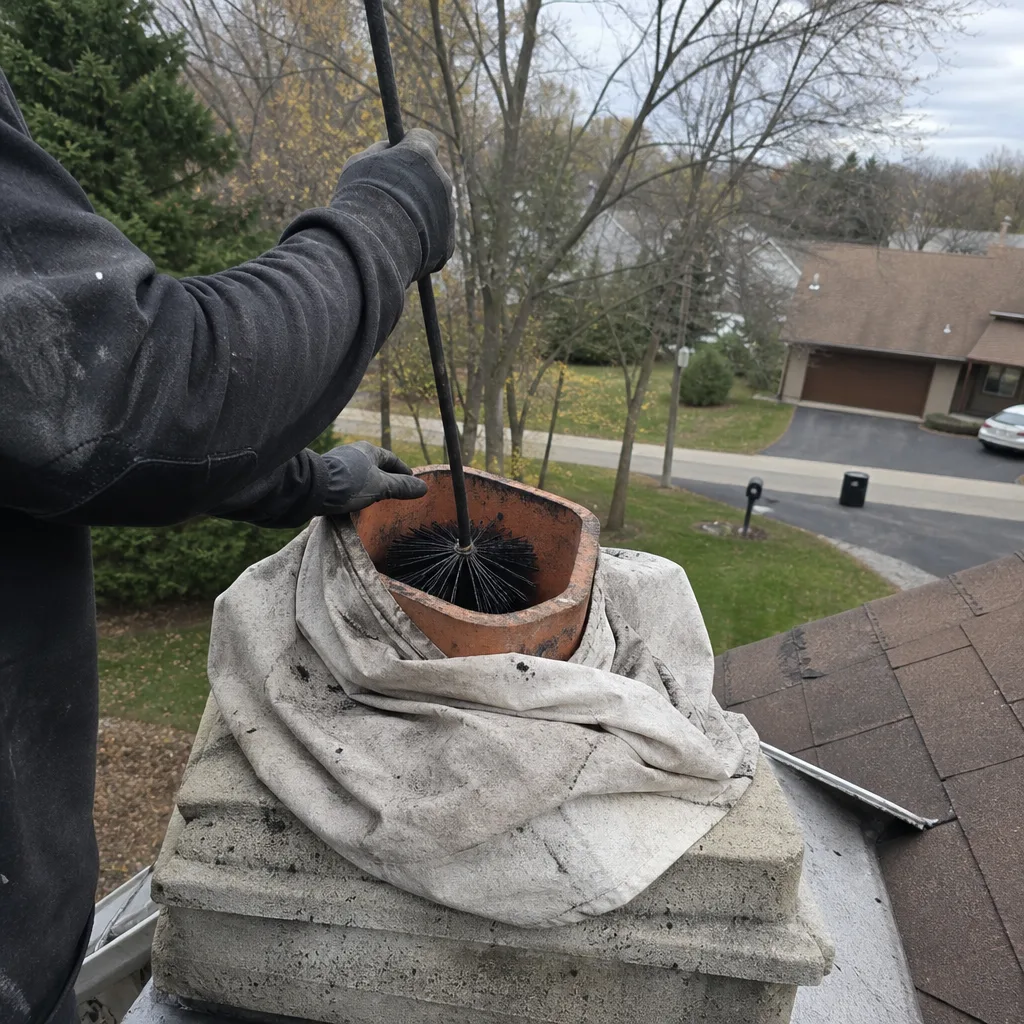
The short version: we show you the evidence before we ask you to spend anything. The camera goes in first. The written price comes before the work. The photo record is yours when we leave. That’s been the practice here since 2009, and it’s the reason we’ve completed more than 38,000 documented chimney jobs across the Naperville area and the broader DuPage and Will County market.
Our technicians are background-checked and uniformed. You’ll get a text when they’re on the way and a name before they arrive – not an anonymous crew showing up in an unmarked van. If something we do isn’t right within 365 days of the job, we make it right. That’s the Done Right Promise, and it’s written on every job, not offered selectively.
We source materials – when liner work, HeatShield resurfacing, or component replacement comes into scope – through the Haven buying network, which keeps our material costs honest and our supply consistent. HeatShield ceramic liner resurfacing, for example, is an option we can discuss if your liner shows erosion alongside the creosote buildup; it’s not something we push, but it’s worth knowing we can do it in a single visit rather than scheduling a second company.
For homeowners doing their research before picking up the phone – which describes most of the people who call us – our home page has the full picture of what the Haven Standard means in practice. And our Chimney Cleaning & Sweep in Naperville page covers the broader scope of what a full chimney cleaning visit includes beyond creosote removal alone.
Key Takeaways
- Creosote removal in Naperville costs $150-$850, depending on the deposit class found during camera inspection.
- Class III glazed creosote is the most hazardous and the most expensive to clear – it requires chemical treatment before mechanical removal and may need two visits.
- A written price, written scope, and written warranty are delivered before any work begins – no exceptions.
- Every visit includes a camera scan of the full flue and a documented photo record – both standard under the Haven Standard, not add-ons.
- If you have a competitor’s written estimate, we’ll review it for free.
- Annual cleaning is the baseline for Naperville homes that use their fireplaces regularly – Naperville’s climate accelerates creosote accumulation compared to milder regions.
Schedule Creosote Removal in Naperville
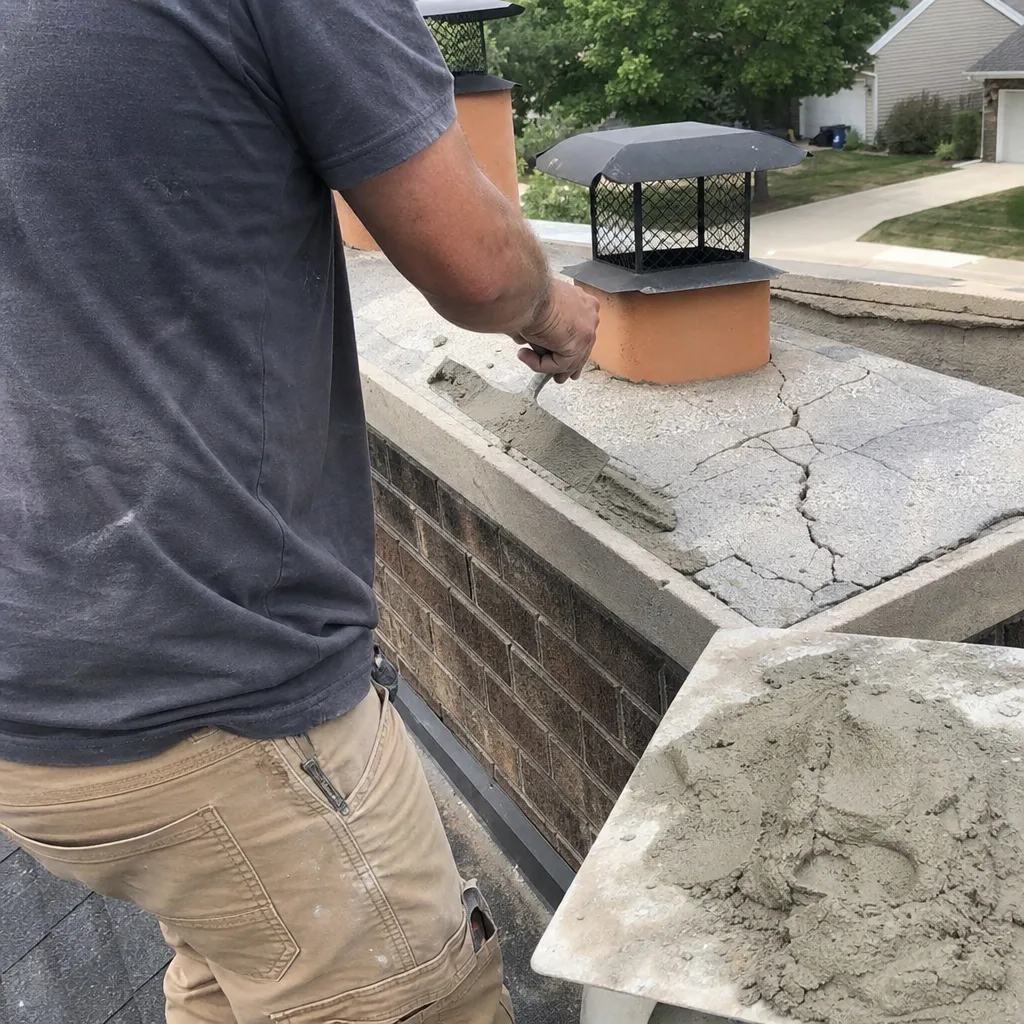
If your chimney hasn’t been cleaned and documented in the past 12 months – or if you’re not sure when it was last done – call (331) 265-1700. A live person answers around the clock. We’ll get you a written price before scheduling and a photo record when the job is complete. No voicemail, no web-form follow-up, no estimate that turns into a surprise once we’re in your home.
Corrine Halstead and the Level Two Chimney Naperville team serve Naperville and surrounding DuPage and Will County communities. If you’d like a free second opinion on a written estimate you’ve already received, bring it – we’ll review it at no charge and give you a straight answer.
Written by Corrine Halstead, Owner at Level Two Chimney Naperville, serving Naperville.